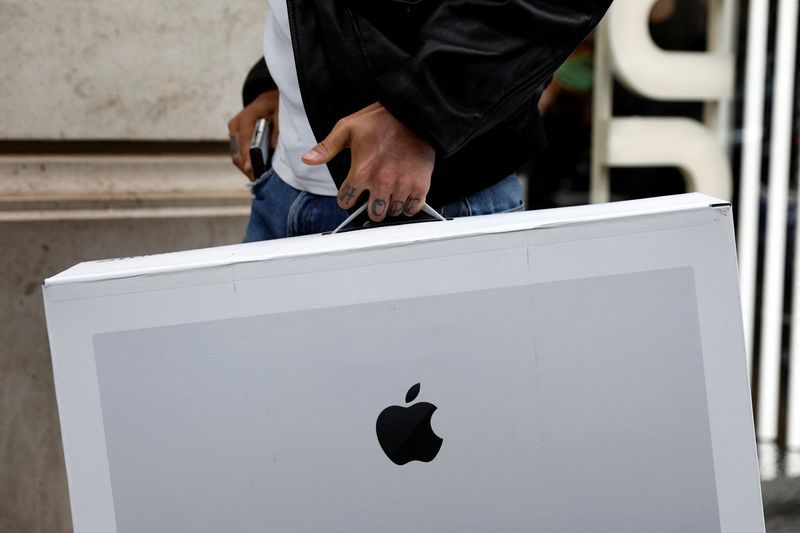
Apple has reclaimed the world's most valuable company status on Friday, edging past Nvidia with a market capitalisation of $4.88 trillion compared to Nvidia's $4.86 trillion following a 3.5% decline in the chipmaker's share price. The exchange marks a significant pivot in how global investors view the artificial intelligence landscape, with capital flowing toward companies offering diversified pathways to monetise the technology rather than concentrating solely on hardware acceleration.
This repositioning represents Apple's first return to the top ranking since April of the previous year, reversing nearly twelve months of Nvidia's dominance. That extended period at the summit underscored the market's initial fixation on semiconductor manufacturers as the primary winners from generative AI deployment. The shift suggests investors have moved beyond the initial euphoria surrounding raw computational power and begun evaluating which established technology ecosystems possess genuine competitive advantages in capturing AI's commercial value.
Analysts attribute the strategic revaluation to a fundamental reinterpretation of Apple's competitive positioning. Toni Meadows, head of investment at BRI Wealth Management, emphasises that Apple was previously dismissed as trailing in artificial intelligence development because it avoided the massive capital expenditures required to build proprietary large language models. However, market sentiment has undergone a substantial transformation, recognising that Apple's business model offers distinct advantages. The company faces significantly lower capital intensity than chipmakers whilst maintaining superior ability to monetise AI through its services division, established ecosystem lock-in mechanisms, and the cyclical hardware upgrade pattern that defines its customer base.
Apple's recent corporate actions have reinforced this narrative. The company deployed a substantially redesigned Siri virtual assistant last month, representing years of delayed development aimed at narrowing the competitive distance separating it from rivals in artificial intelligence capability. The strategic redesign positions Apple to better compete with both established technology giants and innovative startups that have captured mindshare in AI applications. For Chief Executive Officer Tim Cook, approaching his September transition to hardware specialist John Ternus, the milestone carries symbolic weight regarding his tenure's final achievements in navigating the company through a technology inflection point.
Underlying Apple's potential lies an underexploited resource that industry observers frequently highlight: the vast quantities of personal data residing on approximately two billion active iPhones globally. This information could substantially enhance Siri's contextual understanding and overall capability, enabling more sophisticated and personalised responses compared to competitors. However, a critical tension exists between maximising this data's commercial value and maintaining the privacy commitments that form a cornerstone of Apple's brand positioning and regulatory compliance strategies across jurisdictions including the European Union.
Nvidia's displacement does not necessarily indicate a permanent recalibration of the two companies' relative market standing. The semiconductor manufacturer retains formidable structural advantages as a primary beneficiary of artificial intelligence infrastructure spending globally. Its graphics processing units continue powering the generative AI deployment wave across data centres, cloud platforms, and enterprise environments. Benjamin Hall, vice president for alpha research at Segal Marco Advisors, cautions against interpreting the shift as diminishing Nvidia's significance, noting the chipmaker will likely remain a substantial participant in artificial intelligence's commercial development regardless of near-term valuation dynamics.
Apple, meanwhile, confronts its own challenges that could constrain future valuations. The company has implemented price increases across its product portfolio to mitigate rising manufacturing and component costs, a strategy that potentially dampens consumer demand in price-sensitive markets and emerging economies. This pricing pressure becomes increasingly relevant for regions including Southeast Asia, where purchasing power considerations significantly influence upgrade cycles and market penetration.
The competitive landscape has simultaneously expanded beyond the traditional two-company narrative. Memory chipmakers including Micron Technology have emerged as unexpected beneficiaries of AI infrastructure investment, with Micron crossing a one trillion dollar valuation threshold in May as investors recognised the indispensable role of memory systems in artificial intelligence infrastructure. South Korea's SK Hynix, which recently listed shares on the Nasdaq exchange, introduces additional competition for investor capital and attention within the semiconductor segment.
Hall anticipates that expanding awareness regarding memory chips' significance in artificial intelligence systems will disperse investor focus away from the concentrated "Magnificent Seven" technology stocks toward a broader universe of semiconductor and hardware manufacturers. This diversification could reshape valuation multiples across the sector as capital allocators develop more granular understanding of artificial intelligence's supply chain requirements.
The semiconductor index tracking mechanism, the Philadelphia SE Semiconductor index, experienced substantial volatility during July as global investors reassessed the sustainability of artificial intelligence as an investment thesis. The index declined nearly nineteen percent from its peak valuations, reflecting heightened caution regarding technology sector fundamentals and AI deployment returns on investment. Despite this pronounced correction, the semiconductor index has maintained performance superiority relative to the broader market indices during the current calendar year.
For Malaysian and Southeast Asian investors, these developments carry particular significance regarding regional technology sector positioning and capital allocation priorities. The rebalancing from concentrated semiconductor exposure toward diversified technology platforms and services-oriented businesses mirrors shifts in global institutional investment strategies. Companies operating within Malaysia's technology ecosystem, particularly those offering artificial intelligence applications, services integration, or hardware compatibility with major platforms, may benefit from investor appetite seeking exposure beyond pure semiconductor manufacturing.
The underlying message from Apple's ascendance to the top valuation position extends beyond simple market mechanics. It reflects growing conviction that artificial intelligence's commercial value will concentrate within established ecosystems possessing vast user bases, integrated hardware and software platforms, and proven monetisation capabilities rather than exclusively with infrastructure suppliers. This thesis, if sustained, could reshape competitive dynamics across technology markets globally and influence how corporations throughout Southeast Asia position themselves within the artificial intelligence transition.

