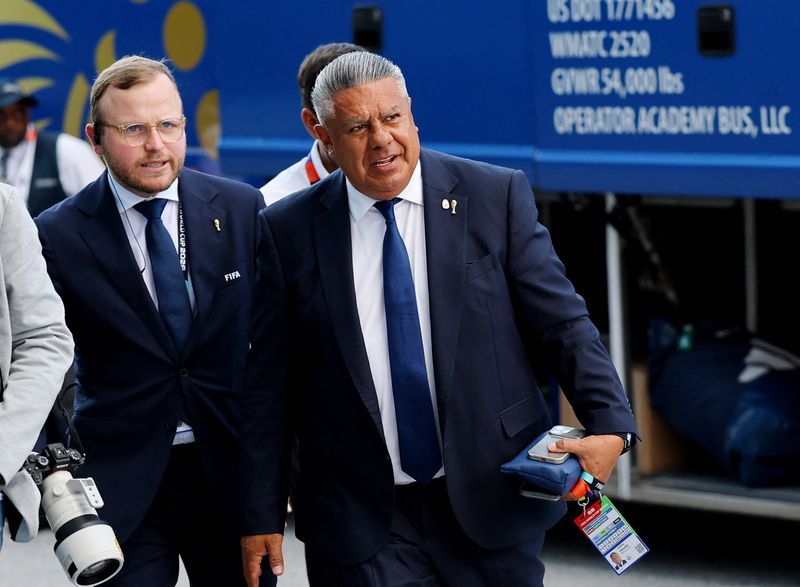
Argentina's football association moved swiftly on Wednesday to publicly dispel what it characterised as false reports regarding its leadership, issuing a forceful denial that president Claudio Tapia or treasurer Pablo Toviggino had received judicial summons from United States authorities. The AFA's statement, released from Buenos Aires, flatly rejected the narrative that had circulated through local Argentine media outlets, emphasising that neither official faced any personal legal obligation stemming from US court proceedings. The timing of the statement underscored the sensitive nature of the claims, which had surfaced following the Argentina squad's World Cup victory celebrations and its return journey through New York.
However, the association's categorical denial came with a notable caveat that complicated its overall message. While insisting that Tapia and Toviggino themselves had not been targeted by judicial processes, the AFA acknowledged that an unnamed third party had indeed been summoned to appear before a US grand jury. That third party, according to the organisation's statement, was potentially required to provide evidence regarding multiple individuals, including officials affiliated with the football association. This distinction—denying direct summons while confirming indirect involvement through another person—raised questions about the full scope of the investigation and what information authorities were seeking to obtain.
The backdrop to these denials involves serious allegations concerning the financial operations of Argentine football. According to investigative reporting from the media outlet Infobae, United States authorities have been examining commercial contracts linked to the AFA, with the investigation focusing on transactions potentially exceeding $300 million. For Malaysian and Southeast Asian observers of global football governance, such financial scrutiny represents part of a broader pattern of international law enforcement examining how major football associations manage their commercial relationships and revenue flows. These investigations have become increasingly common as corruption watchdogs and authorities worldwide have heightened oversight of sports organisations.
The controversy emerged from events at New York's JFK Airport, where according to eyewitness accounts, federal agents conducted an approximately 30-minute questioning session with both Tapia and Toviggino while the Argentine national team prepared to depart. Witnesses at the airport reported that the two officials were questioned aboard a bus parked on the tarmac, a situation that generated considerable media attention despite its relatively brief duration. The presence of FBI agents at this location, combined with reports that authorities had requested access to Tapia's electronic devices, had fuelled the initial speculation about the nature and severity of any investigation.
The AFA's formal response explicitly addressed the device seizure claims, stating unequivocally that neither Tapia's cell phone nor any other electronic devices belonging to either official had been seized or confiscated. The association emphasised that the legal document in question—presumably the grand jury summons—contained no provisions imposing personal measures on the AFA president or its treasurer, did not order their appearance in court, and did not establish any procedural obligations for either of them. This careful legal language suggests the association sought to establish maximum distance between its leadership and any ongoing judicial processes in the United States.
The investigation itself exists within a larger context of scrutiny surrounding Argentine football finances. In December, during unrelated money-laundering investigations, Argentine authorities had conducted raids targeting entities connected to the AFA. Those earlier enforcement actions had already raised questions about financial transparency and appropriate oversight of commercial dealings within the sport. The subsequent involvement of United States authorities indicated that international concerns about these matters had escalated to levels warranting cross-border investigation and cooperation between law enforcement agencies.
For observers in Southeast Asia, where football governance has faced its own challenges regarding corruption and financial transparency, the Argentine case exemplifies how major football organisations face mounting international pressure to account for their commercial activities. Regional football associations across Asia have increasingly experienced similar scrutiny from both national authorities and international sports bodies, underscoring a broader shift toward greater accountability in sports administration. The circumstances surrounding Argentina's situation—combining elements of high-profile sports events, substantial sums of money, and questions about contract management—mirror patterns that have emerged in various contexts across Asian football.
The AFA's defensive posture likely reflects awareness that any suggestion of direct legal involvement for Tapia could undermine his authority as the organisation's leader and create internal governance complications. By maintaining the distinction between direct summons (which the association denies) and indirect involvement through a third party (which it acknowledges), the organisation attempted to limit potential damage to its institutional credibility and leadership structure. This distinction carries particular weight given Tapia's prominent role in Argentine football administration and the association's standing as a major player in global football governance through its membership in FIFA and CONMEBOL, the South American confederation.
The precise identity of the third party summoned to testify remained undisclosed, a silence that likely served strategic purposes for both the AFA and potentially for US authorities conducting the investigation. Revealing this information could either compromise investigative methods or create additional complications for the football association if the third party had substantial connections to the organisation's operations. The investigation's focus on contracts exceeding $300 million suggests authorities were examining substantial commercial transactions that might involve multiple parties, vendors, and intermediaries.
As this matter develops, the intersection of international sports governance, financial oversight, and law enforcement jurisdiction will continue to shape how football organisations worldwide manage their affairs. The case demonstrates that even highly successful national football associations operating at the highest levels of international sport remain subject to rigorous financial scrutiny from multiple jurisdictions. For Argentina's football association, navigating these investigations while maintaining operational legitimacy and leadership credibility presents ongoing challenges that will likely occupy its attention regardless of the eventual outcome of the United States inquiry.

