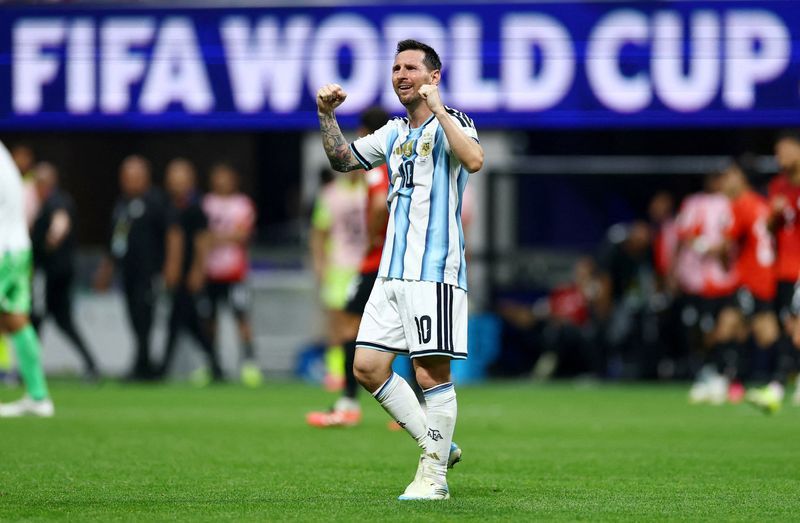
Argentina's journey through the knockout stages has taken a starkly different character from their assured march through the group phase. The defending World Cup champions, having dispatched Algeria, Austria, and Jordan with relative comfort during the opening rounds, now find themselves in the unfamiliar position of fighting desperately to keep their title dream alive. Their extraordinary 3-2 reversal against Egypt in Atlanta on Tuesday, where they recovered from a 2-0 deficit with just 11 minutes remaining, represents the kind of dramatic turning point that could define their entire campaign—assuming, of course, they manage to win the tournament.
Lionel Scaloni's squad has proven far more vulnerable than their opening performances suggested. The contrast between their group-stage execution and their knockout-round struggles is stark and concerning. During the preliminary rounds, when they rotated extensively and rested key players, Argentina conceded only a single goal. Yet in two knockout matches, they have now shipped four goals—a statistical reality that exposes defensive lapses and organisational issues that more formidable opponents may ruthlessly exploit. The narrow escape against Cape Verde, which required extra time to resolve, followed by the chaotic encounter with Egypt, suggests systemic problems rather than isolated defensive lapses.
Messi's intervention against Egypt proved decisive, yet the captain's missed penalty earlier in the match illustrated the thinness of the margin between progression and elimination at this stage of the tournament. The forward's ability to inspire a recovery when circumstances appeared bleakest cannot mask the underlying fragility. Scaloni acknowledged that while his team created genuine opportunities throughout the first half, including the squandered penalty, they lacked the clinical efficiency and defensive solidity that characterised their group-stage performances. The manager's assertion that Argentina performed meaningfully better against Egypt than against Cape Verde rings somewhat hollow given the actual scoreline.
What has become increasingly evident, however, is the psychological fortitude embedded within this Argentina squad. The consistent refrain from players—that the team refuses to surrender and maintains belief regardless of circumstances—speaks to a collective mentality that transcends individual talent. Leandro Paredes and other midfielders have repeatedly stressed that even when facing a 2-0 deficit, the dressing room atmosphere reflected conviction rather than despair. This intangible asset, the refusal to accept defeat, represents Argentina's greatest insurance policy as they navigate an increasingly treacherous path towards another title.
Carlos Tevez's assessment, offered via ESPN Argentina following the Egypt victory, captured an essential truth: modern tournament football increasingly rewards emotional resilience and fighting spirit as much as technical execution. The former striker emphasised the heart and determination displayed by Scaloni's charges, qualities that prove difficult to quantify on a tactical sheet yet prove decisive when matches reach their climax. Argentina's capacity to absorb punishment and respond with urgency distinguishes them from teams that mentally collapse under similar pressure.
The statistical profile of Argentina's tournament performance remains genuinely impressive despite the recent wobbles. They have advanced from the group stage through two consecutive knockout rounds, something that only the most elite teams accomplish. Their ability to create multiple scoring opportunities demonstrates that their underlying approach remains sound; the issue appears to be consistency in execution and, more troublingly, defensive organisation. Scaloni must address the gap between their defensive principles during group play and their vulnerability in knockout football before confronting Switzerland on Saturday.
Switzerland represents a qualitatively different challenge from the opponents Argentina has faced thus far. Scaloni himself acknowledged his respect for the Swiss, describing them as possessing an incredible World Cup tradition alongside outstanding players boasting extensive tournament experience. The Alpine nation's approach to international football has historically emphasised tactical discipline, collective organisation, and pragmatic game management—precisely the attributes that punish the kind of defensive carelessness Argentina has displayed against Cape Verde and Egypt. This quarter-final encounter will demand a synthesis of Argentina's attacking prowess with the defensive stability they demonstrated during the group stage.
The timeline for adjustment remains compressed. Argentina returned to training Wednesday evening in Kansas City with only three full days to prepare. Scaloni must make tactical and potentially personnel decisions that address the defensive vulnerabilities while maintaining the attacking threat that remains Argentina's primary weapon. The missed opportunities and occasional lapses in concentration that proved survivable against Egypt could prove fatal against Switzerland, a team unlikely to squander defensive mistakes as carelessly as their recent opponents.
Argentina's path to retaining their World Cup crown has become considerably more complicated than anticipated. Their early displays suggested a team capable of dominating through superior technique and tactical sophistication. Instead, they have been drawn into tight, tense encounters that rely upon dramatic last-minute interventions. While Messi's genius provides a safety net, championship football ultimately requires both exceptional individual performances and reliable collective organisation. Argentina possess the former in abundance; establishing the latter consistently across 90 minutes will prove essential when they encounter the Swiss challenge.

