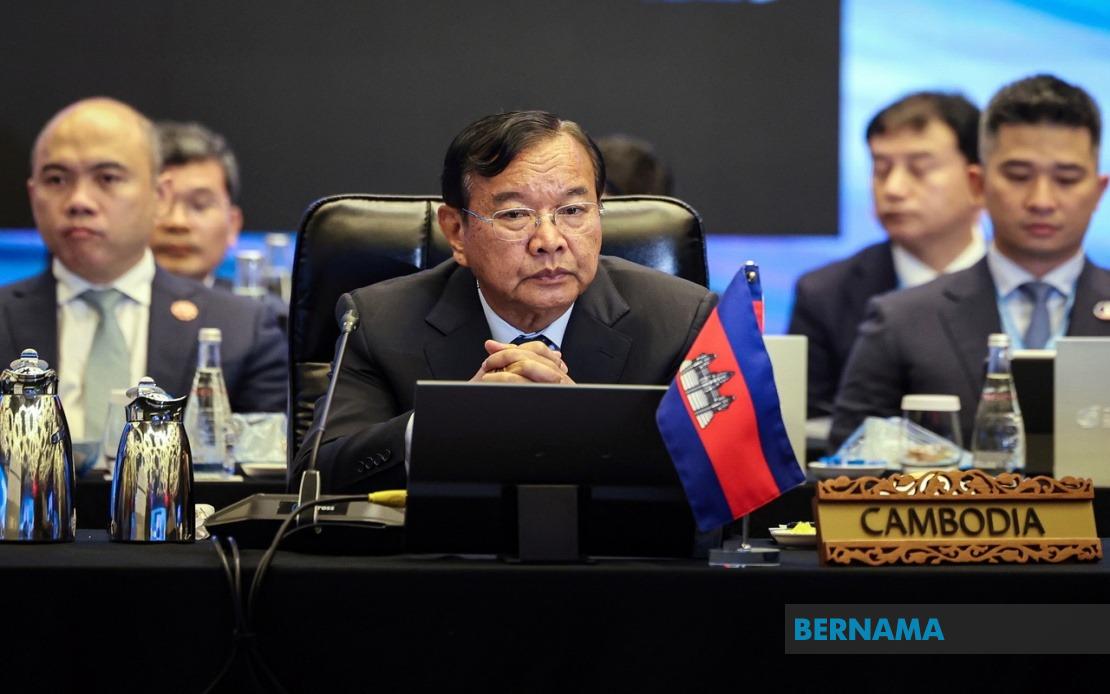
Cambodia's Foreign Affairs and International Cooperation Minister Prak Sokhonn has reinforced ASEAN's continuing importance as a cornerstone for maintaining regional peace and stability, particularly as the 11-member bloc navigated its 59th anniversary on August 8. Speaking in an official statement, Sokhonn underscored the organisation's foundational principles, rooted in the ASEAN Charter and the Treaty of Amity and Cooperation, as the bedrock upon which member states have built their collective security architecture and diplomatic framework.
The Cambodian minister's remarks arrived at a pivotal moment for Southeast Asia, a region that has undergone a remarkable transformation since ASEAN's establishment in 1967. Over nearly six decades, the bloc has effectively pivoted the region from an era characterised by fragmentation, suspicion, and recurring conflicts into a community progressively bound by constructive dialogue, multilateral economic engagement, and the pursuit of mutual prosperity. This evolution represents one of the more successful regional integration experiments globally, offering a model that has attracted sustained international attention and attempted emulation elsewhere.
Yet Sokhonn's message carried an unmistakable warning about contemporary challenges threatening this hard-won stability. He highlighted the deteriorating global security environment, marked by the resurgence of armed conflicts in multiple theatres, intensifying great-power competition with direct implications for Southeast Asian interests, and a broader erosion of respect for international law and the multilateral institutions that have undergirded post-Cold War order. These pressures bear particular significance for ASEAN members, many of whom depend on rules-based systems and neutral diplomatic spaces to mediate their own bilateral disputes and to maintain equitable relationships with distant powers.
Crucially, Sokhonn rejected a passive posture for the regional organisation. He argued forcefully that ASEAN cannot afford to limit itself to reactive responses when confronted with external pressures or shifting strategic dynamics. Instead, he contended that the bloc must assume a more assertive role in shaping the regional and global political trajectory, leveraging its collective voice and institutional mechanisms to influence outcomes that would otherwise be determined unilaterally by larger actors. This framing reflects growing anxiety among some Southeast Asian leaders that their region risks becoming a mere theatre for great-power competition unless ASEAN demonstrates strategic agency.
The maintenance of ASEAN's unity and centrality within the broader Asian strategic architecture emerged as Sokhonn's key prescription for navigating these headwinds. For Malaysia and other Southeast Asian nations, the concept of ASEAN centrality remains deeply significant—it encodes the principle that regional issues should be addressed by regional actors operating through regional mechanisms, rather than being subordinated to external powers' preferences. This principle has faced mounting strain as geopolitical competition intensifies and as some powers seek to establish alternative regional architectures or bilateral arrangements that circumvent ASEAN's inclusive consensus-building processes.
Cambodia, which acceded to ASEAN in 1999 after the bloc's gradual expansion from its original five founding members, occupies a distinctive position within the organisation. As Sokhonn noted, the kingdom takes considerable pride in its contributions since joining, having participated in various ASEAN initiatives ranging from security cooperation to economic integration efforts. Cambodia's perspective as a relative latecomer that has benefited from ASEAN membership lends credibility to arguments about the organisation's enduring value, even as some observers question whether ASEAN's consensus-based decision-making processes can adequately address modern security challenges requiring faster, more decisive action.
Sokhonn's reiteration of Cambodia's commitment to strengthening ASEAN's unity, resilience, and global relevance carries particular weight given Cambodia's complex geopolitical position. The nation maintains substantial strategic partnerships with major powers including China, while simultaneously seeking to preserve its standing within the ASEAN framework and balance competing external relationships. By emphasising adherence to the ASEAN Charter and the Treaty of Amity and Cooperation both in principle and in practice, Sokhonn signalled Cambodia's intention to remain a constructive force within regional mechanisms, even as individual members pursue their distinct national interests.
The bloc itself comprises ten Southeast Asian nations—Brunei, Cambodia, Indonesia, Laos, Malaysia, Myanmar, the Philippines, Singapore, Thailand, and Vietnam—plus the latest addition, Timor-Leste, which joined in 2002. This composition creates both opportunities and challenges. The diversity of political systems, development levels, economic structures, and strategic alignments within ASEAN makes consensus difficult to achieve on contentious issues, yet this same plurality reflects the bloc's inclusive vision and its effort to encompass the region's full complexity. For Malaysian readers and policymakers, ASEAN's effectiveness directly shapes the regional environment in which Malaysian interests are pursued, from trade negotiations to managing maritime disputes and responding to transnational challenges.
The contemporary moment demands that ASEAN members genuinely internalize Sokhonn's message about proactive engagement. The geopolitical landscape is shifting rapidly, with traditional assumptions about regional stability increasingly questioned. Great-power competition in Asia is intensifying, technological disruption is reshaping security dynamics, and non-traditional challenges from climate change to pandemics to cyber threats require coordinated responses. A passive ASEAN, one that merely absorbs external shocks or reacts after events have unfolded, risks irrelevance. Conversely, an ASEAN that collectively develops strategic visions, coordinates diplomatic positions, and mobilizes its combined weight can meaningfully influence regional outcomes and protect the interests of all member states, particularly smaller nations that lack individual leverage over major powers.
For Malaysia specifically, Cambodia's emphasis on ASEAN's indispensability resonates with Malaysian policy preferences for maintaining a regional order shaped by Southeast Asian voices rather than external impositions. Malaysia has long advocated for ASEAN-centered mechanisms and has invested considerable diplomatic capital in maintaining the bloc's relevance. The challenge ahead involves ensuring that institutional commitments to unity translate into substantive coordination on pressing issues—from managing great-power competition to addressing maritime security concerns, from economic integration to addressing governance challenges that threaten regional stability. Whether ASEAN can evolve its decision-making processes and operational capacity to match the ambitions outlined by Sokhonn remains a defining question for the region's future.

