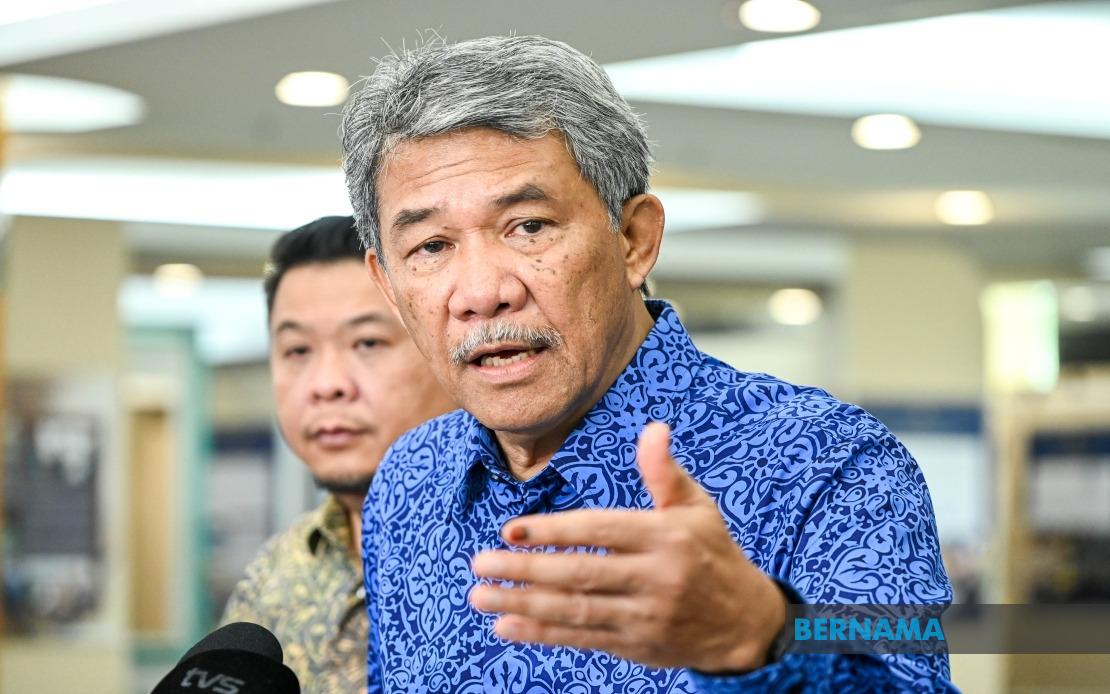
ASEAN's ambition to establish itself as the world's fourth-largest economic powerhouse by 2030 hinges on a critical challenge: the region's internal trade remains persistently underdeveloped. Speaking at the 59th ASEAN Day celebration in Putrajaya on Monday, Foreign Minister Datuk Seri Mohamad Hasan underscored that intra-ASEAN trade currently represents less than 25 per cent of member states' total commerce, revealing a significant gap between current reality and the bloc's economic potential.
The Foreign Minister's remarks signal a strategic pivot within ASEAN's priorities. While the regional association has historically grappled with political complexities and diplomatic sensitivities, policymakers increasingly recognise that sustained economic integration offers a more pragmatic path toward genuine regional cohesion. Mohamad emphasised that ASEAN's contemporary agenda extends well beyond managing political tensions, focusing instead on constructing a unified economic framework that can compete with established global powers.
The mathematics behind ASEAN's economic projection are compelling. With a combined GDP trajectory placing it on course to become the fourth-largest economic bloc within the decade, the region represents an emerging competitor to established power blocs. However, this projection assumes significant improvements in internal trade mechanisms and supply chain integration. The current figure of less than 25 per cent intra-ASEAN trade indicates that member nations remain heavily dependent on extra-regional commerce, limiting the multiplier effects that deeper integration could generate across the bloc.
To address this structural weakness, ASEAN has established multiple institutional frameworks designed to facilitate seamless commerce across borders. The free movement of goods protocol, a cornerstone of regional trade liberalisation, aims to eliminate tariff barriers and streamline customs procedures among member states. These mechanisms, though established, require continuous refinement and enforcement to overcome persistent obstacles including varying regulatory standards, infrastructure gaps, and divergent economic development levels across the bloc.
Malaysia's tenure as ASEAN chair during the previous year generated several foundational initiatives that now inform the bloc's ongoing economic agenda. The Kuala Lumpur Declaration, adopted during that period, established policy directions and commitments that continue shaping regional dialogue and cooperation frameworks. These resolutions represent more than symbolic gestures; they codify principles that successive ASEAN chairs, including the Philippines in its current role, must actively translate into operational improvements.
The Philippines' assumption of the ASEAN chairmanship reflects this continuity of economic focus. As the current chair, Manila has inherited the responsibility of advancing proposals and implementing resolutions developed during Malaysia's leadership period. This seamless handover between ASEAN chairs ensures that economic priorities maintain momentum despite the bloc's rotating leadership structure, a characteristic that distinguishes ASEAN's consensus-based decision-making from more hierarchical regional arrangements.
Malaysia's designation as the Permanent Shepherd of the ASEAN Community 2045 vision positions the nation as a custodian of the bloc's long-term strategic trajectory. This role carries specific implications for Malaysia's engagement with intra-regional trade development. By serving as a guardian of ASEAN's foundational vision, Malaysia commits to ensuring that trade integration receives sustained institutional support and that member states maintain focus on deepening commercial ties over the coming decades.
The gap between current intra-ASEAN trade levels and potential integration capacity reflects multiple interconnected challenges. Infrastructure deficiencies in less-developed member states create logistics complications that elevate costs and extend delivery timelines. Regulatory divergences force businesses to navigate multiple compliance frameworks, effectively imposing hidden taxes on cross-border transactions. Supply chain fragmentation means that regional production networks remain underdeveloped compared to those in East Asia or Europe, limiting opportunities for economies of scale that deeper integration would unlock.
For Malaysian stakeholders, enhanced intra-ASEAN trade offers tangible advantages. Malaysia's position as a regional economic leader with advanced infrastructure and manufacturing capabilities positions the nation to benefit substantially from liberalised trade arrangements. Malaysian companies could expand significantly within ASEAN markets as tariff barriers diminish and regulatory harmonisation progresses. Conversely, increased competition from larger regional markets demands that Malaysian businesses enhance competitiveness and innovate continuously.
The implications extend beyond commercial interests to encompass political and strategic dimensions. Economies intertwined through dense trade networks and integrated supply chains develop mutual interests in regional stability and prosperity. The experience of post-war Europe, where economic integration helped transform former adversaries into allies, offers a relevant lesson for ASEAN. Deepening trade relationships can reinforce the diplomatic cooperation frameworks that ASEAN has painstakingly constructed over decades.
Achieving the 25 per cent threshold and substantially exceeding it requires coordinated effort across multiple dimensions. Governments must continue investing in cross-border infrastructure, including improved transportation networks and digital connectivity. Regional institutions must strengthen technical assistance programmes helping less-developed members align regulatory standards with leading economies. Private sector engagement becomes crucial, as businesses ultimately drive trade flows and investment decisions.
The timeline toward 2030 imposes urgency on these initiatives. Achieving fourth-largest economy status by that target date demands that intra-ASEAN trade expansion accelerates significantly from current trajectories. The structural impediments to deeper integration will not dissolve automatically; rather, they require deliberate policy interventions, sustained political commitment, and substantial capital investments across the region.
Moving forward, monitoring mechanisms and accountability frameworks will prove essential. ASEAN must establish clear metrics for assessing progress toward intra-regional trade objectives and regular mechanisms for evaluating the effectiveness of existing liberalisation instruments. Malaysia's role as Permanent Shepherd provides an opportunity to institutionalise rigorous oversight of trade integration progress, ensuring that aspirational rhetoric translates into measurable economic outcomes across the decade ahead.

