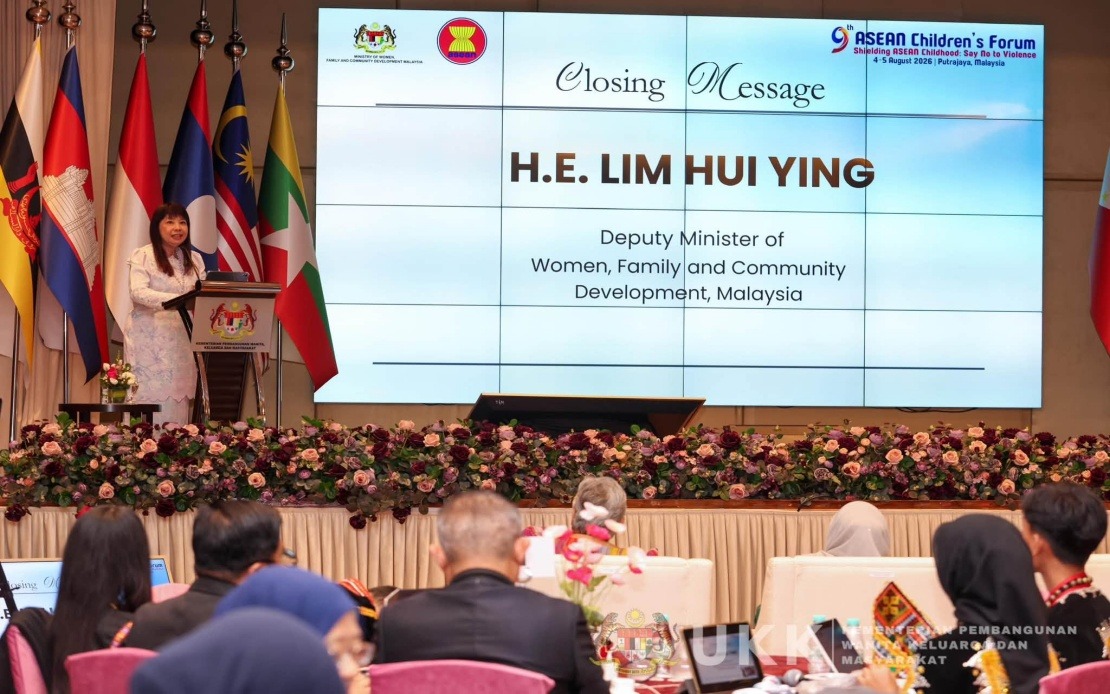
Child protection advocates across Southeast Asia are pushing ASEAN member states to take decisive legislative action following a regional forum that centred child voices in policy discussions. The 9th ASEAN Children's Forum, which concluded in Putrajaya on August 6, brought together young participants from across the bloc to address the multifaceted challenge of violence against children in its various forms—physical, emotional, psychological, and sexual. Their collective recommendations now form a blueprint for governmental and institutional reform that regional policymakers are being urged to seriously consider and act upon.
Deputy Women, Family and Community Development Minister Lim Hui Ying emphasised that the proposals emerging from the forum carry particular weight because they emanate directly from children's lived experiences rather than abstract policy considerations. She stressed that these recommendations warrant genuine engagement from decision-makers at both national and ASEAN sectoral levels, arguing that children's perspectives offer invaluable insight into the gaps and failures within existing protective frameworks. The minister's message underscores a broader shift towards child-centred policymaking, recognising that young people themselves are experts in understanding the vulnerabilities they face.
The forum's recommendations span four critical environments where children require protection: their homes, educational institutions, online spaces, and broader communities. This comprehensive approach acknowledges that threats to child safety operate across interconnected domains and that isolated interventions prove inadequate. Within the home setting, participants stressed the need for strengthened legal protections and improved reporting pathways that do not burden children with complex bureaucratic procedures. Schools emerged as another focal point, with particular emphasis on rigorous anti-bullying policies backed by enforcement mechanisms and support systems.
The digital dimension of child safety featured prominently in discussions, reflecting contemporary realities that traditional legislative frameworks have struggled to address. As online harassment, exploitation, and exposure to harmful content increasingly characterise childhood in Southeast Asia, participants advocated for targeted protections and age-appropriate digital literacy measures. Community-level recommendations focused on establishing safer neighbourhoods through collective responsibility and accessible support services that extend beyond formal institutions.
Among the concrete policy proposals advanced during the forum was the expansion of child-friendly reporting channels. Current systems often require children to navigate complex legal and institutional processes, effectively deterring them from coming forward. The forum participants advocated for simplified, accessible mechanisms—potentially including digital platforms, school-based contacts, or community liaisons—that reduce barriers to disclosure and ensure that children feel genuinely heard and protected when they report abuse or bullying.
Psychosocial support services emerged as another critical gap. The forum recognised that addressing violence requires not merely punitive measures against perpetrators but comprehensive healing and recovery support for affected children. Participants urged governments to broaden mental health and counselling services, making them universally accessible rather than limited to privileged populations. This focus on comprehensive support reflects understanding that trauma manifests across psychological, emotional, and social dimensions requiring integrated interventions.
The recommendations also highlight the importance of inclusive services for vulnerable children—those from marginalised communities, living in poverty, experiencing disability, or other circumstances that compound their exposure to abuse. This perspective ensures that child protection frameworks do not inadvertently exclude those most at risk while benefiting only those with greater access to institutional support. Such inclusivity requires deliberate design and sustained resource allocation.
Rather than positioning children as passive recipients of protection, the forum fostered active child agency and peer responsibility. Participants pledged mutual support and committed to fostering cultures of care and respect within their own peer networks. This recognition of children's capacity to shape their own safety environments offers a counterpoint to exclusively top-down protection models. When children themselves become architects of safer communities, sustainability and cultural embedding of protective norms improve significantly.
The forum also underscored the necessity of multi-stakeholder engagement. Governments cannot solely bear responsibility for child protection; parents, teachers, private sector entities, civil society organisations, media outlets, and peer networks all play constitutive roles. This distributed accountability model recognises that violence prevention requires cultural shifts across society rather than merely legislative mandates. Media, for instance, influences how societies conceptualise childhood and violence; private companies shape online spaces where increasingly significant portions of childhood unfold; educators occupy positions of trust and proximity to children.
For Malaysia specifically, these regional recommendations carry particular relevance as the nation continues developing its own child protection architecture. The country has invested in legislative frameworks and institutional bodies, yet implementation gaps and coordination challenges persist. Regional peer learning through ASEAN mechanisms offers opportunities to benchmark progress, learn from neighbours' experiences, and collectively address transnational threats including trafficking and online exploitation that cross borders with ease.
The hybrid format of the forum, combining in-person and virtual participation, itself represents progress in making regional mechanisms genuinely inclusive. Children from diverse geographical and socioeconomic backgrounds could participate, bringing varied perspectives that richer dialogues than those restricted to capital-based participants. This accessibility model should become standard across regional processes addressing child welfare.
Moving forward, the challenge lies in translating these recommendations into sustained governmental action. Regional frameworks succeed when member states commit resources and political capital to implementation. ASEAN's consensus-based operating model means progress depends on simultaneous movement across multiple countries rather than rapid, isolated reforms. Building momentum requires ongoing dialogue, knowledge sharing, and mutual accountability among member states alongside continued child participation in policy development processes.
The forum's emphasis on child protection as a shared ASEAN responsibility reflects recognition that Southeast Asian children face common challenges—economic inequality, rapid digital change, transnational threats—requiring coordinated responses. By anchoring policy conversations in children's own insights and recommendations, the region positions itself to develop more effective, culturally resonant, and genuinely protective frameworks that advance the best interests of young people across the bloc.

