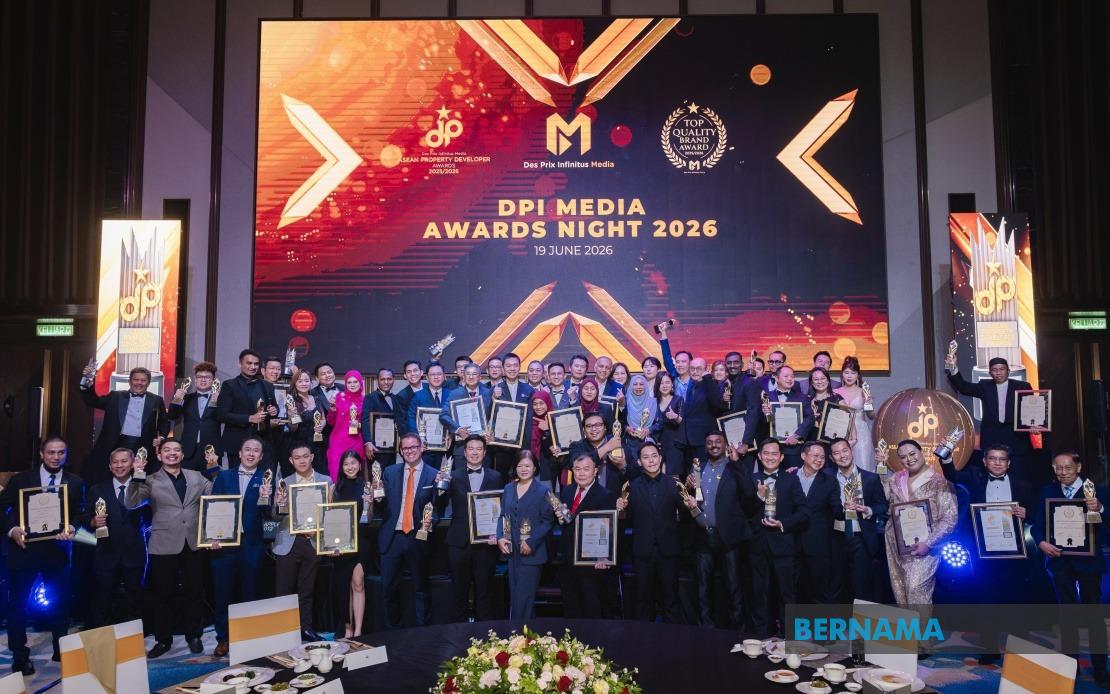
The ASEAN region's property development and business sectors gained significant recognition on June 19 when Des Prix Infinitus Media hosted a gala ceremony in Kuala Lumpur, honouring more than 70 outstanding companies and industry figures through the ASEAN Property Developers Awards 2025/2026 and Top Quality Brand Awards 2025/2026. The event, presided over by Deputy Minister in the Prime Minister's Department (Federal Territories) Datuk Lo Su Fui alongside Des Prix Infinitus Media Managing Director Hagenz Choo, underscored the growing importance of recognising excellence across the rapidly evolving Southeast Asian business landscape.
The awards programme reflects a broader shift in how regional industries evaluate and celebrate success. Rather than focusing solely on financial metrics, the ceremony emphasised the role of responsible development, innovation, and commitment to environmental and social governance standards. This evolution in award criteria mirrors global trends where businesses are increasingly expected to balance profitability with societal responsibility and environmental stewardship. For Malaysia and the wider ASEAN community, such recognition serves as both validation and motivation for companies pursuing sustainable growth models.
In his remarks, Datuk Lo Su Fui highlighted the transformative impact of award-winning property developers across the region. He noted that their contributions extend beyond construction and land development, encompassing broader efforts to reshape urban environments and bolster economic resilience across Southeast Asia. The emphasis on sustainable urban development reflects ASEAN's alignment with international development goals, particularly the creation of inclusive, safe, resilient, and environmentally conscious city spaces. This positioning is particularly relevant for Malaysia, where cities like Kuala Lumpur are undergoing significant transformation as part of broader national development strategies.
The deputy minister also drew attention to Malaysia's own commitments toward carbon neutrality and responsible urban planning. His remarks positioned Kuala Lumpur as a model for how ASEAN cities can balance rapid economic growth with environmental responsibility. This framing is significant because it signals government endorsement of businesses that integrate sustainability into their core operations—a message that carries weight for developers and corporations operating across the region who may be evaluating their own environmental commitments and competitive positioning.
The Top Quality Brand Awards component of the ceremony recognised businesses that have cultivated strong consumer trust and loyalty through consistent quality, adaptability, and customer-focused strategies. According to Choo, these honoured brands represent organisations that understand the importance of evolution in response to changing market dynamics and consumer expectations. The increasing emphasis on Environmental, Social, and Governance (ESG) values among award recipients suggests that Malaysian and regional businesses are increasingly incorporating sustainability and ethical practices into their long-term strategic planning, rather than treating such measures as peripheral corporate responsibility initiatives.
Des Prix Infinitus Media's approach to the awards programme positions the organisation as more than a conventional publisher. Choo articulated the company's role as a curator of success stories and a convener of industry dialogue. This positioning is relevant for understanding how business excellence gets defined and communicated across Southeast Asia. By identifying and amplifying examples of industry leadership, such media platforms influence how peers evaluate their own performance and strategic priorities. For Malaysian executives and entrepreneurs, participation in such award programmes offers both recognition and a benchmark against regional competitors.
The property development sector's particular prominence in this year's awards reflects the centrality of real estate to ASEAN's economic development and urbanisation trajectory. Developers awarded recognition reportedly understand that their work encompasses far more than the physical construction of buildings and infrastructure. Instead, the award criteria acknowledge property development's role in shaping community wellbeing, economic opportunity, and long-term urban liveability. This conceptual shift matters for how Malaysian property companies position themselves in an increasingly competitive regional market where buyers and investors seek evidence of broader social and environmental responsibility.
The ceremony drew participants from diverse sectors across ASEAN, demonstrating the regional breadth of the awards programme and the interconnected nature of business excellence across different industries. Property developers, manufacturing firms, hospitality companies, and service providers all found representation among the honoured organisations. This cross-sectoral participation highlights how principles of excellence—innovation, customer focus, operational efficiency, and responsible governance—transcend industry boundaries and resonate across the ASEAN business community.
For Malaysian stakeholders, the recognition extended to local companies and the hosting of such a prestigious regional event in Kuala Lumpur reinforces the country's standing as a business hub within Southeast Asia. It also underscores the importance of Malaysia's participation in regional economic networks and award recognition systems that help establish credibility, facilitate business networking, and set performance benchmarks. Companies that receive such recognition gain competitive advantages in terms of brand positioning, investor confidence, and access to regional business networks.
The growing influence of ASEAN as a centre for business excellence, evident from the scale and quality of this awards ceremony, reflects the region's economic dynamism and the increasing sophistication of its business environment. As Southeast Asian economies integrate more deeply and competition intensifies, recognition programmes that identify and celebrate excellence become valuable tools for companies seeking to differentiate themselves. They also create reference points for other businesses considering their own development strategies and competitive positioning.
Des Prix Infinitus Media's continued operation of such awards programmes signals sustained investment in business recognition and industry dialogue within the ASEAN region. The company's Malaysian base positions it well to understand regional business dynamics while maintaining independence and credibility. For companies considering award participation in future cycles, the breadth and prestige of this year's ceremony—with over 70 honours distributed—indicates these are substantive recognition programmes attracting genuine industry participation rather than purely commercial ventures.
The emphasis on storytelling and credibility creation articulated by programme organisers suggests that winning recognition carries value beyond the awards ceremony itself. Honoured companies gain legitimate platforms for communicating their achievements to investors, customers, employees, and peers. This amplification mechanism helps translate operational excellence into competitive advantage, making award participation strategically relevant for Malaysian and regional businesses seeking to enhance their market positioning and stakeholder confidence.

