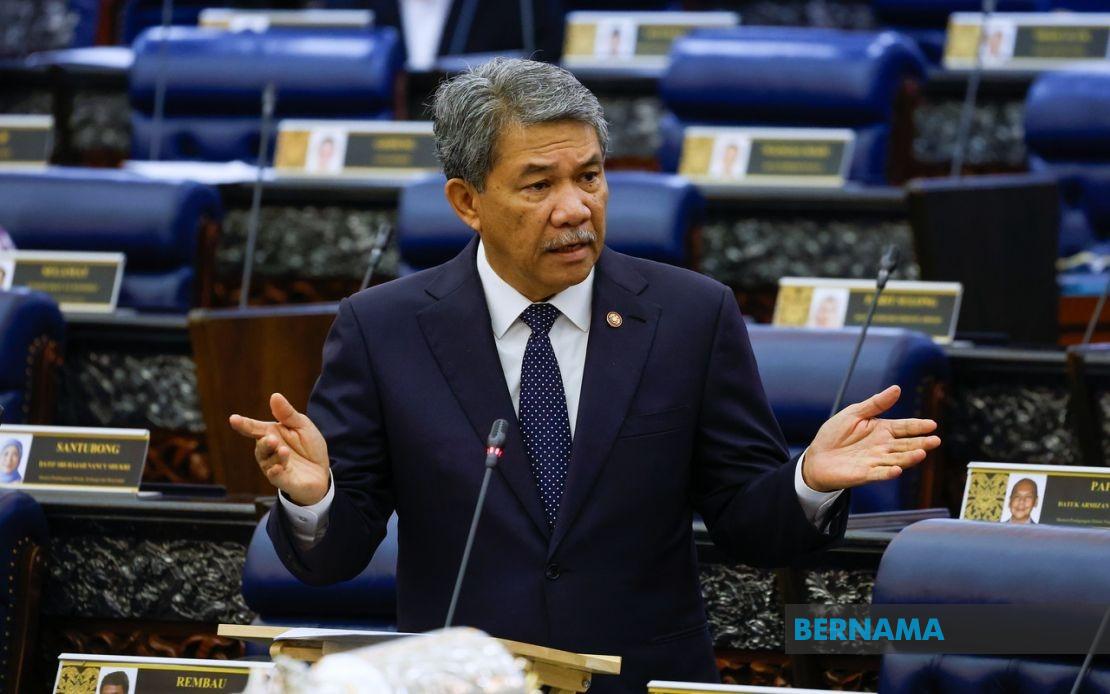
Malaysia's Foreign Minister Datuk Seri Mohamad Hasan has signalled that ASEAN is actively reconsidering its diplomatic playbook on Myanmar, moving beyond the existing Five-Point Consensus framework that has stalled over the past two years. Speaking in Parliament on June 25, Mohamad acknowledged that despite some marginal improvements in Myanmar's security situation, the country remains far from achieving the milestones outlined by regional leaders under the 5PC, which continues to be ASEAN's primary tool for steering the crisis toward resolution.
The shift in approach reflects growing frustration within ASEAN capitals at the limited traction the consensus has achieved since its adoption. At the 48th ASEAN Summit held in Cebu, Philippines on May 8, heads of state decided that foreign ministers should undertake a series of informal diplomatic missions to assess the ground situation in Myanmar and chart a realistic path forward. This delegation of responsibility to foreign ministers represents a tactical adjustment, allowing for quieter, more flexible negotiations without the formality and constraints that accompany high-level summitry. Mohamad stressed, however, that any fundamental alterations to the framework would require explicit approval from ASEAN leaders themselves, ensuring the bloc maintains strategic unity on this sensitive issue.
A critical component of Malaysia's current push involves extending Myanmar's existing ceasefire arrangement, which is scheduled to terminate at the end of July. Mohamad outlined Malaysia's proposal that this six-month pause in hostilities be expanded into a second phase, designed to facilitate more structured and inclusive peace discussions. By extending the ceasefire, ASEAN hopes to create breathing room for substantive talks while simultaneously demonstrating to Myanmar's fractured political landscape that negotiation remains preferable to renewed conflict. The proposal also carries an implicit message to Myanmar's military junta that regional support is contingent on genuine movement toward dialogue.
Alongside the ceasefire extension, Malaysia has pressed Myanmar to submit a detailed roadmap outlining how it intends to sustain and advance the peace process. This roadmap would need to address the critical question of inclusive dialogue, requiring Myanmar's government to engage meaningfully with all significant stakeholders—a prospect that has proven difficult given the entrenched positions of the junta, the civilian-led National Unity Government, the People's Defence Force, and various ethnic armed organisations. The demand for clarity on these political pathways reflects ASEAN's recognition that open-ended ceasefire agreements, without a defined end goal, often merely freeze conflicts rather than resolve them.
The geopolitical anxiety underlying ASEAN's revised approach is palpable. Mohamad explicitly warned against allowing Myanmar to drift into diplomatic isolation or marginalisation, cautioning that such an outcome would create fertile ground for external powers to extend their influence over Myanmar's internal affairs. This concern is not hypothetical; China and India have long-standing interests in Myanmar, and major global powers are acutely interested in the outcome of any Myanmar settlement. By maintaining Myanmar within ASEAN's orbit and preventing a power vacuum, the bloc aims to shield the resolution process from being hijacked by competing external agendas that could entrench the conflict further and destabilise Southeast Asia more broadly.
Malaysia's diplomatic strategy encompasses engagement with the full spectrum of Myanmar actors, including the military government, the National Unity Government representing deposed civilian leaders, the People's Defence Force—the armed resistance movement—and the complex network of ethnic armed organisations that control substantial territories along Myanmar's borders. This comprehensive outreach, while labour-intensive, reflects an understanding that sustainable peace cannot be imposed by ASEAN but must emerge from a negotiated settlement that addresses the grievances and security concerns of multiple parties. Malaysia's willingness to communicate with all sides positions it as a bridge-builder within ASEAN, a role particularly important given that some member states maintain closer relationships with particular factions.
The parliamentary exchange between Mohamad and opposition MP William Leong Jee Keen illuminates the mounting domestic pressure on Malaysia to demonstrate tangible progress on Myanmar. Leong's supplementary question directly challenged whether ASEAN's existing diplomatic framework remains adequate given Myanmar's repeated failure to comply with the 5PC's core commitments. Mohamad's response—acknowledging the need for exploration of new approaches while affirming the framework's continued relevance—attempts to navigate between two imperatives: reassuring critics that Malaysia recognises the status quo is unsustainable, while avoiding any suggestion that ASEAN's collective position is fracturing.
The practical challenge facing foreign ministers will be considerable. Myanmar's military leadership, emboldened by recent battlefield successes against opposition forces, may have limited incentive to rush toward the kind of comprehensive, inclusive dialogue that ASEAN is now proposing. Conversely, the fragmented opposition—split between the National Unity Government's political legitimacy claims and the People's Defence Force's military capabilities—struggles to present a unified negotiating position. Ethnic armed organisations, some of which have reached tacit accommodations with the junta while others remain hostile, add further complexity. Any genuine ceasefire extension and subsequent dialogue framework must somehow accommodate these cross-cutting tensions.
Regionally, Malaysia's push for Myanmar engagement carries implications for the entire Southeast Asian bloc. How ASEAN manages the Myanmar crisis will shape perceptions of the organisation's coherence and effectiveness at a time when regional unity is increasingly strained by divergent national interests and great power competition. A successful resolution would validate ASEAN's non-interference principle and consensus-based approach, while further deterioration could expose the limits of ASEAN diplomacy and invite greater international intervention. Malaysia, as the current chair of various ASEAN mechanisms, has positioned itself as a key architect of whatever revised strategy emerges.
Looking ahead, the success of ASEAN's recalibrated approach will depend on several factors: Myanmar's willingness to genuinely extend the ceasefire and commit to defined political objectives; the ability of opposition groups to coordinate sufficiently to present coherent demands; and sustained solidarity among ASEAN members themselves despite their varying bilateral relationships with Myanmar. The next six months will be critical. As the original ceasefire winds down, ASEAN's foreign ministers must demonstrate that their informal engagements can translate into tangible movement toward the comprehensive, inclusive dialogue that has remained elusive throughout Myanmar's current crisis.

