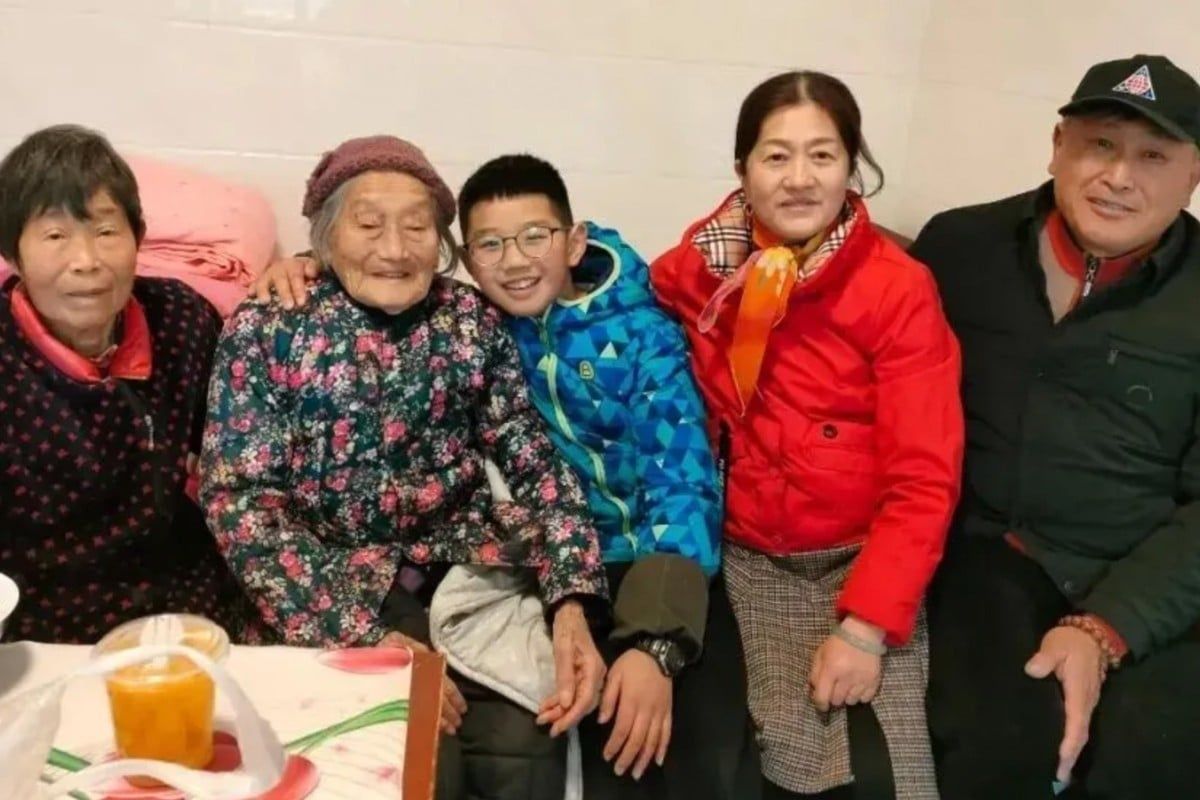
Wang Gaiying, a 111-year-old grandmother residing in Rugao, Jiangsu province in eastern China, has become an internet sensation by revealing that her extraordinary lifespan stems not from exotic remedies or expensive treatments, but from mundane daily practices woven into the fabric of ordinary life. Her story resonates across social media platforms in China and beyond, offering accessible wisdom at a time when longevity research typically focuses on pharmaceutical interventions or cutting-edge medical technologies. Wang's case demonstrates that sometimes the most profound health benefits emerge from consistency and mindfulness applied to routine activities that most people take for granted.
Rugao has earned recognition as one of China's premier "longevity capitals," a distinction supported by demographic data showing exceptional concentrations of people living into their second century. As of February this year, the municipality was home to 672 centenarians, according to the Jianghai Evening News—a figure that places it among the world's most remarkable longevity hotspots. This regional phenomenon has attracted scholarly attention, prompting researchers from the Chinese Academy of Sciences' Institute of Soil Science in Nanjing to investigate the underlying causes. Their findings point toward the area's geologically distinctive characteristics: the mineral-rich soil produces agricultural crops abundant in trace elements that accumulate in the human body over decades, potentially conferring protective health benefits that conventional nutritional science is only beginning to understand.
Wang's household structure itself reflects traditional Chinese family values while providing practical advantages for her longevity journey. She lives in a five-generation arrangement with her grandson, now 60 years old, creating a multigenerational support network that combines emotional connection with practical caregiving. This domestic architecture contrasts sharply with the nuclear family model prevalent in developed nations, where elderly individuals often experience social isolation linked to accelerated cognitive decline and premature mortality. The presence of younger family members who can monitor her wellbeing while respecting her agency as an active household member appears to have contributed meaningfully to her physical and mental vitality.
Perhaps most striking is Wang's approach to physical activity, which reframes housework as legitimate exercise rather than viewing it as a burden to be minimized. Even in her early hundreds, Wang actively participated in agricultural work, harvesting peanuts and watermelons alongside family members in Rugao's productive fields. Although advancing age has necessarily slowed her pace, she maintains this work ethic at a modified intensity, continuing to engage in light domestic tasks such as wiping tables and folding clothes. When family members encourage her to rest, Wang articulates a coherent philosophy: she insists that maintaining constant motion preserves muscular function and cardiovascular efficiency, preventing the rapid decline that often characterizes sedentary aging. This commitment to functional movement through purposeful activity rather than formal exercise regimens may explain why she remains physically capable despite her advanced years.
Wang's dietary approach emphasizes balance and variety rather than restriction or excessive consumption. Her family deliberately rotates different staple foods—dumplings, steamed buns, and other traditional preparations—ensuring that monotony does not lead to nutritional gaps or diminished appetite. Fish holds particular importance in her diet, valued simultaneously for its nutritional profile and its tender texture that accommodates the changing digestive capabilities of advanced age. Her philosophy rejects the impulse toward indulgence, consciously practicing portion control without adopting an ascetic or punitive relationship with food. This measured approach to nutrition appears more sustainable than extreme diets, combining traditional wisdom with practical adaptation to the realities of aging physiology.
Wang's drinking habits reveal how family members can modify health-related behaviors based on evolving circumstances. Social media personality Yaoqing Ge, who documented a visit with Wang in December, noted that the centenarian once enjoyed rice soaked in baijiu, the potent traditional Chinese spirit. Approximately five years ago, her family made the deliberate decision to discontinue this practice, recognizing that alcohol consumption at advanced age posed concrete risks—specifically, impaired balance leading to potentially catastrophic falls and cognitive impairment. This represents a thoughtful intervention where caregivers balanced respect for Wang's autonomy against practical hazard mitigation, a delicate calibration that contributed to her continued safety and independence.
Beyond the physical dimensions of longevity, Wang attributes her extended life to what might be termed emotional hygiene: a daily commitment to performing small acts of kindness toward family members and friends. Whether through offering genuine compliments to loved ones or sending brief greetings to elderly acquaintances, she embeds prosocial behavior into her routine. Psychological research increasingly confirms that such practices correlate with reduced inflammation markers and improved cardiovascular outcomes, suggesting that kindness operates through measurable biological pathways. Wang's personal discipline regarding emotional processing further amplifies these benefits: she consciously refuses to carry grievances into sleep, instead treating rest as an opportunity for cognitive reset. By her own account, a restorative night of sleep frequently reveals that yesterday's frustrations were disproportionate to actual circumstances, allowing her to release resentment and maintain psychological equilibrium.
Wang's sleep schedule demonstrates the kind of rigorous consistency that characterizes her overall approach to living. She maintains a disciplined routine of sleeping from 7 p.m. through 7 a.m.—a full twelve-hour period that aligns with traditional Chinese medicine principles emphasizing restorative sleep—supplemented by one or two daytime naps. This generous allocation of sleep time contrasts with contemporary productivity culture that often valorizes sleep deprivation as evidence of dedication and importance. For Wang, adequate sleep functions as foundational infrastructure supporting all other health practices: without sufficient rest, the body cannot repair cellular damage, consolidate memories, or regulate metabolic processes essential to longevity.
The social media response to Wang's story reveals how longevity narratives resonate differently across cultural contexts. One observer expressed aspiration: "Grandma Wang is truly blessed. I hope my parents can live as long as she has." Another commentator offered a more nuanced analysis, suggesting that Wang's longevity represents an intersection of genetic predisposition, favorable environmental factors, and deliberate behavioral choices. This latter perspective—acknowledging the complex interplay between nature and nurture—provides a more accurate framework than either pure genetics determinism or absolute environmental causation. For Malaysian and Southeast Asian readers, Wang's example carries particular relevance: many communities in the region share similar traditional family structures, agricultural heritage, and philosophical frameworks regarding balance and moderation that undergird her approach.
The implications of Wang's longevity extend beyond individual biography into broader questions about aging policy and social organization. Her maintained self-reliance and participation in household work challenges deficit-based models of aging that assume inevitable decline and dependency. Instead, Wang demonstrates that advanced age need not mean withdrawal from meaningful contribution to family life. Her integration within a multigenerational household, where her presence carries both symbolic and practical significance, contrasts with institutional models in some developed nations that segregate the elderly into specialized facilities. Whether one attributes her remarkable health primarily to Rugao's mineral-rich soil, her consistent behavioral practices, her family structure, her emotional resilience, or some synergistic combination remains an open question. Yet what emerges clearly is that Wang has constructed a life architecture—physical, nutritional, emotional, and social—that optimizes human flourishing within the natural constraints of advanced age.

