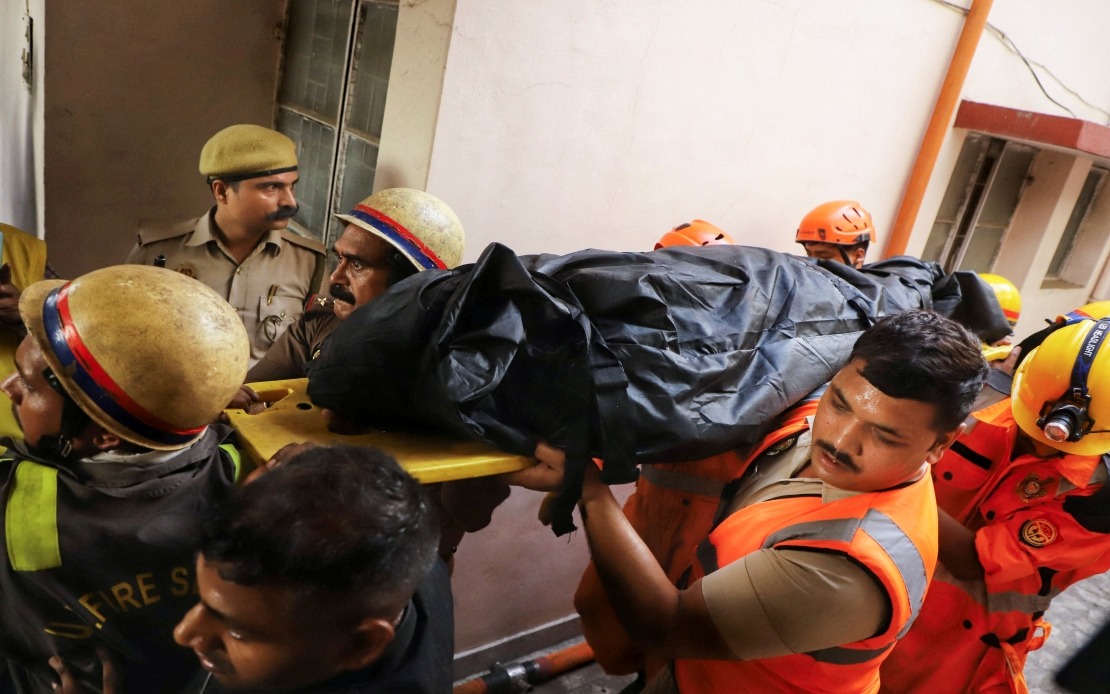
A catastrophic fire has claimed the lives of at least 15 people, predominantly young students, in a three-storey commercial building located in the Aliganj district of Lucknow, the capital of Uttar Pradesh state. The blaze swept through the structure on Monday, leaving a trail of devastation in what witnesses described as a harrowing sequence of events that unfolded within minutes. The building housed an animation training centre alongside various retail establishments, creating a complex layout that may have hindered evacuation efforts during the emergency.
The scale of the tragedy became apparent as emergency responders arrived at the scene. More than 20 victims were transported to the trauma centre of King George's Medical University (KGMU) for treatment, with authorities confirming that five injured individuals were admitted for ongoing medical care. The remainder—15 individuals—were pronounced dead upon arrival at the hospital, underlining the ferocity of the fire and the limited window for escape available to those trapped inside the building.
Harrowing scenes unfolded as the fire consumed the structure and thick smoke billowed through the corridors. Social media footage and accounts from eyewitnesses documented desperate moments in which young occupants, overcome by smoke and flames, resorted to jumping from windows to escape the inferno. Bystanders on the ground frantically attempted to summon emergency services, though the response timeline and coordination between police and fire authorities remain subjects of investigation. The visual documentation of these moments has sparked public concern about emergency response protocols in the state capital.
Uttar Pradesh Chief Minister Yogi Adityanath issued a statement acknowledging the tragedy, expressing condolences to bereaved families while describing the incident as "extremely tragic and heart-rending." His remarks, delivered while addressing a public rally in another city, reflected the gravity with which state leadership regarded the disaster, though immediate policy responses or announcements regarding fire safety measures were not disclosed at that time.
This catastrophe arrives in the context of a broader pattern of fire incidents across India's major urban centres. Just earlier in June, Delhi experienced a devastating hotel fire that claimed at least 22 lives, many of them foreign medical tourists seeking treatment in the capital. The Delhi incident raised significant questions about compliance with fire safety codes and the vulnerability of older hotel structures to rapid fire spread. The proximity of these two major incidents within the same month has intensified scrutiny on building safety standards across northern India's commercial establishments.
The Lucknow fire specifically underscores risks associated with mixed-use commercial buildings that combine educational and retail functions. Animation training centres, which have proliferated across Indian cities as the animation and digital media industries expand, often operate from rented spaces with minimal structural modifications. When such facilities occupy multi-storey buildings with multiple independent businesses, the absence of integrated fire management systems and unified evacuation protocols creates compounding hazards. The presence of students—typically younger individuals less familiar with building layouts—further exacerbates vulnerability during emergencies.
For Southeast Asian nations including Malaysia, the Lucknow incident carries relevant implications regarding building code enforcement and occupancy regulations. Similar mixed-use commercial buildings house animation studios, digital agencies, and training centres across Malaysian cities including Kuala Lumpur, Petaling Jaya, and Cyberjaya. These facilities often operate with minimal fire safety infrastructure compared to dedicated office towers, and regulatory oversight remains inconsistent across states. The scale of casualties in Lucknow—largely preventable through proper exit systems, fire detection equipment, and staff training—provides a cautionary reference point.
Investigations into the Lucknow incident will likely focus on the building's structural compliance with fire safety regulations, functionality of sprinkler systems if any existed, adequacy of emergency exits, and adherence to occupancy limits for each floor. Preliminary assessments will determine whether the facility held current fire safety certificates and whether inspection regimes had been conducted. These details remain critical for understanding systemic failures that allowed a localized fire to result in mass fatalities.
The incident has prompted renewed calls from safety advocates and public health researchers for stricter enforcement of fire code regulations across Indian commercial establishments. Building owners operating older structures face particular pressure to retrofit safety systems, though the financial costs often result in non-compliance. State governments across India have been urged to establish dedicated task forces for auditing mixed-use commercial buildings and imposing penalties for safety violations.
For regional observers, the Lucknow fire reinforces the importance of institutional capacity in fire prevention and emergency response. Nations across South and Southeast Asia continue developing frameworks for building safety oversight, yet implementation gaps persist between regulatory requirements and ground-level compliance. Investment in fire detection technology, staff training programmes, and clear evacuation procedures represents a relatively modest cost compared to the human toll of inadequate safety measures.
The tragedy also highlights the vulnerability of young people in professional training environments. Animation centres, coaching institutes, and similar facilities frequently employ informal employment practices and minimal occupational safety protocols. Students and trainees operating in these settings often lack awareness of emergency procedures specific to their venues, placing them at heightened risk during sudden crises.
As investigations proceed, the Lucknow fire will likely influence policy discussions within Uttar Pradesh and potentially across India regarding mandatory safety audits, enforcement mechanisms, and accountability measures for building owners. The incident serves as a stark reminder that commercial development must be matched by proportionate investment in public safety infrastructure and rigorous regulatory oversight to prevent future tragedies of similar magnitude.

