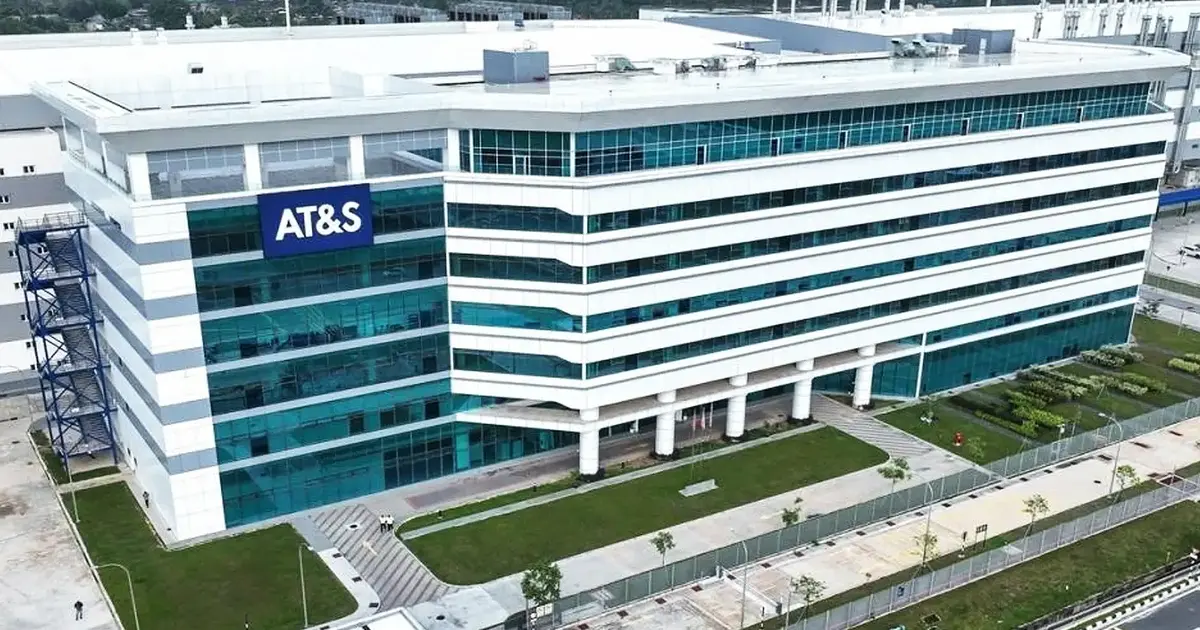
Austria-based electronics manufacturer AT&S has committed RM9.4 billion to establish manufacturing operations in Kulim, a development that Prime Minister Anwar Ibrahim has hailed as evidence of strengthening international investor sentiment toward Malaysia. The substantial investment underscores how the country's reputation for stable governance continues to attract high-value semiconductor ventures at a time when global supply chains are undergoing significant reconfiguration.
Anwar framed the Austrian company's decision within a broader narrative of renewed economic competitiveness and institutional credibility. His remarks highlight how investor decisions increasingly hinge on perceptions of regulatory transparency and rule of law—factors that Malaysian policymakers have prioritised since 2022. The timing of AT&S's commitment coincides with Malaysia's intensified push to position itself as a regional hub for advanced electronics manufacturing, particularly as tensions in cross-strait semiconductor supply chains encourage multinational firms to diversify geographic exposure.
AT&S, a Vienna-headquartered firm specialising in printed circuit boards and electronics manufacturing services, operates across multiple continents and serves major technology corporations. The Kulim facility will represent a substantial regional footprint for the company and signals confidence in Malaysia's technical workforce, existing industrial infrastructure, and proximity to downstream markets across Southeast Asia. Kulim has emerged as a preferred location for semiconductor and electronics investments, benefiting from established industrial parks, supporting logistics networks, and proximity to port facilities that facilitate international trade.
The investment's magnitude merits attention within Malaysia's broader manufacturing strategy. The RM9.4 billion commitment positions AT&S among the more significant foreign direct investments announced in the semiconductor space in recent years. This scale demonstrates that Malaysia remains competitive against alternative locations in the region, including Vietnam, Thailand, and Indonesia, all of which have pursued aggressive policies to attract similar investments. The Austrian company's decision suggests confidence that Malaysia can offer value propositions that rival competing jurisdictions, whether through skilled labour availability, regulatory predictability, or established supply chain networks.
International investor sentiment toward Malaysia has experienced fluctuations, shaped by political transitions, policy uncertainty, and global economic shifts. Anwar's emphasis on governance improvements addresses historical concerns about consistency in regulatory application and institutional independence. By highlighting AT&S's confidence in Malaysia's institutional framework, the Prime Minister is signalling to other prospective investors that recent governance reforms have materially altered the country's investment profile. This messaging carries particular weight in sectors like semiconductors, where manufacturers require stable long-term visibility to justify facility construction and supply chain commitments.
The semiconductor industry holds strategic importance for Malaysia's economic diversification agenda. As manufacturing bases mature and labour costs rise in established economies, Southeast Asia has become increasingly attractive for chipmaking, assembly, and testing operations. Malaysia's established presence in semiconductor assembly and testing provides complementary advantages for firms like AT&S that offer services across the manufacturing spectrum. The Kulim investment will likely generate employment across multiple skill levels while fostering downstream growth among suppliers and service providers.
Geopolitical considerations also underpin the timing and significance of this investment. Tensions surrounding semiconductor supply chains, particularly regarding Taiwan's centrality to advanced chip production, have motivated multinational companies to establish geographically dispersed manufacturing footprints. Malaysia's position as a politically stable, ASEAN-integrated economy offers geographic and diplomatic advantages compared to more contentious regional locations. For Austrian and European firms navigating complex international trade relationships, Malaysia provides access to growing Southeast Asian markets while maintaining stable relationships with major trading partners.
The Kulim facility will represent AT&S's commitment to the Malaysian market specifically and the broader ASEAN region's manufacturing ecosystem. Successful execution of this facility could encourage subsequent expansions by AT&S and demonstrate to competing electronics manufacturers that Malaysia offers competitive advantages sufficient to justify major capital commitments. The multiplier effects—through employment, supplier development, and technology transfer—often exceed the initial investment figures, as incoming multinational firms establish procurement relationships and workforce development programmes.
Anwar's characterisation of this investment as validation of Malaysia's governance represents an important framing for the administration. Beyond the immediate economic benefits, the investment serves a communicative function, signalling to international business communities that Malaysia has stabilised its institutional environment and established predictable rules for commercial operation. This messaging becomes particularly significant as Malaysia competes with other emerging market destinations for capital that might otherwise flow toward established manufacturing bases in South Korea, Taiwan, or Singapore.
The investment also reflects AT&S's strategic positioning within global electronics supply chains. As international companies reassess geographic concentration risks, firms offering distributed manufacturing capabilities become increasingly valuable. AT&S's expansion into Malaysia enhances its ability to serve clients across Asia-Pacific while offering alternatives to over-reliance on any single production location. For Malaysian policymakers, attracting companies pursuing this multi-geography strategy represents higher-quality foreign direct investment, as it typically involves deeper local integration and longer-term commitment.
Looking ahead, AT&S's Kulim investment may catalyse additional announcements from comparable electronics manufacturers evaluating regional expansion options. Successful projects frequently trigger competitive responses from rival firms unwilling to cede market position to competitors establishing local presence. The demonstration effect of major investments often matters as much as the direct economic contribution, as subsequent waves of investor interest can rapidly follow initial high-profile commitments from credible multinational corporations.