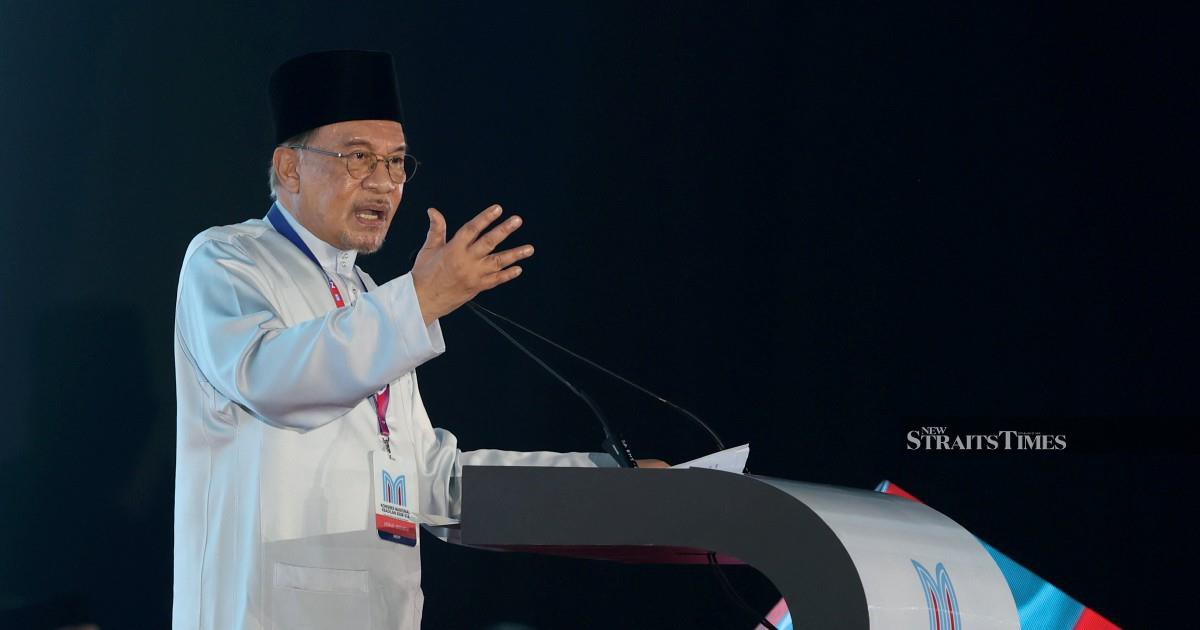
Prime Minister Datuk Seri Anwar Ibrahim has confirmed that the government intends to table its proposal to repeal the Universities and University Colleges Act 1971 at the Cabinet meeting scheduled for Wednesday, signalling that the controversial piece of legislation may finally be on track for formal consideration and potential reform.
The AUKU, enacted over five decades ago, has long been a focal point of contention in Malaysian higher education policy. The legislation grants university administrators significant authority to regulate student conduct, including restrictions on political activity, academic freedom, and campus assembly rights. Critics have argued that the act, while intended to maintain institutional order, has effectively limited student expression and democratic participation within tertiary institutions.
Anwar's announcement from Ayer Keroh represents tangible movement on a matter that has dominated discussions among student advocates, civil society organisations, and education reformers throughout the country. The promised Cabinet tabling suggests that the government has completed preliminary consultations and departmental coordination necessary to advance the proposal beyond preliminary advocacy stages into the formal legislative process.
The push to abolish AUKU reflects broader debates about governance and institutional autonomy within Malaysian universities. Supporters of reform emphasise that contemporary tertiary education requires environments where intellectual discourse and student engagement can flourish without excessive governmental oversight. They contend that restrictive policies undermine Malaysia's competitiveness in attracting international talent and limit the development of critical thinking skills essential for knowledge economy participation.
Conversely, university leadership and some government quarters have historically expressed concerns about the institutional stability implications of less structured student organising. However, evolving perspectives across different stakeholder groups suggest growing consensus that the 1971 framework requires modernisation to reflect contemporary democratic principles and international best practices in higher education governance.
The timing of this Cabinet presentation carries significance beyond the immediate legislative agenda. Education remains a priority portfolio under Anwar's administration, with the Prime Minister personally championing various reform initiatives aimed at strengthening Malaysia's tertiary education competitiveness regionally and globally. The move to progress AUKU abolition demonstrates commitment to this agenda despite competing policy priorities and competing interest groups.
Potential implications of AUKU repeal would extend across multiple dimensions of university life. Student organisations would likely gain expanded capacity for political and civic engagement, potentially reshaping campus dynamics and student-institution relationships. Faculty members might experience enhanced academic freedom protections, while university management would need to develop alternative regulatory frameworks emphasising consensus and dialogue rather than hierarchical restrictions.
The legislative path forward remains contingent on Cabinet approval, followed by parliamentary consideration and debate. Different political perspectives within the coalition government may surface during these formal stages, requiring negotiation and consensus-building. Opposition parties have maintained longstanding positions on this matter, adding another dimension to parliamentary discussion when the proposal reaches the legislature.
Implementation of AUKU abolition would require substantial institutional preparation. Universities would need to establish new student conduct codes, develop governance structures accommodating expanded student input, and train administrative personnel in managing increased campus activism within frameworks emphasising engagement rather than prohibition. These transitions would unfold gradually across the tertiary education sector.
Regional context adds another consideration to Malaysia's AUKU reform debate. Several Southeast Asian universities operate under less restrictive regulatory frameworks, positioning them as potentially attractive alternatives for Malaysian students seeking unrestricted academic environments. Abolishing AUKU could enhance Malaysia's institutional positioning within the regional higher education marketplace and improve the country's international reputation regarding academic freedom.
The upcoming Cabinet decision will indicate whether the government possesses sufficient political will to advance this contentious reform despite potential institutional resistance and divergent stakeholder perspectives. Success at the Cabinet stage would represent the first crucial hurdle, with parliamentary passage and subsequent implementation presenting additional challenges requiring sustained political commitment.
Anwar's explicit confirmation of Wednesday's Cabinet tabling suggests the government has resolved internal differences sufficiently to move forward. This represents meaningful progress on a reform agenda that has circulated through Malaysian policy discussions for years without achieving formal legislative status, offering students, academics, and civil society advocates genuine grounds for anticipating substantive institutional change within Malaysia's higher education system.

