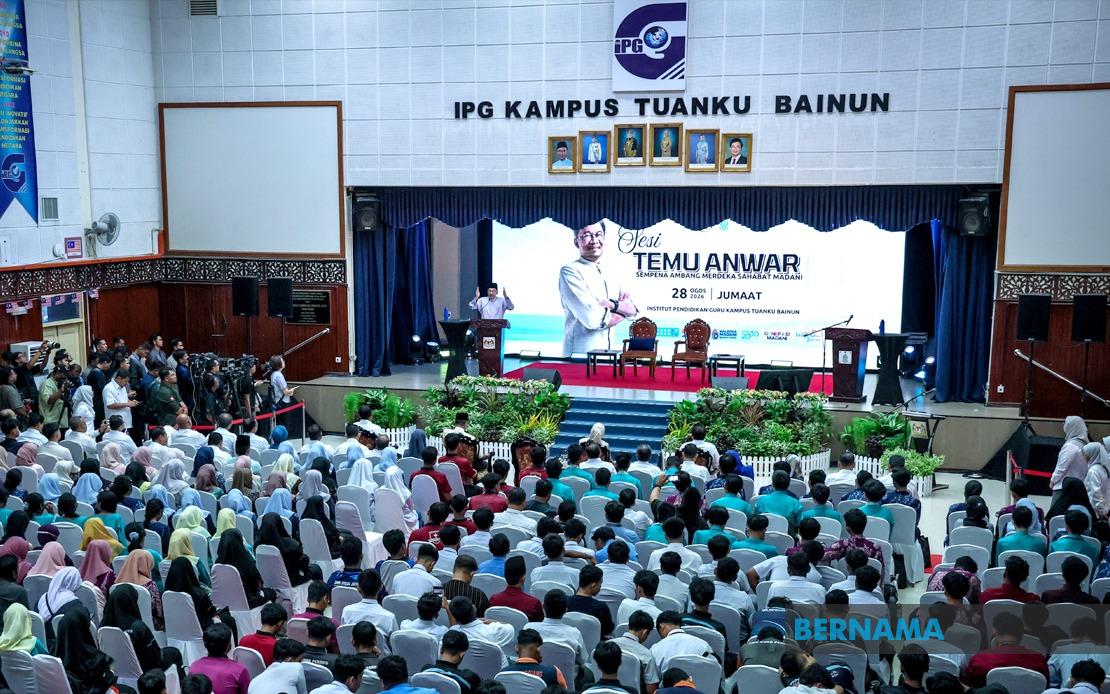
Prime Minister Datuk Seri Anwar Ibrahim has framed the repeal of the Universities and University Colleges Act 1971 (AUKU) as a landmark step toward empowering Malaysia's student population, contending that the move will dismantle decades-old restrictions on campus speech and foster a generation capable of rigorous, independent thought. Speaking at a Temu Anwar session in Bukit Mertajam on August 28, Anwar positioned the abolition as essential to creating intellectual space where young Malaysians can develop their voices without fear of institutional punishment.
The Prime Minister drew a sharp distinction between the legislative framework imposed in 1971 and the democratic entitlements of modern citizens. He emphasised that students at voting age—18 and above—possess the civic maturity to engage with controversial ideas and participate in political discourse, yet the AUKU had historically confined their ability to do so on campus. This generational framing suggests Anwar views the repeal not merely as a procedural change but as a philosophical realignment between Malaysia's governing structures and the expectations of a more educated, globally connected electorate.
Central to Anwar's argument is the assertion that open debate and the freedom to articulate minority viewpoints are prerequisite conditions for developing critical thinking. He advocated for creating environments where students are actively encouraged to advance their perspectives, even when those views prove ultimately flawed or contestable. This pedagogical stance reflects a belief that intellectual maturity emerges through exposure to disagreement and the necessity of defending one's positions against scrutiny, rather than through compliance with top-down restrictions.
The remarks were delivered in the company of Education Minister Datuk Seri Fadhlina Sidek, underscoring that the policy initiative enjoys backing from Malaysia's education portfolio. The joint appearance suggests coordination between the Prime Minister's office and the Education Ministry in messaging the transition toward greater campus freedoms, though implementation details and timelines remain subject to legislative process.
For Malaysian higher education institutions, the AUKU repeal carries substantial operational implications. Universities will need to recalibrate student conduct policies, grievance procedures, and administrative guidelines that currently derive legitimacy from the act's provisions. This transition presents both opportunities and administrative challenges: institutions must establish new frameworks that permit genuine intellectual expression while maintaining campus safety, security, and academic integrity standards.
The repeal resonates within a broader regional context of intensifying debates over student activism and campus governance in Southeast Asia. Malaysia's move toward greater student speech protections positions the country alongside regional peers seeking to balance institutional stability with democratic participation. However, the practical outcomes will depend significantly on how individual universities choose to exercise their expanded discretion and whether security concerns or political sensitivities constrain the freedoms ostensibly granted by AUKU's abolition.
From the perspective of student recruitment and institutional reputation, the policy change may strengthen Malaysia's standing among international applicants and Malaysian families who value academic freedom. Universities competing for talent in a global education market increasingly emphasise their commitment to open inquiry and diverse viewpoints. The AUKU repeal allows Malaysian institutions to advertise themselves as spaces genuinely conducive to intellectual experimentation and political engagement.
Anwar's framing also addresses a historical critique of Malaysia's governance: that authoritarian legacy constraints have inhibited the development of independent thinking among younger generations. By positioning AUKU abolition as essential to fostering creativity and judgment, he articulates a vision of national progress tied to unlocking human potential rather than managing populations through restriction. This resonates with messaging around institutional modernisation that has characterised portions of his administration's platform.
Yet the success of this policy in achieving its stated objectives will depend heavily on implementation and cultural change within institutions. Removing a restrictive law does not automatically generate a culture of free intellectual exchange; it removes legal barriers to such exchange. University administrators, academics, and students themselves must actively cultivate deliberative environments where disagreement is treated as generative rather than dangerous. The extent to which this occurs across Malaysia's higher education sector remains an open question.
The student questioner who prompted Anwar's remarks appears to have been considering entry into political life—a notable detail suggesting the Prime Minister's response was partly pitched toward younger Malaysians contemplating civic participation. By framing AUKU repeal as enabling rather than constraining such ambitions, Anwar sought to position the government as facilitator of youthful political engagement, a rhetorical strategy relevant to broader conversations about political renewal and generational leadership in Malaysia.

