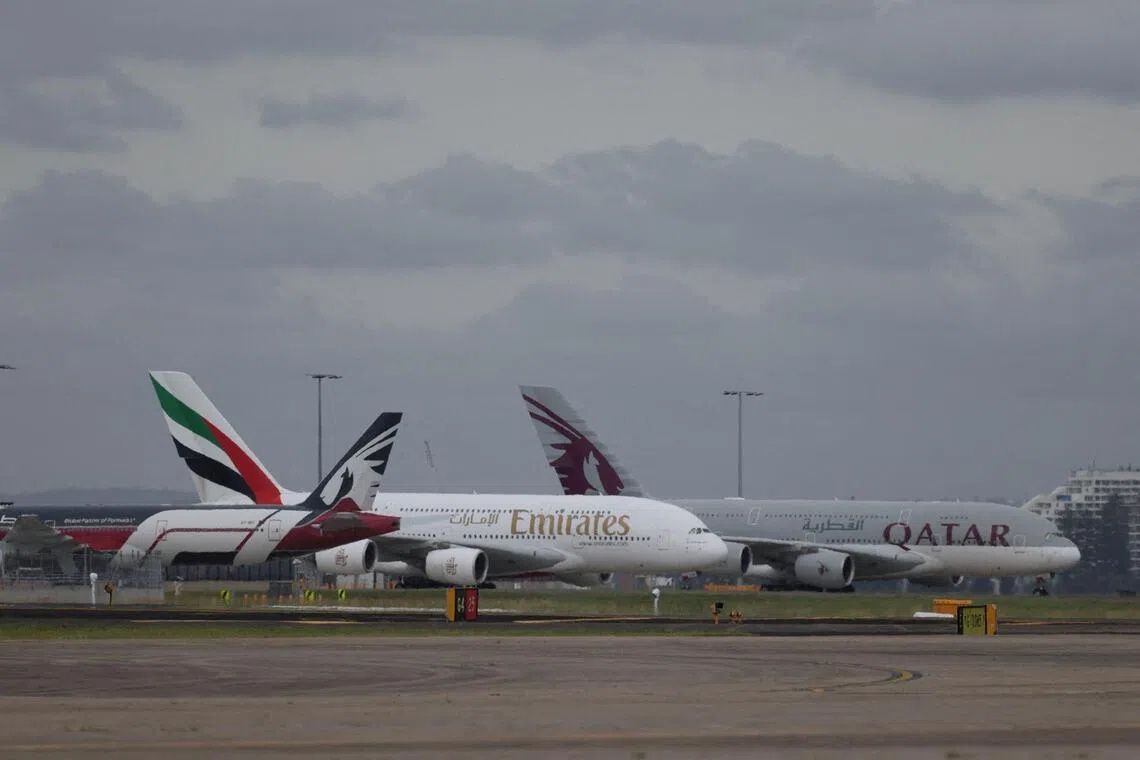
Sydney Airport has become the focus of an urgent safety investigation after Australian transport authorities confirmed they are examining three separate near-collision incidents that occurred over a fortnight, with two dangerous situations unfolding on the same morning. The Transport Safety Bureau announced the probe on Friday, August 14, following escalating concerns about ground operations at one of the country's busiest aviation hubs and the coordination between pilots and air traffic control personnel.
The most recent incident involved a Virgin Australia Boeing 737 that had received clearance to take off on the morning of August 9 when its crew spotted a Qantas aircraft actively crossing the runway directly in their path. Although both planes had been authorized to use the runway—one to depart and one to taxi across—the Virgin Australia pilots managed to halt their aircraft approximately one kilometre away from the Qantas plane, averting what could have been a catastrophic collision. Hours earlier the same day, a separate near-miss occurred when a Jetstar flight crew executed an emergency braking manoeuvre to prevent impact with a Qatar Airways jet already on the tarmac.
These recent occurrences follow an earlier incident on July 27, when two Qantas aircraft narrowly avoided colliding after both had been cleared for take-off. The cluster of incidents within such a compressed timeframe has prompted serious questions about whether systemic failures in communication protocols, controller workload management, or procedural oversight exist within Sydney Airport's operations. Transport Safety Bureau Chief Commissioner Angus Mitchell acknowledged the gravity of the situation, emphasizing that authorities would conduct a thorough examination of any organizational or structural weaknesses that may have contributed to these dangerous situations.
Mitchell's investigation will encompass multiple variables that might have influenced the incidents, including operational tempo at the airport during these periods, the staffing levels within the control tower, and the specific procedures followed by controllers on duty. The commissioner noted that a supervisory or training exercise was underway on August 9, suggesting that reduced tower capacity or divided attention during routine instruction may have factored into the incident that day. This detail opens questions about whether training protocols should be adjusted to avoid conducting such exercises during peak operational hours.
The aviation industry across Southeast Asia and the Pacific has grown increasingly scrutinized regarding safety standards, and Sydney Airport incidents carry particular significance given Australia's status as a developed aviation nation with stringent regulations. For Malaysian readers, Sydney's experiences underscore the critical importance of rigorous oversight at major regional hubs like Kuala Lumpur International Airport, where similar pressures from rapid traffic growth and controller recruitment challenges exist. The near-misses illustrate how even well-established airports with advanced infrastructure can face dangerous moments when procedures, communication, or staffing fall short of safety standards.
The delay in publicly reporting these incidents has itself become controversial, with critics questioning why the aviation community and traveling public were not immediately informed. Such transparency concerns resonate across Asia-Pacific aviation circles, where regulatory consistency and open communication about safety matters directly influence passenger confidence and operational protocols at neighboring airports. Mitchell acknowledged the timeliness issues without providing specific explanations, though such delays typically occur while initial assessments are completed before formal incident classifications are made.
Australia is currently navigating a significant expansion of air traffic controller recruitment and training programs to manage increased flight operations following pandemic-related suppression of aviation activity. Mitchell identified this period of accelerated hiring and qualification of new controllers as a relevant context, suggesting that growing pains in the controller workforce may be contributing factors. Training new personnel while maintaining existing safety standards remains one of aviation's perennial challenges, particularly during periods of rapid capacity expansion.
Prime Minister Anthony Albanese has called for a formal investigation, elevating the matter into the political sphere and signaling government-wide concern about Sydney Airport safety management. This political engagement typically accelerates investigation timelines and may prompt regulatory reviews of airport operations, controller scheduling practices, and communication protocols. For airports across the region, including those in Malaysia, such high-level political attention demonstrates how safety incidents can rapidly become matters of national importance.
The investigation will examine technical factors including radio communication clarity, the design of runway layouts and taxi procedures, and whether controllers had adequate information displays to track aircraft positions accurately. Investigators will also consider whether standard operating procedures were being correctly followed by all parties involved, and whether any procedures themselves require updating to prevent similar situations. This comprehensive approach reflects modern aviation safety methodology, which focuses on systemic factors rather than individual blame.
The implications extend beyond Sydney to regional aviation authorities considering operational improvements. Malaysia's aviation regulators and airport operators managing growing traffic volumes can draw important lessons from this investigation once findings are released. The incidents highlight that safety cannot be assumed even at major developed-world airports, and that constant vigilance, adequate staffing, regular procedure reviews, and transparent communication remain non-negotiable elements of aviation safety culture.

