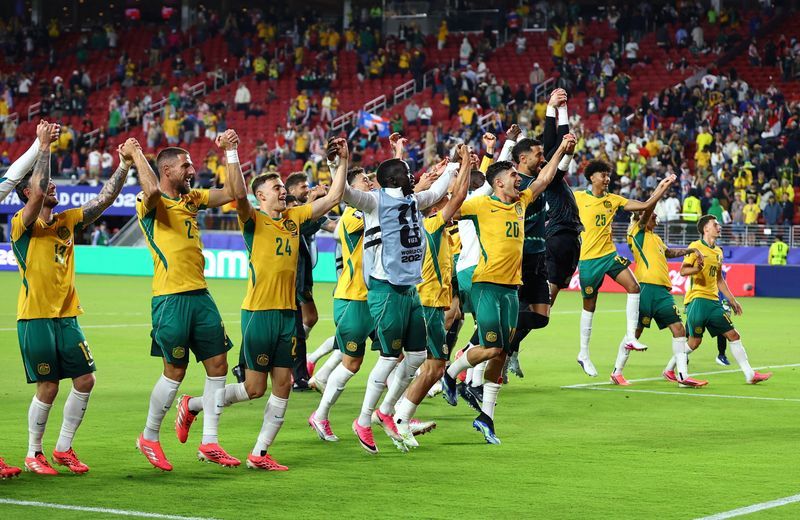
Australia has booked passage to the World Cup knockout round for the third time in tournament history after playing out a tense, defensive encounter against Paraguay at San Francisco Bay Area Stadium on Thursday. The goalless stalemate in California proved sufficient for manager Tony Popovic's side to claim second place in Group D behind co-hosts the United States, though the result leaves Paraguay in precarious circumstances as they await news from other fixtures to determine if their own World Cup dream survives.
The match itself unfolded as a physical, scrappy affair that rarely generated the flowing attacking football supporters typically associate with global tournament football. Australia began as the dominant force, with Popovic having made six tactical changes to his starting lineup in a statement of attacking ambition. The inclusion of youngster Nestory Irankunda and forward Cristian Volpato signalled the manager's intent to break the deadlock, while Jordan Bos shifted from his usual left-back berth to the right flank to compensate for the absence of injured defender Jacob Italiano.
Despite their territorial superiority in the opening phase, the Socceroos struggled desperately when opportunities arose. In one telling moment early in proceedings, Volpato's cutback found Jackson Irvine in a promising position on the right side of Paraguay's penalty area, yet the midfielder's angled attempt flew directly at goalkeeper Orlando Gill without troubling the keeper. Further efforts from Bos and Volpato followed similar patterns—drawing saves from Gill but never seriously threatening to find the net. The Australian attacking players appeared to labour under considerable pressure, their decision-making becoming increasingly wayward as the first half wore on.
Paraguay, meanwhile, endured a miserable opening 45 minutes, restricted to just one shot as Alfaro's defensive setup absorbed the Australian assault. The South American side clearly came into the match with an organised gameplan focused on limiting space rather than creating attacking opportunities. However, the introduction of Mauricio at halftime—a Brazilian-born substitute—energised Paraguay's approach considerably. Within minutes of the restart, Mauricio tested the waters with a long-range effort that sailed harmlessly past the frame.
As the second half progressed, Paraguay gradually gained confidence and began to carve out more threatening passages of play. The energetic Julio Enciso emerged as their most dangerous outlet, repeatedly slicing through Australia's defensive line and creating moments of genuine danger. In one of the clearest scoring chances of the entire match, Enciso found himself in a position to inflict real damage but his low drive skewed well wide of the left post with eight minutes remaining—a miss that would ultimately decide Paraguay's fate.
The closing stages of the encounter transformed into an end-to-end contest, with both sides pushing harder in search of the winning goal. Australia nearly broke through in the 89th minute when Bos made a dynamic run down the right flank, splitting two Paraguay defenders before charging into the penalty box. The fullback's subsequent shot fizzed dangerously across the goalline and beyond the far post, a narrow miss that encapsulated the Socceroos' evening of narrow escapes and near-misses. Paraguay responded with a late effort as Mauricio found a sliver of space on the edge of the area and sent a low shot toward goal, but the attempt lacked conviction and proved simple for Australia's goalkeeper to handle.
With the draw confirmed, Australia will now prepare to face the second-placed team emerging from Group G, a pool that remains genuinely wide open heading into Friday's final matches. Egypt are scheduled to face Iran while Belgium take on New Zealand, meaning the identity of Australia's knockout opponent will only become clear once those fixtures conclude. The Socceroos' path to the round of 16 represents their third appearance in the World Cup's knockout stage in tournament history, and comes four years after they reached the last 16 in Qatar.
Paraguay's position, by contrast, remains frustratingly uncertain. The 2010 quarter-finalists accumulated four points from their three group matches and may yet advance as one of the eight best-finishing third-placed teams in the tournament. However, their progression now depends entirely upon results in other groups concluding without their participation. The waiting game ahead will test Paraguay's patience considerably, as other nations complete their group matches in the coming days. The South Americans showed grit and resilience in California but ultimately could not break through an Australian defence that, despite struggling at times, proved solid when it mattered most. For Popovic and his squad, advance they will—though more through substance than the style that typically captures global imagination.

