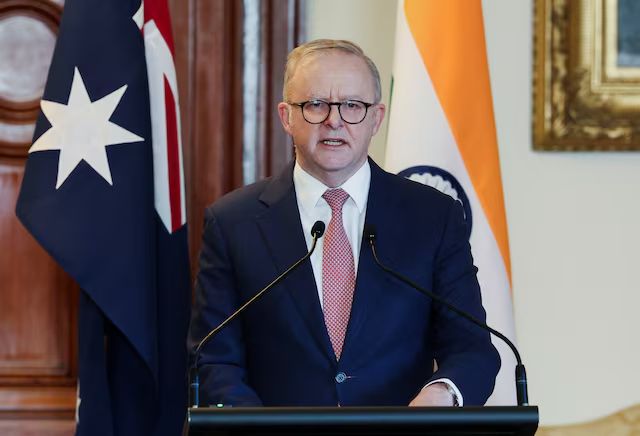
Australia's Prime Minister Anthony Albanese has committed to confronting the Trump administration over fresh tariffs imposed on the nation's exports to the United States. Speaking on Sunday, Albanese indicated that trade tensions would be a priority topic in forthcoming discussions with U.S. President Donald Trump, confirming that Canberra intends to challenge what it views as an unfounded trade barrier.
The fresh duties, implemented by Washington on Friday, affect 60 trading partners globally. The Trump administration justified the move by asserting that these nations have failed to adequately restrict commerce in goods manufactured through forced labour. The timing coincided with the expiration of a temporary 10 per cent universal tariff that had previously been applied across the board. For Australia, the consequences are particularly acute: the country faces a targeted 12.5 per cent tariff rate, placing it among 38 nations subject to this higher duty level. Meanwhile, 17 other trading partners encounter a 10 per cent rate, while five nations confront a mixed-rate structure.
The Albanese-led Labor government has categorically rejected the legitimacy of these tariffs, characterising them as unjustified and unwarranted. Officials have explicitly stated their intention to campaign for the removal of these duties through diplomatic channels. Albanese's remarks underscore a hardening resolve within the Australian government to contest what it perceives as a mischaracterisation of the country's labour standards and supply chain governance.
When pressed on whether he would seek dialogue with Trump on the matter, Albanese responded with unambiguous commitment, stating "absolutely." He went further, indicating that Australia would pursue the issue systematically across the full spectrum of the bilateral relationship. The Prime Minister noted that discussions have already commenced at various levels, suggesting an immediate diplomatic push rather than a delayed response. This multi-layered engagement strategy reflects Canberra's determination to resolve the dispute before it causes sustained economic damage.
Albanese emphasised Australia's existing legislative framework designed to combat modern slavery and forced labour practices. He highlighted that the country maintains robust provisions governing labour standards across its economy. Beyond existing measures, the government is actively strengthening these safeguards through enhanced scrutiny of supply chain operations. Critically, Albanese pointed to the introduction of substantial financial penalties and fines designed to deter violations, demonstrating that Australia has invested significantly in labour protection mechanisms that should satisfy international scrutiny.
The tariff dispute carries particular weight given Australia's historical reliance on open trade relationships and its geographic position as a major exporter of raw materials and manufactured goods. The 12.5 per cent rate applied to Australian products represents a meaningful imposition for exporters across multiple sectors, potentially affecting everything from agricultural commodities to processed goods. The differential tariff structure, whereby Australia faces a higher rate than some competitors, has likely amplified concerns within the government about competitive disadvantage.
Albanese's positioning on trade represents a continuation of his publicly articulated commitment to "free and fair trade" with Washington. This formulation attempts to balance Australia's desire for open markets with acknowledgement of legitimate regulatory concerns, though the government clearly believes the forced labour allegations lack sufficient foundation in this instance. The Prime Minister had previously made tariffs a central focus during his inaugural call with Trump following Labor's landslide election victory last year, indicating this remains a core bilateral issue.
The dispute also reflects broader tensions within the Trump administration's approach to international trade. The forced labour justification, while ostensibly targeting genuine labour violations, has been applied selectively across trading partners, with Australia's inclusion suggesting either that the administration views the country as non-compliant or that tariffs serve broader protectionist objectives. The varying rates applied to different nations indicate a nuanced assessment by Washington, though Australia's position at the higher end of the tariff scale suggests it has not succeeded in making the case for preferential treatment.
For regional context, Australia's tariff battle carries implications for other Southeast Asian and Pacific trading nations that may face similar duties. How Canberra navigates this dispute could establish precedent for how other countries approach negotiations with the Trump administration. Australia's relatively strong economic position and established ties with Washington provide it with negotiating leverage that smaller neighbours may lack, making the outcome particularly instructive for the region.
The government's strategy of raising the issue "at every level" signals an intention to pursue both formal diplomatic channels and back-channel communications. This approach suggests Canberra is preparing for a potentially protracted negotiation rather than expecting immediate capitulation. The emphasis on Australia's genuine labour protections implies that the government believes evidence and reasoned argument will ultimately prevail, though Australian officials are clearly taking the threat seriously enough to mobilise diplomatic resources.
The timing of these tariffs, arriving shortly into Trump's return to office, establishes the tone for the bilateral trade relationship during his administration. Australia's swift and vocal response indicates that Canberra will not passively accept trade restrictions it views as unjustified, setting expectations for a more contested relationship than perhaps existed during previous U.S. presidencies.

