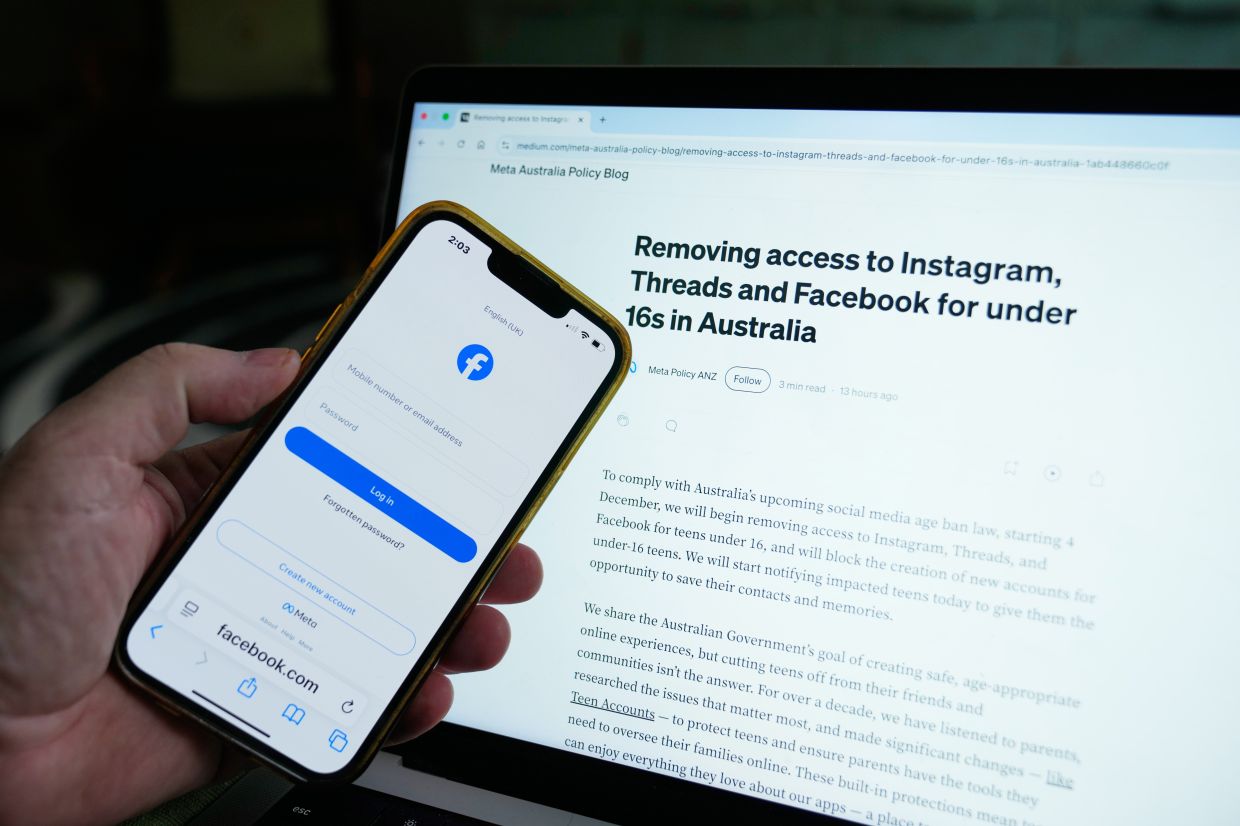
Australia's Prime Minister Anthony Albanese has launched a scathing attack on political opponents for delaying critical amendments designed to bolster enforcement of the nation's landmark ban on social media use by children under 16. The amendments, tabled before Parliament, would substantially expand the authority of eSafety Commissioner Julie Inman Grant to investigate and penalise platforms that fail to comply with the restrictions introduced in December. However, the Liberal Party opposition and the Australian Greens moved on July 2 to refer the proposed changes to an eight-week Senate inquiry, effectively stalling their passage at a time when the government lacks Senate control.
Albanese's frustration stems from the practical implications of the delay. Under current law, Inman Grant can only request information from platforms about their compliance efforts. The amendments would grant her the additional power to demand documentary evidence and compel responses from social media companies, creating an enforcement mechanism with real teeth. The Prime Minister argues that every week of postponement allows platforms to delete evidence of their non-compliance, undermining the commissioner's ability to build cases against offenders when the law eventually takes effect. "It is outrageous the delay because what the eSafety Commissioner has said very clearly is that that will allow the platforms to go and just delete a whole lot of material," Albanese told the Australian Broadcasting Corporation, adding that immediate passage would have established a clear date from which enforcement actions and fines could commence.
The proposed amendments go further than simply empowering the commissioner's investigative abilities. They would grant Inman Grant authority to demand information from third-party technology providers, particularly those developing age assurance solutions, to verify claims made by platforms about how they are implementing age-gating mechanisms. This represents a critical response to the persistent problem of children circumventing age restrictions through various technological means. Additionally, the legislation would double the maximum financial penalty for non-compliant platforms from A$49.5 million to A$99 million, raising the stakes for companies that fail to take what regulators consider reasonable steps to exclude minors from their services.
The political opposition to strengthening the enforcement framework reveals deep divisions over the ban's fundamental soundness. David Shoebridge, a Greens senator who has consistently opposed the legislation from its inception, questioned whether doubling penalties that have never been deployed represents a meaningful improvement. His intervention highlights a broader scepticism within some political quarters about whether regulatory threats alone can achieve the stated objective of protecting children. Shoebridge's position reflects a philosophical objection to the ban itself, viewing it as an overreach that infringes on digital freedoms rather than a measured response to legitimate harm.
The Liberal Party's communications spokesperson, Senator Sarah Henderson, adopted a different critique, arguing that the government's entire approach has been inadequately thought through. Rather than opposing the ban's principle, she contended that the original legislation was hastily drafted, poorly implemented, and fundamentally flawed in design. Henderson called for more rigorous scrutiny of the amendments, suggesting they should be substantially tougher than currently proposed. This position reflects the opposition's strategy of attacking the government's competence in executing the ban rather than opposing the measure outright, positioning themselves as advocates for a more effective—rather than less restrictive—regulatory approach.
The political deadlock surrounding enforcement powers contrasts sharply with the initial parliamentary consensus. In 2024, both major parties supported the original legislation overwhelmingly, and the ten targeted platforms—including Facebook, Instagram, YouTube, TikTok, Snapchat, X, Kick, Reddit, Threads, and Twitch—were granted more than a year to implement compliance measures. This extended timeline was intended to allow companies adequate opportunity to develop and deploy age-verification technologies and other age-gating mechanisms. Yet the actual compliance record has proven deeply disappointing, revealing the limitations of voluntary corporate cooperation even under legislative duress.
Early compliance figures appeared encouraging but masked a more troubling reality. When the ban took effect in December, the government initially announced that platforms had removed, deactivated, or restricted accounts held by more than five million children. However, the eSafety Commissioner's March report delivered a sobering reassessment. Seven out of every ten children who held active accounts on restricted platforms on December 10 remained on Facebook, Instagram, Snapchat, and TikTok, demonstrating that the ban's initial impact had been vastly overstated and that platforms were failing to maintain compliance. This revelation transformed the narrative from one of successful regulatory implementation to one of systematic non-compliance.
The persistent failure of major platforms to adhere to the ban prompted Commissioner Inman Grant to escalate enforcement action. In April, she signalled her intention to pursue court action against the most recalcitrant platforms—Facebook, Instagram, Snapchat, TikTok, and YouTube—alleging that they were not implementing reasonable measures to exclude children from their services. This represents a significant regulatory escalation, moving beyond information requests to litigation. In contrast, Inman Grant expressed satisfaction with the compliance efforts demonstrated by the secondary platforms—X, Kick, Reddit, Threads, and Twitch—suggesting that genuine variation exists in corporate responsiveness to regulatory pressure.
Communications Minister Anika Wells has reinforced the government's assessment that compliance has stalled. In monthly updates received from the eSafety Commissioner since March, Wells reported observing no measurable improvements in platform behaviour. This stagnation occurs despite the enhanced visibility and regulatory attention generated by the commissioner's public statements and enforcement threats. The failure to detect progress despite intensified scrutiny suggests either that platforms are deliberately resisting compliance until forced by law, or that technological and operational barriers to age verification remain more formidable than anticipated.
The Australian experience has become a closely watched reference point for policymakers globally. Numerous countries are either implementing similar restrictions or actively developing legislation to limit social media access for young people. The substantial gap between Australia's regulatory intentions and actual compliance outcomes carries important lessons about the difficulty of enforcing digital restrictions in an environment where platforms command sophisticated technical resources and face contradictory commercial incentives. The delay in passing enforcement amendments may ultimately weaken Australia's position as a regulatory model, suggesting that even a determined government backed by parliamentary majorities struggles to translate legislation into real-world compliance without robust enforcement mechanisms from the outset.
The Senate inquiry that will now scrutinise the amendments represents both an opportunity and a risk for government objectives. The process could theoretically strengthen the measures by incorporating additional safeguards or expanding enforcement tools. Alternatively, the eight-week timeframe may provide space for organised opposition to mobilise, generating arguments that delay the amendments further or lead to them being watered down in negotiation. For the eSafety Commissioner, the parliamentary gridlock represents a frustrating obstacle to investigations that could establish crucial precedents about platform accountability. The coming weeks will determine whether Australia's regulatory framework can evolve quickly enough to address the sophisticated evasion strategies already being deployed by social media companies determined to retain their youngest users.

