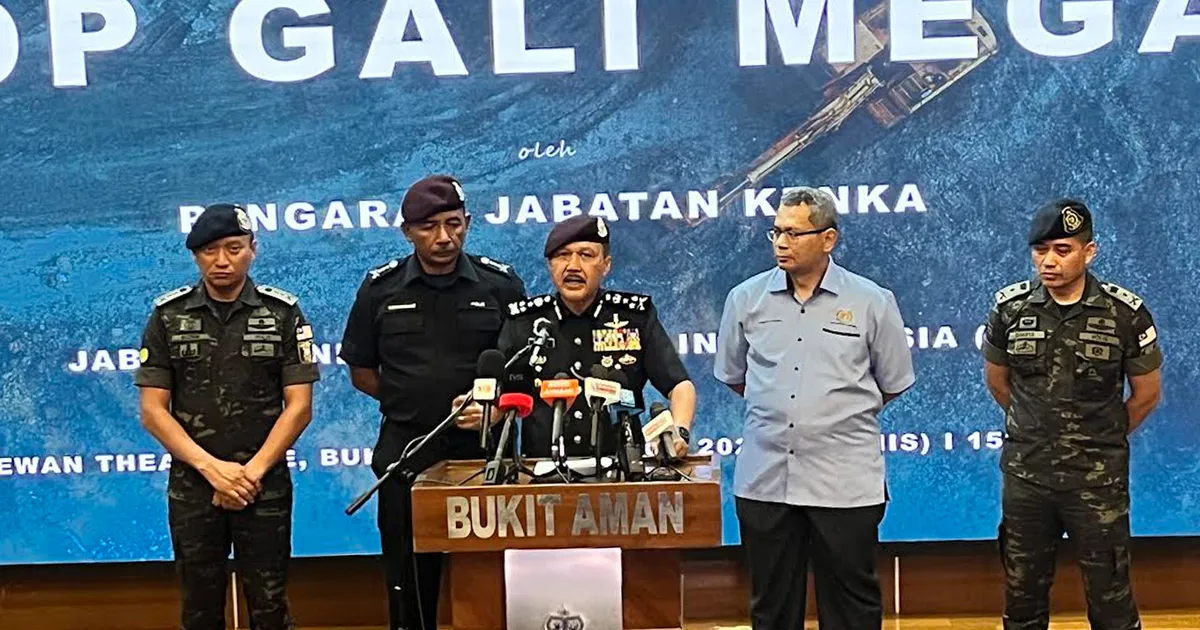
Malaysian authorities have intensified their crackdown on illegal mining operations, resulting in the arrest of 99 suspects and the confiscation of assets worth RM119 million during a five-day enforcement campaign that concluded in late August. The coordinated operation, which ran from August 19 to 23, represents a significant escalation in efforts to combat unauthorised extraction of natural resources across the country and underscores growing concern about the scale of illicit mining activities threatening Malaysia's environmental integrity and regulatory framework.
The enforcement action culminated in the seizure of approximately 33,000 tonnes of natural resources, encompassing coal, quarry stone, earth and sand materials valued at RM21 million. This substantial haul reflects the sheer volume of materials being extracted outside legal channels and highlights the logistical complexity involved in managing and monitoring mining operations across Malaysia's diverse geographical landscape. The variety of seized materials suggests a widespread network of illegal operations targeting multiple resource types rather than isolated incidents.
Illegal mining has become an increasingly serious concern for Malaysian policymakers, as unauthorised extraction operations operate beyond environmental compliance requirements and regulatory oversight. These activities typically bypass mandatory environmental impact assessments, restoration obligations, and proper land-use protocols, leaving affected areas degraded and requiring expensive rehabilitation. The resources extracted through illegal channels represent lost government revenue through unpaid royalties and licensing fees, diverting potential public funds that would otherwise support development and environmental management initiatives.
The scale of assets frozen during this operation—totalling RM119 million—suggests the operation targeted not merely small-scale miners but established networks with significant financial infrastructure. This level of asset seizure indicates that illegal mining has evolved into a sophisticated enterprise involving equipment purchases, land access arrangements, and substantial capital deployment. The targeting of financial assets alongside physical resources demonstrates an increasingly comprehensive enforcement approach that disrupts both operational capacity and economic incentives driving these activities.
Operations of this magnitude require substantial coordination between multiple government agencies, including environmental enforcement bodies, land departments, and law enforcement authorities. The successful execution across a five-day period points to careful intelligence gathering, surveillance, and planning to identify priority targets and coordinate simultaneous strikes across different locations. Such interagency cooperation remains essential given the geographical spread of mining activities and the technical expertise required to identify and document violations effectively.
The enforcement crackdown carries particular significance for Southeast Asia, where illegal mining represents a transnational challenge affecting multiple jurisdictions and environmental systems. Criminals exploit porous borders and regulatory gaps between countries, moving operations as one location becomes too risky. Malaysia's intensified enforcement efforts set a regional precedent and demonstrate commitment to managing extractive industries responsibly—a critical priority as global supply chains increasingly scrutinise environmental and social governance standards.
Environmental degradation from illegal mining extends beyond immediate site damage, affecting water quality, soil integrity, and biodiversity in surrounding areas. The absence of proper environmental management during extraction means ecological recovery takes decades, imposing long-term costs on communities dependent on natural resources. Protecting these environments serves not only conservation interests but also safeguards agricultural productivity and freshwater availability for growing populations across the region.
For legitimate mining operators in Malaysia, aggressive enforcement against illegal competitors creates a more level playing field. Companies investing in compliance infrastructure, environmental management, and regulatory adherence face unfair competition from operators cutting corners. By substantially increasing enforcement pressure and penalties, authorities help ensure that legitimate industry participants can operate profitably without being undercut by lawless competitors who externalise environmental and social costs.
The RM119 million asset seizure also highlights the profitability driving illegal mining, signalling substantial economic motivation behind these operations. This financial scale indicates that standard fines alone may prove insufficient as deterrents; the requirement to forfeit productive assets and equipment represents a more meaningful consequence that threatens operational viability. Such asset-based enforcement strategies can prove more effective at disrupting organised illegal mining networks than traditional penalty approaches.
Moving forward, sustaining this enforcement momentum requires continued resource allocation and interagency coordination. Single operations, however successful, produce only temporary disruptions unless followed by systemic improvements in monitoring capacity, regulatory responsiveness, and penalty enforcement. Building technological capabilities—including satellite monitoring, drone surveillance, and digital permitting systems—could enhance detection rates and reduce response times to suspected violations.
The operation also underscores the importance of addressing underlying drivers pushing individuals toward illegal mining, particularly in economically marginalised communities where informal extraction offers income alternatives lacking elsewhere. Comprehensive responses must balance enforcement with economic development initiatives and skills training that provide legitimate pathways for resource sector participation. Without addressing these root causes, crackdowns risk merely displacing activities rather than permanently eliminating them.
Stakeholders including environmental organisations, mining industry associations, and local communities increasingly expect government to demonstrate active management of extractive activities. This operation signals administrative responsiveness to these expectations and reinforces Malaysia's positioning as a jurisdiction committed to sustainable resource management. Maintaining credibility requires sustained enforcement consistency and transparent reporting of outcomes, establishing patterns that deter future violations through visible consequences.

