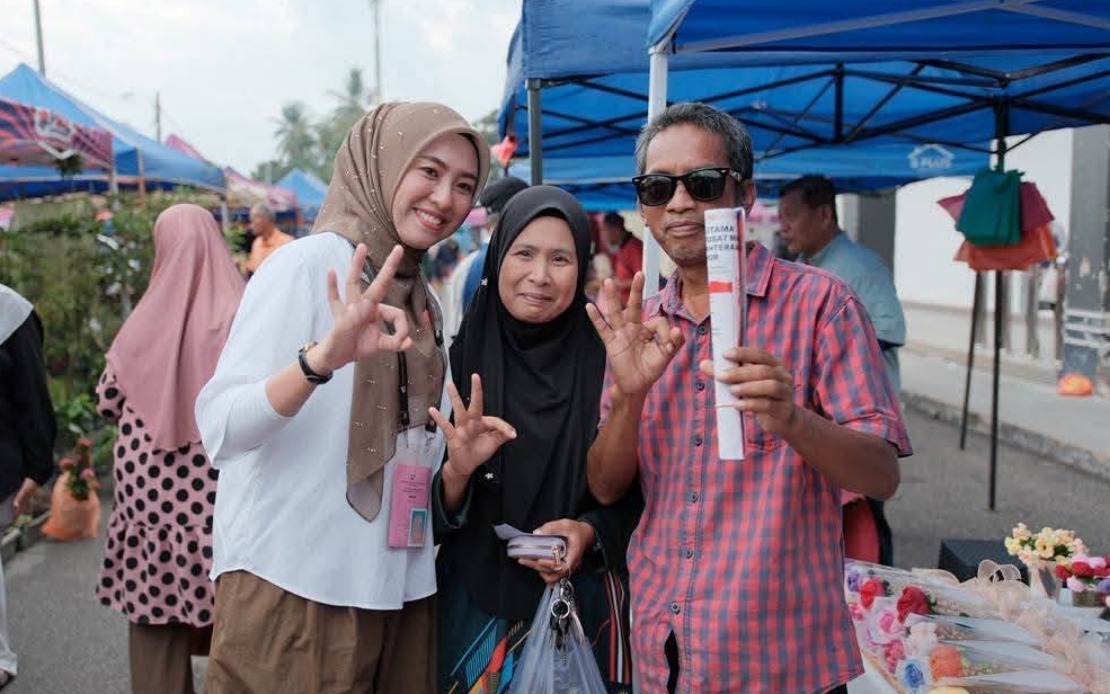
Ayna Soraya Badaruddin, the Pakatan Harapan candidate contesting the Sungai Balang state seat in Muar, has outlined an ambitious vision to harness Pantai Seri Menanti's natural appeal by developing it into a dedicated Youth Fishing and Leisure Hub. The proposal seeks to leverage the beach's existing popularity while creating structured facilities that would simultaneously cater to younger demographics and generate economic benefits for nearby communities. The initiative reflects a broader strategy among PH candidates to position grassroots infrastructure projects as catalysts for both social engagement and economic renewal.
According to Ayna Soraya, the underdeveloped coastal area possesses considerable untapped potential, drawing recreational visitors particularly from within the Sungai Balang constituency who seek affordable leisure options. Her vision centres on transforming the natural landscape into a curated recreational space without compromising its environmental character. The proposal emphasises creating dedicated zones for fishing enthusiasts while introducing complementary amenities that would broaden appeal beyond traditional angling demographics. This multi-use approach reflects contemporary urban planning principles increasingly adopted across Malaysian municipal developments.
Central to the proposal is the introduction of what Ayna Soraya describes as a "healing" destination—a deliberately quieter zone where young people could retreat for relaxation and social connection. Accompanying this concept is a miniature stall framework utilising a camping-style arrangement, where temporary vendors could operate alongside natural surroundings. This model mirrors successful micro-tourism initiatives implemented in other Southeast Asian jurisdictions, where informal commercial arrangements coexist with environmental conservation. Such arrangements typically generate employment for youth entrepreneurs while maintaining community character rather than introducing large-scale commercial development that might alienate local residents.
The candidate has also identified critical infrastructure deficiencies requiring rectification. Basic amenities at Pantai Seri Menanti remain rudimentary, and fishing platforms lack safety features that would encourage broader participation. Ayna Soraya proposes systematic upgrades addressing these gaps—improved sanitation facilities, adequate sheltering, enhanced lighting for evening activities, and properly engineered structures for anglers. Such foundational improvements typically yield multiplier effects, as enhanced safety and comfort encourage repeat visitation and attract demographics beyond regular users.
Economic opportunity formation constitutes another pillar of the development framework. Ayna Soraya envisions establishing dedicated commercial spaces explicitly reserved for local youth entrepreneurs, formalising what currently exists informally. This structured approach would provide young people with legitimate platforms for launching recreational business ventures—food stalls, equipment rentals, guiding services—while generating municipal revenue through licensing arrangements. Such initiatives align with government objectives promoting youth economic participation and entrepreneurship, particularly in constituencies where conventional employment remains limited.
The proposal incorporates a competitive events strategy designed to elevate Pantai Seri Menanti's profile beyond local significance. Regular fishing competitions operating at zonal or district levels would attract participants and spectators from across the broader Johor region, positioning the venue as an established sporting destination. Such events generate ancillary economic activity—accommodation, meals, equipment sales—extending benefits throughout surrounding communities. Competition calendars also provide media opportunities and promotional visibility, transforming previously anonymous coastal spaces into recognized regional landmarks.
Ayna Soraya frames the comprehensive development plan as positioning Pantai Seri Menanti as a distinctive domestic tourism attraction, countering the market dominance of larger, more commercialised coastal resorts elsewhere in Johor. By emphasising authenticity and community-level management, the proposal targets price-sensitive visitors seeking genuine leisure experiences rather than luxury offerings. This positioning potentially addresses a genuine market gap, as numerous Malaysian coastal communities possess natural attractions yet lack coordinated development strategies to monetise and showcase such assets effectively.
The proposal emerges within a competitive electoral context. Ayna Soraya contests a three-cornered race for the Sungai Balang state assembly seat against incumbent Selamat Takim of Barisan Nasional and Muhammad Amin Sailan representing Perikatan Nasional. Infrastructure and economic development proposals represent conventional campaign strategies across Malaysian electoral contests, with candidates leveraging specific local projects to demonstrate policy specificity and constituent responsiveness. The Pantai Seri Menanti initiative provides Ayna Soraya with a concrete, locally-rooted proposal distinguishing her platform from broader partisan messaging.
The 16th Johor State Election, scheduled for Saturday, encompasses 172 candidates competing across 56 state seats. Electoral participation will involve 2,727,926 registered voters, representing Johor's full electorate. This electoral scale demonstrates the diversity of regional priorities reflected across Johor's constituencies, where coastal development initiatives such as Ayna Soraya's proposal compete alongside urban infrastructure, agricultural support, and industrial economic strategies for voter attention.
For Malaysian observers evaluating electoral platforms, Ayna Soraya's proposal illustrates how regional candidates increasingly ground partisan commitments in concrete, location-specific development initiatives. Rather than abstract policy proclamations, localised infrastructure projects offer voters tangible benchmarks against which to assess candidate seriousness and policy competence. The Pantai Seri Menanti proposal's viability ultimately depends upon post-election political will, municipal capacity, and financial allocation—factors that frequently determine whether electoral commitments translate into implemented outcomes. The proposal's reception among Sungai Balang voters may substantially influence both the electoral outcome and broader assessments of how Malaysian constituencies evaluate development leadership.

