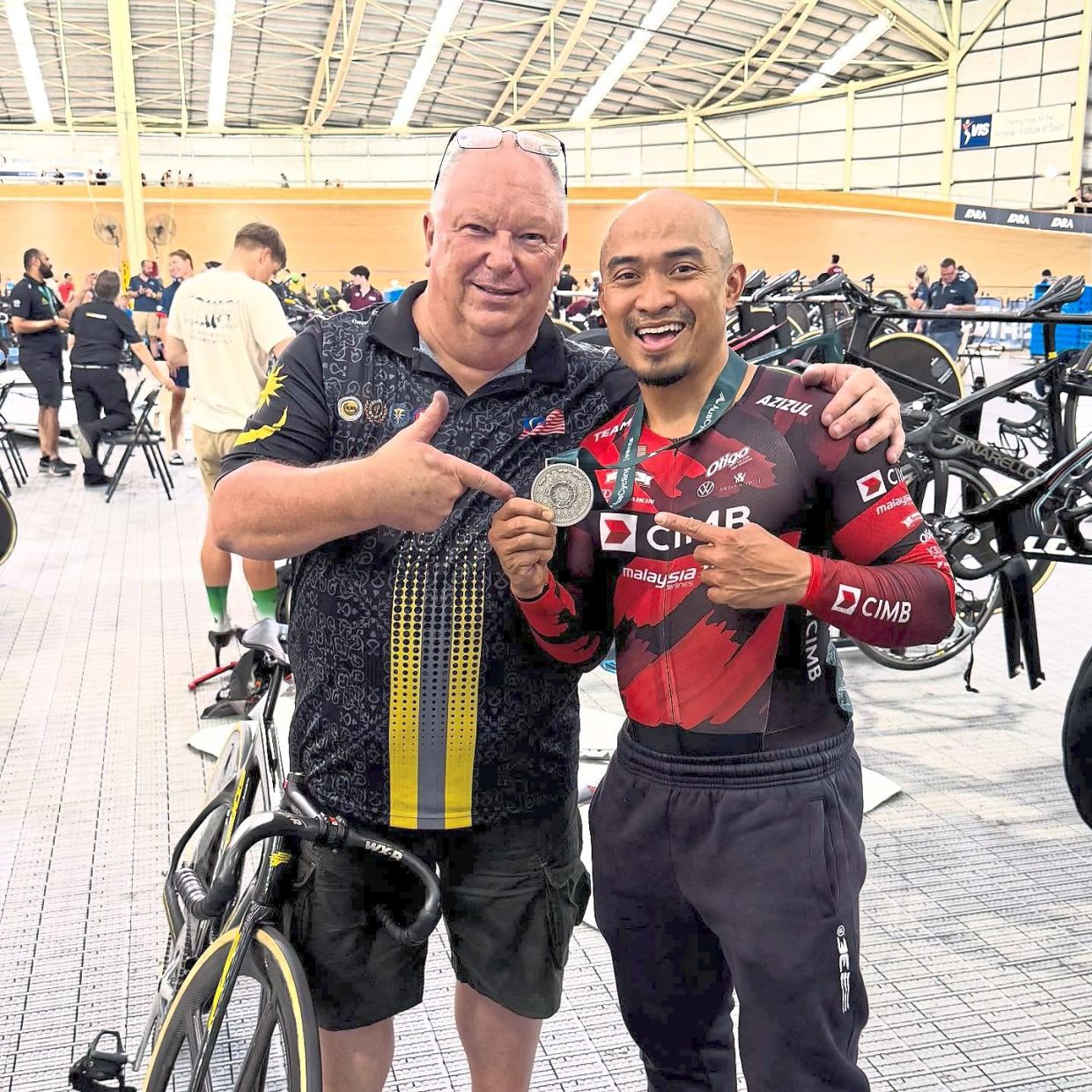
National track cyclist Azizulhasni Awang has acknowledged the considerable personal risk he is taking by publicly backing technical director John Beasley, understanding full well that his defence of the Australian could invite retaliation and attempts to undermine him amongst certain quarters. The Tokyo 2020 Olympics silver medallist recognised that alignment with Beasley, who has guided Malaysian track cycling for two decades, positions him as a potential target should results at the forthcoming Commonwealth Games and Asian Games fall short of expectations.
Azizul's willingness to absorb these risks reflects a deeper conviction about loyalty and merit within Malaysian sport. He articulated candidly that the moment he chose to defend Beasley publicly, he accepted the vulnerability that comes with such a stance. The cyclist recognised that critics and those harbouring grievances against Beasley might attempt to diminish his credibility or exploit any future setback in his own performance as ammunition against both him and the technical director. This calculation is not abstract for an athlete of his standing; every Olympic medal, every world championship, every domestic result will be scrutinised through the lens of his association with a controversial figure.
Yet Azizul's resolution appears rooted in a conviction that transcends tactical considerations. He articulated a faith-based framework for his decision-making, noting that his actions are guided by belief in divine will rather than fear of consequences. This spiritual anchor seems to provide him psychological shelter from the anticipated storms ahead. He emphasised that he is unafraid precisely because he trusts in a higher authority and that this faith emboldens him to articulate positions he genuinely believes to be correct, regardless of the political cost.
Beasley's contributions to Malaysian track cycling have been substantial and undeniable. Under his stewardship, the nation has produced world-class cyclists who have competed at the highest levels of international competition, including Azizul himself. The technical director's expertise has transformed Malaysia from a cycling backwater into a credible force in the Asian and Commonwealth track cycling arenas. However, his tenure has not been without controversy, and internal criticism from some quarters within the cycling federation has surfaced publicly, prompting the Malaysia National Cycling Federation (MNCF) to take disciplinary action.
The federation's response to the public criticism of Beasley underscores the institutional dynamics at play. Two individuals affiliated with state cycling bodies have been issued show-cause letters for making public statements against Beasley without first exhausting internal administrative processes. The MNCF contended that such public criticism damages the national body's credibility and standing. This disciplinary stance reveals an institutional preference for resolving internal disputes through closed channels rather than allowing grievances to play out in public forums, a posture that has divided opinion within Malaysian sports circles.
Azizul's intervention in this controversy represents a conscious choice to step beyond his primary role as an athlete and engage in institutional politics, a territory where reputational risks multiply exponentially. Athletes who speak up on administrative matters often find their subsequent performances become subjects of heightened scrutiny, with critics ready to attribute any disappointment to distraction or loss of focus. Conversely, should Azizul and other Malaysian cyclists deliver medal-winning performances at the Commonwealth Games and Asian Games, the narrative could shift decisively in Beasley's favour, vindicating Azizul's gamble.
The timing of Azizul's defence is significant. Both the Commonwealth Games and Asian Games loom as crucial testing grounds for Malaysian cycling and for Beasley's continued tenure. These competitions will generate concrete, measurable outcomes that will either validate or undermine the confidence Azizul has placed in his technical director. In the high-stakes environment of international sport, results speak with unambiguous authority, and athletic performance becomes the ultimate argument in administrative disputes.
Azizul has signalled that his immediate priority remains the preparation and execution of athletic excellence at these upcoming Games. He has called for unity and support from all stakeholders in Malaysian cycling, implicitly urging critics to set aside their grievances and focus on collective success. This appeal to national interest and team cohesion reflects a pragmatic understanding that internal divisions can undermine athletic performance and that external pressures—from other countries' cycling programs, from the challenge of competing at elite levels—demand undivided attention and resources.
The broader context for this dispute involves questions about leadership accountability, administrative transparency, and the appropriate channels for dissent within Malaysian sporting institutions. While the MNCF's disciplinary action addresses the method by which criticism was voiced, it does not address the substance of the concerns that prompted the public statements. This distinction matters for the long-term health of Malaysian cycling, as suppressing internal critique without addressing its underlying causes may breed resentment and undermine morale.
Azizul's stance also carries implications for how Malaysian athletes engage with institutional governance more broadly. By positioning himself firmly alongside Beasley and accepting the attendant risks, Azizul is signalling that merit and loyalty to those who have contributed to athlete development should outweigh political calculation. This message could resonate with other athletes facing similar choices about whether to engage in institutional controversies or maintain distance from administrative disputes.
The resolution of this controversy will likely depend heavily on competitive outcomes. Should Malaysian cyclists excel at the Commonwealth Games and Asian Games, the narrative will shift toward vindication of Beasley's methods and Azizul's judgment. Conversely, disappointing results would provide ammunition to critics and vindicate those who have questioned the technical director's approach. For Azizul, the pressure is thus twofold: to deliver personally as an athlete while defending someone whose legacy will ultimately be written in medal counts and world rankings.
Looking ahead, Azizul has chosen a path that prioritises principle over convenience, accepting that this choice may generate criticism and negativity directed toward him in the future. Whether this decision enhances or damages his standing within Malaysian cycling will depend not merely on his own performances but on the broader trajectory of the national program and on the extent to which Beasley's continued involvement produces the world-class results that have defined his tenure thus far.

