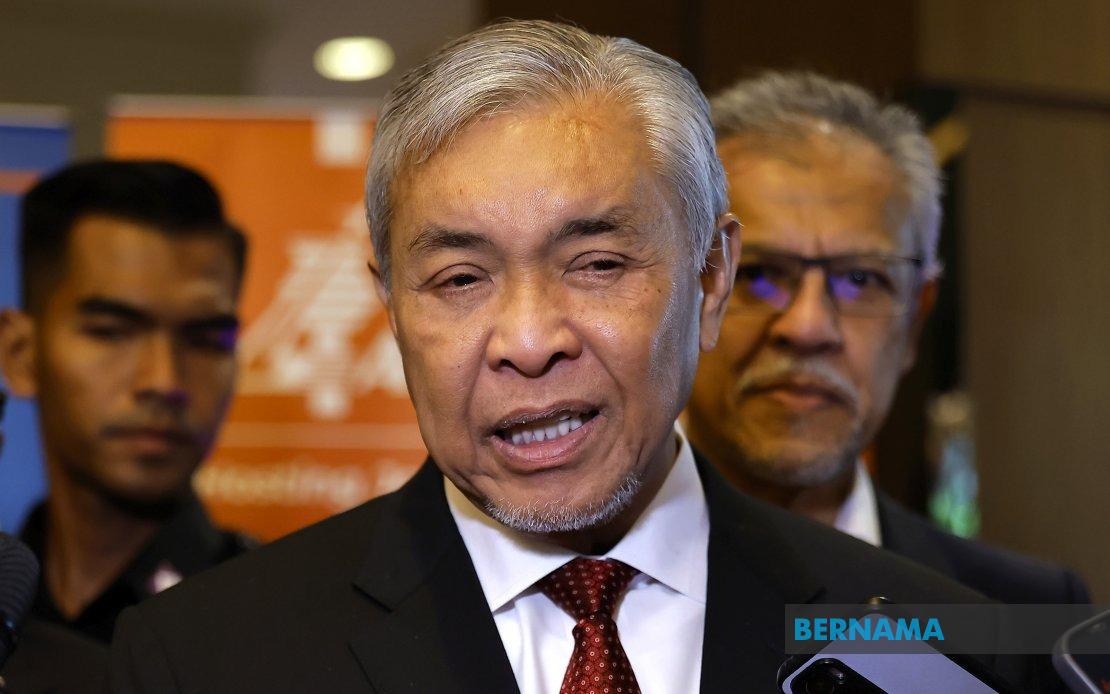
Malaysia is poised to capitalise on a unique opportunity this October when the Sepang International Circuit becomes the venue for the Bahrain Gulf Air Grand Prix, offering the country a platform to showcase its world-class sporting infrastructure to a global audience and potentially attracting both immediate tourist inflows and longer-term investment. Deputy Prime Minister Datuk Seri Dr Ahmad Zahid Hamidi outlined the strategic significance of the arrangement at a national air disaster preparedness workshop, emphasising that while Bahrain assumes the financial burden of staging the formula one event, Malaysia stands to gain substantially through the international visibility and economic activity the race generates.
The announcement, confirmed yesterday by Formula 1 and the International Automobile Federation, positions the Sepang circuit on the prestigious racing calendar between the Azerbaijan and Singapore grands prix from October 2 to 4, 2026, pending final agreement signatures and formal approvals from the World Motor Sport Council. This scheduling places Malaysia at a critical juncture in the Asian leg of the racing season, potentially maximising spectator and media interest across the region. Ahmad Zahid's remarks during the workshop underscored a pragmatic assessment of the arrangement: Bahrain, as the official race title holder, covers the substantial organisational and infrastructure costs, while Malaysia benefits from the extraordinary exposure that comes with hosting a formula one event watched by millions of viewers worldwide.
The strategic value extends beyond immediate television ratings. Ahmad Zahid highlighted that the global media coverage surrounding a formula one grand prix translates into sustained international attention for Malaysia's tourism sector, with the event reaching billions of people across multiple continents. For a country seeking to reestablish itself as a premier destination in Southeast Asia's tourism landscape, such exposure carries measurable economic weight. The Sepang International Circuit, despite boasting world-class facilities and international standards, has remained significantly underutilised in recent years apart from its annual MotoGP hosting, representing both an underexploited asset and a compelling case for diversifying major sporting events held within Malaysia.
The deputy prime minister articulated an ambitious longer-term vision, suggesting that the successful execution of the Bahrain formula one event could strengthen Malaysia's position to bid independently for future formula one races. He acknowledged, however, that realising this ambition requires sustained government commitment and robust corporate partnership frameworks. The remarks signal a potential shift in how Malaysia approaches major sporting event hosting, moving away from purely government-funded models toward more sophisticated public-private partnership structures that distribute costs and risks more efficiently across multiple stakeholders.
This strategic philosophy has already been applied to Malaysia's MotoGP commitment. Ahmad Zahid referenced a Cabinet directive, following the Prime Minister's guidance, that reshaped how the government supports the annual motorcycle racing championship. Rather than relying exclusively on budgetary allocations filtered through the Ministry of Youth and Sports and the Ministry of Finance, the new approach integrates development projects, commercial sponsorships, and collaborative management arrangements designed to maximise efficiency and reduce direct fiscal pressure. Such mechanisms have proven instrumental in sustaining MotoGP's presence in Malaysia despite the substantial annual costs involved, offering a template that could be adapted for formula one ambitions.
The economic implications for Malaysia's tourism and hospitality sectors are substantial. Formula one events typically attract international visitors, corporate delegations, and media personnel, generating ancillary spending across accommodation, dining, transportation, and entertainment services. For Kuala Lumpur and Selangor, the October timing aligns with the year's latter monsoon season when tourism demand is transitioning, potentially smoothing occupancy rates during a traditionally quieter period. Regional connectivity through Kuala Lumpur International Airport positions the country as an accessible entry point for international visitors attending the event, with spillover benefits for other Malaysian destinations.
Beyond immediate tourism metrics, the visibility generated by formula one broadcasting carries indirect benefits for Malaysia's investment climate. Companies considering regional headquarters or manufacturing locations monitor a country's global profile as one factor in site selection. The sustained international media coverage of a formula one grand prix, featuring prominently in broadcasts reaching business communities worldwide, subtly influences perceptions of Malaysia's stability, infrastructure quality, and integration into global markets. For sectors including technology, finance, and advanced manufacturing, such perception shifts can translate into tangible investment inquiries and project relocations.
The announcement also reflects evolving dynamics in Asia-Pacific motorsports. Singapore's formula one event remains the region's marquee race, yet the addition of a Malaysian round would diversify the circuit's representation and create scheduling opportunities for teams, drivers, and media to engage more comprehensively with Southeast Asia. The geographic proximity between Sepang and Singapore, separated by less than 400 kilometres, creates natural logistical efficiencies for the broader formula one operation while enhancing the region's motorsports ecosystem. This clustering effect benefits not only the host countries but also strengthens the appeal of the Asian region within the formula one commercial strategy.
The conditions attached to the October 2026 date—specifically the requirement for final agreement signatures and World Motor Sport Council approval—reflect standard formula one governance procedures but introduce a modest element of uncertainty. However, given the public statements from FIA officials and the apparent alignment of stakeholder interests, these regulatory hurdles appear procedural rather than substantive. The timeline provides approximately fifteen months for Malaysia to establish supporting infrastructure, coordinate with Bahrain-based organisers, and implement marketing strategies to maximise the event's domestic and international impact.
For Malaysian policymakers and the tourism sector, the Bahrain formula one race represents a lower-risk opportunity to demonstrate Sepang's continued viability as a world-class motorsports venue while gathering data and experience that could inform independent formula one bids. The partnership model, with Bahrain bearing costs while Malaysia captures prestige and economic activity, exemplifies creative solutions to the financial constraints that have made international sporting events increasingly challenging for individual nations to fund entirely through domestic resources. Should this model succeed in October 2026, it could open pathways for similar arrangements with other prestigious global sporting properties seeking venues in strategic locations across Asia.

