Bahrain's development minister has signalled that the kingdom remains financially stable enough to avoid tapping emergency liquidity, even as renewed tensions in the Gulf threaten economic gains and geopolitical uncertainty clouds the horizon. Speaking to Reuters this week, Noor bint Ali Alkhulaif confirmed that despite mounting regional turmoil, the country has not activated a $5.3 billion currency swap arrangement negotiated with the United Arab Emirates in April. The decision reflects either genuine confidence in Bahrain's near-term resilience or a determination to preserve financial flexibility for an extended period of instability, depending on how developments unfold in coming months.
The broader economic picture, however, tells a more complicated story. Bahrain has emerged as one of the Gulf Cooperation Council's most vulnerable economies to the fallout from escalating Iran-related conflicts. Credit rating agency S&P Global projects that the region's geopolitical turmoil will compress Bahrain's gross domestic product by three percentage points this year alone, whilst simultaneously producing a fiscal deficit approaching 8.5% of GDP. These are substantial figures for a small island economy historically dependent on tourism, financial services, and transit trade through strategically vital waterways. Fresh Iranian attacks in recent days have underscored the persistent nature of security risks, throwing into sharper relief the challenges facing policymakers attempting to chart a recovery path.
When Alkhulaif took office, officials envisioned 2024 as a pivotal year for repositioning Bahrain's economy and introducing structural reforms. That narrative has been considerably disrupted. Yet the minister maintains that recovery mechanisms are already functioning beneath the surface of headline concerns. She pointed to concrete evidence that major manufacturing enterprises and logistics operators have begun routing operations around traditional chokepoints like the Strait of Hormuz, reducing vulnerability to any single channel of maritime commerce. Equally significant, Alkhulaif noted that tourist arrivals from neighbouring Gulf states—which comprised roughly 90% of the kingdom's 15 million visitors last year—have largely rebounded to pre-conflict levels. Such resilience in regional tourism suggests that whilst geopolitical jitters persist, there remains fundamental appetite for travel and commerce within the Gulf bloc itself.
Foreign exchange reserves do present a cause for concern. Bahrain's dollar holdings have fallen to their lowest point since the COVID-19 pandemic, hovering around $3 billion. This decline reflects the genuine economic strain of conflict-related disruptions and the higher-than-normal capital outflows typical during periods of heightened regional tension. Maintaining adequate reserves is essential for any central bank seeking to defend its currency peg and manage seasonal liquidity demands. Yet the fact that officials have publicly refrained from activating the UAE swap—which was explicitly negotiated as emergency backstop financing—suggests either that reserve depletion remains manageable or that drawing on the swap at this early stage would signal weakness that authorities wish to avoid communicating to foreign investors and credit markets.
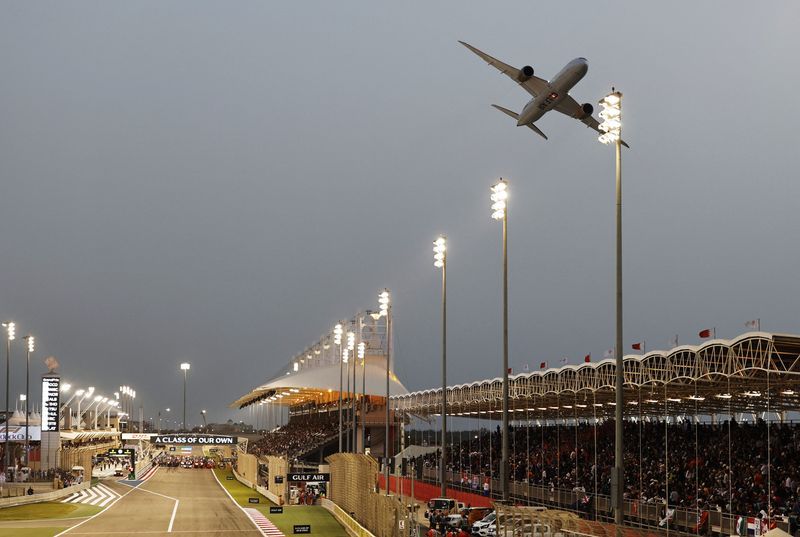
Beyond currency mechanics, Bahrain is pursuing a distinctive and symbolically important recovery project: the restoration of its Formula One Grand Prix to the 2024 racing calendar. The event was cancelled in March following the eruption of hostilities, alongside the Saudi Arabian Grand Prix. Alkhulaif indicated that preliminary discussions have commenced regarding the possibility of reinstating cancelled races into the remaining schedule. The most viable slot appears to be the weekend of October 3-4, positioned between the Azerbaijan Grand Prix in Baku and the Singapore Grand Prix on October 11. This timing would require geopolitical conditions to stabilise somewhat, but not necessarily to return to complete normality, suggesting officials believe a workable window may open before year's end.
The F1 Grand Prix carries outsized significance for Bahrain beyond its sporting prestige. The weekend event typically attracts approximately 105,000 spectators, with international high-spending visitors accounting for 10% to 15% of that attendance figure. For a kingdom eager to project normalcy and attract foreign investment whilst demonstrating that the conflict has not rendered the country uninvestable or unsafe, hosting a major international sporting event would deliver powerful messaging. The spectacle draws global media attention, showcases infrastructure quality, and generates visible economic activity across hospitality, transportation, and retail sectors—all precisely the dimensions Bahrain wishes to highlight as evidence of resilience and recovery.
Industry sources indicate that Formula One teams and organisers must make binding scheduling decisions relatively soon to permit the logistical preparations that a grand prix demands. Transporting personnel, equipment, and support infrastructure to a racetrack requires weeks of advance coordination. Unlike domestic sports events, which can sometimes absorb last-minute modifications, international Formula One requires fixed commitments regarding facilities, security arrangements, and broadcasting schedules. This timeline pressure means that Bahrain's diplomatic efforts and assessments of security conditions cannot extend indefinitely—a decision point approaches whether for or against holding the race this October.
Looking further ahead, Bahrain appears positioned to reclaim an additional prize in the international motorsport calendar. The 2026-27 F1 season will see Ramadan occur earlier in the year than it historically has, opening the possibility that Bahrain might host the season-opening grand prix—a distinction long sought by the kingdom and a benchmark of prestige within the Middle Eastern sporting sphere. Hosting the opening race of a season amplifies global visibility and establishes thematic messaging for the entire championship cycle. However, officials acknowledge that realising this ambition depends almost entirely on whether the underlying security environment and Iran-related tensions show material improvement during the coming months and into 2025. The contingency is explicit: geopolitical stabilisation remains the prerequisite for all sporting and economic recovery scenarios.

