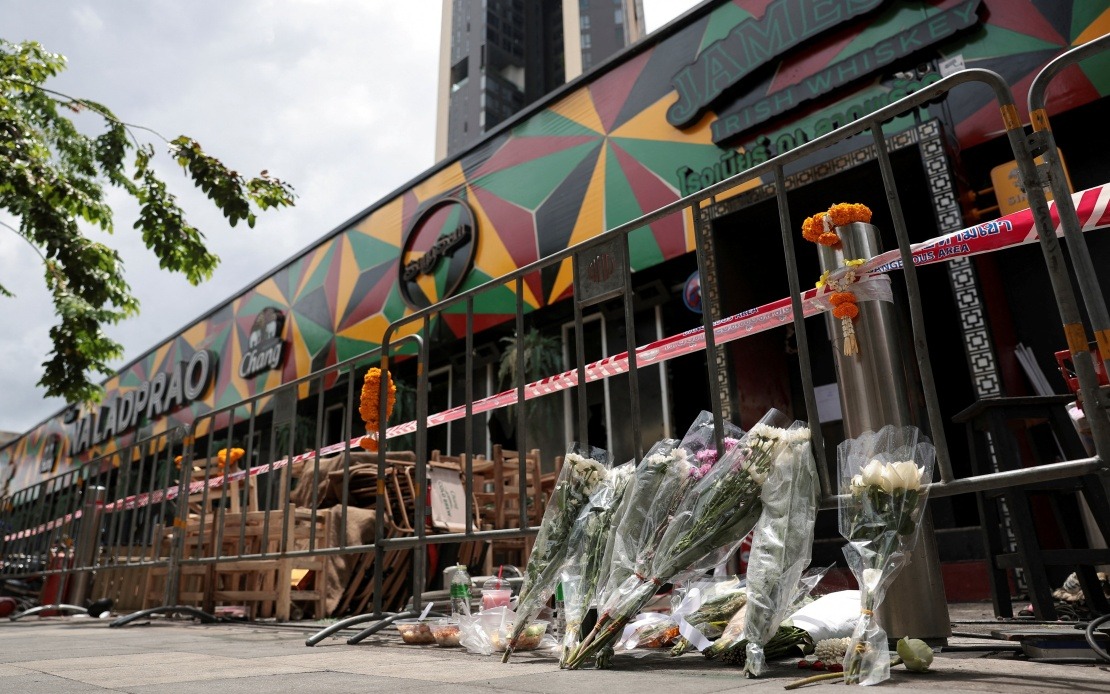
Thailand is reeling from a major public safety catastrophe following a devastating fire at an entertainment bar in Bangkok that has claimed 32 lives so far. The death toll continued to climb into the week as two critically injured victims succumbed to their injuries while receiving treatment at separate hospitals, according to Thai medical authorities. The Bangkok Emergency Medical Centre, commonly referred to as the Erawan Centre, confirmed on Wednesday that the latest fatalities occurred at Paolo Kaset Hospital and Nopparat Rajathanee Hospital, bringing the number of people who died after hospitalisation to five since the initial incident.
The fire erupted shortly before midnight on Monday at Rong Beer Na Lat Phrao, an entertainment venue located in Bangkok's Chatuchak district, catching patrons and staff off guard during operating hours. Emergency responders faced an immense challenge in rescuing trapped occupants and evacuating the premises as the blaze spread rapidly through the venue. The scale of the tragedy underscores longstanding concerns about safety standards in Thailand's sprawling nightlife industry, where venues often operate with minimal oversight and questionable adherence to building codes.
The human cost of the disaster extended far beyond those who perished in the flames. Medical authorities documented 79 total casualties from the fire as of Wednesday morning, with the majority requiring hospitalisation for burn injuries and smoke inhalation. Of these injured survivors, 44 had been released from medical care, suggesting that many sustained moderate injuries manageable with outpatient treatment. However, the condition of those still receiving care remained precarious, with 30 individuals remaining in hospital facilities, including 15 occupying intensive care unit beds where round-the-clock medical intervention continued.
The tragedy prompted an immediate high-level response from Thailand's political leadership, signalling government concern about systemic safety failures in the built environment. Prime Minister Anutin Charnvirakul issued directives on Tuesday ordering the Ministry of Interior to orchestrate comprehensive safety inspections across the kingdom's building stock and entertainment establishments. This coordinated effort involves multiple state agencies working in tandem, including the Bangkok Metropolitan Administration, local administrative bodies at the municipal level, the Department of Public Works and Town & Country Planning, the Royal Thai Police, and various other relevant government departments tasked with building oversight and public safety compliance.
The scale of the inspection initiative reflects recognition among Thai officials that the fire may represent a broader systemic problem rather than an isolated incident of negligence at one venue. Such widespread inspections suggest authorities have identified patterns of unsafe practices across the hospitality and entertainment sector that require urgent remediation. The involvement of so many different government agencies indicates the complexity of coordinating safety enforcement across Bangkok's sprawling metropolitan area and throughout the provinces, where regulatory capacity often remains limited.
Investigators have identified several critical areas requiring urgent scrutiny as they attempt to establish how the fire originated and why evacuation efforts proved so catastrophically inadequate. Preliminary findings suggest that emergency exit routes may have been obstructed or blocked, preventing rapid evacuation of patrons when the fire broke out. Such blockages of emergency egress points represent a fundamental violation of basic fire safety principles and suggest possible negligence on the part of venue management in maintaining proper safety protocols. Additionally, investigators are examining the role that combustible interior materials and furnishings may have played in accelerating the spread of flames throughout the venue once ignition occurred.
Electrical system failures constitute another major line of enquiry that authorities are pursuing with urgency. Faulty wiring, overloaded circuits, or malfunctioning electrical equipment could have provided the ignition source for the fire. The prevalence of substandard electrical installations in older Thai buildings, combined with inadequate maintenance practices in many entertainment venues, makes electrical fault a plausible culprit. Such failures often go undetected for extended periods because venues prioritise continuous operation over regular safety inspections and maintenance routines.
For Malaysian observers, this tragedy carries particular relevance given similarities between Thailand and Malaysia's nightlife sectors and the transnational nature of Southeast Asia's entertainment industry. Many Malaysian tourists frequent Bangkok's entertainment venues, and several prominent Malaysian nightlife operators maintain business interests across the region. The incident serves as a sobering reminder of the importance of rigorous enforcement of safety standards in entertainment venues, a lesson equally applicable to Malaysia's own hospitality industry.
The regulatory environment surrounding building safety in Thailand has long presented challenges, with inspections often characterised as sporadic and enforcement inconsistent. Private venue operators sometimes view safety compliance as a burdensome expense rather than an essential investment in patron welfare. This cultural and institutional disconnect between safety requirements and operational priorities has contributed to repeated tragedies in Thailand's entertainment sector over the years, establishing a troubling pattern that authorities struggle to reverse despite periodic crackdowns.
The implications for Southeast Asia's broader hospitality sector are substantial. Thailand's tourism-dependent economy makes the reputation and actual safety of its venues a matter of national economic importance, as tourist confidence directly impacts visitor numbers and spending patterns. However, the immediate human tragedy transcends commercial considerations, representing an enormous loss to families and communities affected by the disaster. Each fatality represents not merely a statistical entry but a complete disruption of family structures and community networks across Thai society.
Authorities now face the challenge of translating the momentum created by this catastrophe into sustained, meaningful reforms of how entertainment venues operate and how they are monitored. Historical patterns suggest that initial intensive inspection drives often lose momentum within months, returning to the earlier state of lax oversight. Preventing such backsliding will require sustained political commitment, adequate funding for ongoing inspections, and crucially, meaningful penalties for violations that actually incentivise compliance rather than tokenistic improvements followed by renewed negligence.

