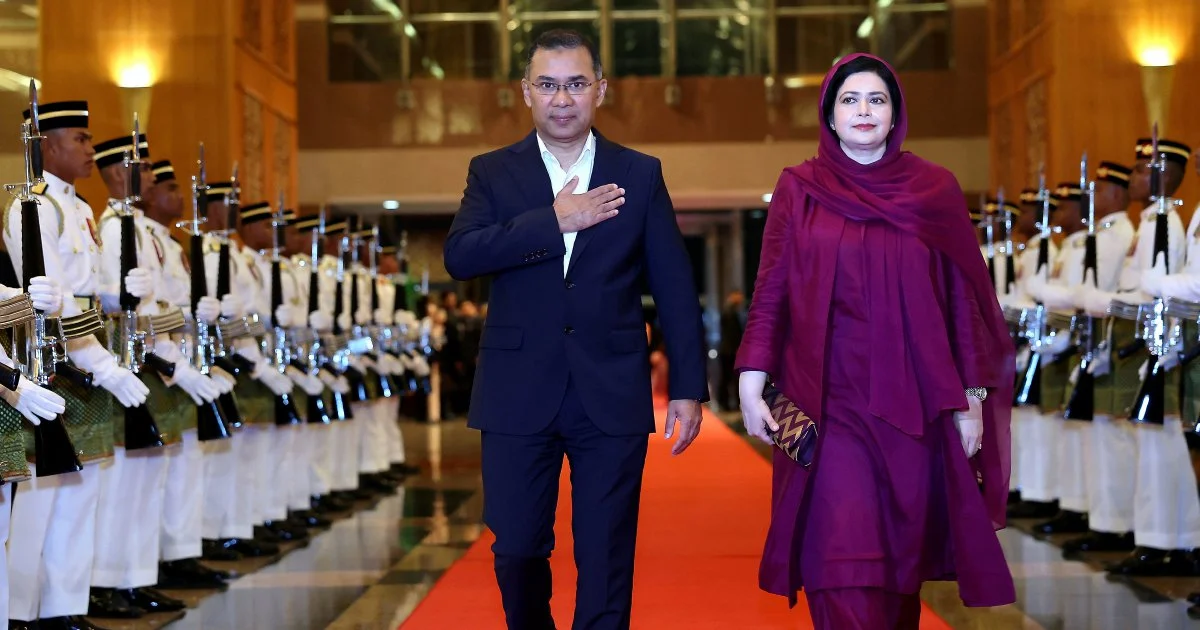
Bangladesh Prime Minister Tarique Rahman has extended a direct appeal to Malaysian business leaders, inviting them to participate in the country's expanding investment landscape and take advantage of its increasingly receptive regulatory framework. The overture represents a strategic effort to attract capital from one of Southeast Asia's most significant economies and deepens bilateral ties between the two nations.
Rahman's invitation underscores Bangladesh's broader push to diversify its foreign investment base beyond its traditional sources. With Malaysia's strong position as a regional economic hub and substantial capital reserves, the country represents an attractive partner for Bangladesh seeking to accelerate infrastructure development, manufacturing expansion, and technological advancement. Malaysian companies, particularly those in telecommunications, financial services, construction, and retail sectors, have demonstrated previous success in South Asian markets and could find comparable opportunities in Bangladesh.
The timing of this engagement reflects Bangladesh's efforts to stabilise its economy following recent political transitions. The nation has emerged from a period of domestic turbulence and is actively repositioning itself on the international stage as a stable, investment-ready destination. By specifically targeting Malaysian investors, Bangladesh signals confidence in its governance structures and commitment to honouring commercial commitments to neighbouring partners.
Bangladesh's business environment has undergone significant transformation in recent years, with improvements to infrastructure, digital connectivity, and regulatory clarity. The country's workforce of over 170 million people provides both a substantial consumer market and a reservoir of skilled and semi-skilled labour, attractive to manufacturers seeking to establish or expand regional operations. Additionally, Bangladesh's strategic location along major shipping routes and its membership in regional trade frameworks enhance its appeal as a manufacturing and logistics hub.
Malaysian investors would encounter several established competitive advantages in Bangladesh. The country maintains relatively lower operating costs compared to more developed regional economies, a significant factor for companies seeking to optimise production efficiency. Furthermore, Bangladesh has invested substantially in special economic zones and industrial parks, many equipped with modern facilities and preferential tax regimes designed to attract foreign manufacturers. These dedicated zones reduce bureaucratic friction and provide investors with predictable, transparent operating conditions.
For Malaysia, expanding investment ties with Bangladesh carries strategic value beyond immediate commercial returns. Strengthening economic linkages supports ASEAN cohesion by fostering prosperity among member states and creates foundations for deeper regional integration. Malaysian companies already operate extensively throughout South Asia, and Bangladesh represents a logical extension of existing investment strategies. The mutual benefits of closer economic engagement extend to supply chain diversification, an increasingly important consideration as global commerce adapts to geopolitical and pandemic-related disruptions.
Sector-specific opportunities warrant particular attention. Bangladesh's telecommunications infrastructure remains an area with significant expansion potential, offering openings for Malaysian tech companies and service providers. The country's banking and financial services sector, while developed, continues seeking international partnerships and capital infusions. Manufacturing, particularly in textiles, pharmaceuticals, and light engineering, represents another avenue where Malaysian expertise and capital could drive mutual growth. Additionally, Bangladesh's energy sector, increasingly focused on renewable sources, presents opportunities for companies with experience in sustainable development.
However, potential investors should acknowledge that operating in Bangladesh requires navigating specific challenges including customs procedures, infrastructure limitations in certain regions, and the need to develop local partnerships. Successful Malaysian investors in Bangladesh typically combine long-term commitment with patient capital, understanding that market penetration and profit realisation extend over several years. Engagement with industry associations, government liaison offices, and established local partners significantly improves operational outcomes.
The Prime Minister's invitation also reflects recognition of Malaysia's developmental experience and institutional expertise. Many Malaysian companies have successfully expanded into emerging markets and adapted their business models to local conditions. Bangladesh sees value in transferring this knowledge while benefiting from Malaysia's capital and technological capabilities. Joint ventures and strategic partnerships between Malaysian and Bangladeshi enterprises could accelerate capability development in both countries.
Government-to-government engagement supporting this business outreach creates a favourable framework for investor confidence. Bilateral discussions on trade agreements, double taxation avoidance, and dispute resolution mechanisms remove structural barriers to investment. Enhanced diplomatic cooperation signals political stability and commitment to honouring international commercial obligations, considerations fundamental to institutional investors evaluating long-term commitments.
Bangladesh's emergence as an increasingly important Asian economy positions it strategically for Malaysian engagement. With annual economic growth consistently exceeding five percent and a young, growing middle class driving consumer demand, the country offers both cyclical growth opportunities and long-term structural expansion. Malaysian investors with experience in middle-income market development possess particular competitive advantage in capturing emerging opportunities before international competition intensifies.
As Bangladesh continues modernising its economy and infrastructure, the window for establishing first-mover advantage in select sectors remains open. Malaysian companies considering expansion into South Asia would benefit from evaluating Bangladesh's proposition alongside more established markets. The combination of improving business conditions, strategic geographic location, and deliberate government encouragement creates circumstances conducive to successful investment for well-positioned Malaysian enterprises.

