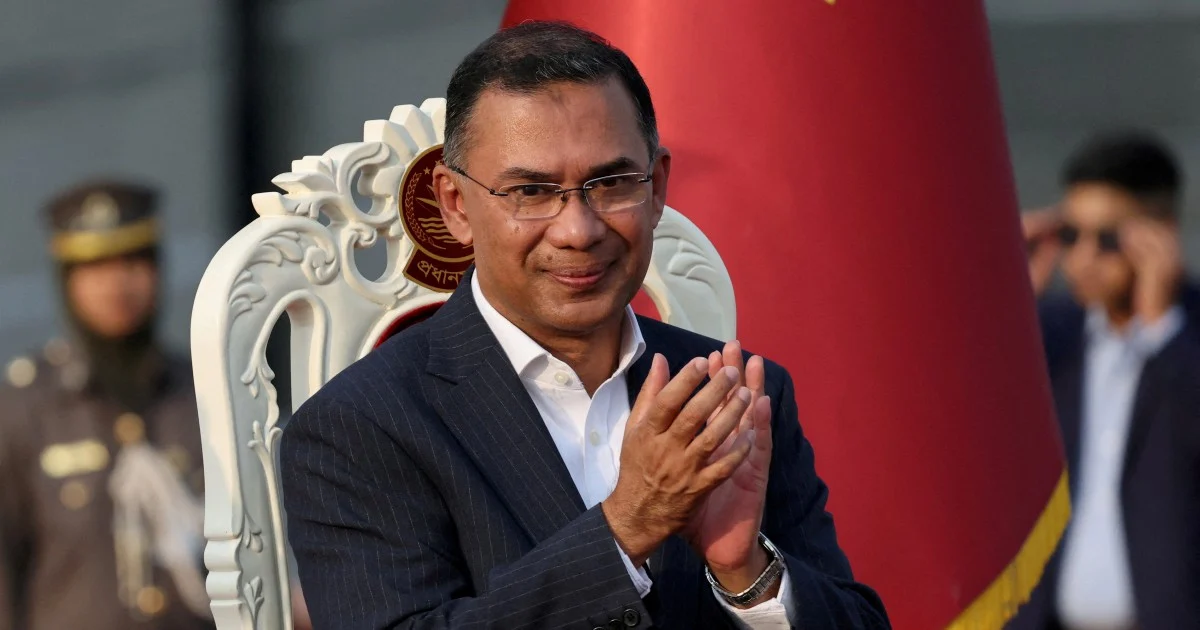
Bangladesh Prime Minister Tarique Rahman touched down at Kuala Lumpur International Airport in Sepang today, marking the beginning of a significant diplomatic mission aimed at revitalising and broadening the relationship between Dhaka and Kuala Lumpur. The visit represents an important moment for both Southeast Asian neighbours to reaffirm their commitment to collaborative engagement across multiple sectors and shared developmental priorities.
The timing of Rahman's visit carries considerable weight in the regional context, reflecting the evolving geopolitical landscape of Southeast Asia where bilateral relationships continue to shape economic and political dynamics. For Malaysia, receiving the Bangladeshi premier signals an emphasis on strengthening partnerships with major population centres and emerging economies in South Asia, a region increasingly central to Asian economic integration efforts. Bangladesh, as South Asia's second-largest economy and a crucial neighbour to the region, represents a strategic partner for Malaysian business and political interests.
Bilateral relations between Malaysia and Bangladesh span multiple dimensions, encompassing trade, investment, cultural exchanges, and people-to-people connections. The two nations share maritime boundaries in the Bay of Bengal and possess complementary economic structures, with Bangladesh emerging as a significant manufacturing hub while Malaysia serves as a regional financial and technology centre. Enhanced cooperation between the two countries can unlock opportunities for joint ventures, technology transfer, and supply chain integration that benefit both economies.
The visit is expected to focus on deepening economic partnerships, with particular attention to manufacturing sectors where Bangladesh has developed considerable comparative advantage. Malaysian companies have historically invested in Bangladesh's textile and garment industries, and Rahman's visit may pave the way for expanded collaborative ventures in emerging sectors such as renewable energy, digital technology, and infrastructure development. Trade volumes between the nations have shown steady growth, and both governments appear committed to accelerating this momentum through strategic policy alignment and targeted investment initiatives.
Cultural and educational cooperation remains another vital pillar of the bilateral relationship. Malaysia has long served as a destination for Bangladeshi students pursuing higher education, while Malaysian institutions have increasingly engaged in collaborative research and knowledge-sharing programmes with Bangladeshi counterparts. These educational bridges contribute significantly to people-to-people understanding and create networks of professionals and intellectuals who carry forward bilateral goodwill beyond government circles.
Regional security and stability concerns also feature prominently in contemporary Malaysian-Bangladeshi dialogue. Both nations face shared challenges including maritime security, transnational crime, and the need for coordinated responses to humanitarian crises in the Bay of Bengal region. Enhanced cooperation on these fronts strengthens the broader Southeast Asian capacity to address transnational challenges while protecting maritime interests and ensuring stability along crucial shipping lanes that impact global commerce.
The visit comes at a moment when ASEAN-South Asian relations are gaining renewed strategic importance. While Bangladesh remains outside ASEAN, its interactions with member states like Malaysia shape the broader architecture of regional cooperation. Bangladesh's participation in regional mechanisms such as BIMSTEC and its growing engagement with Southeast Asian forums underscore its recognition as a key player in shaping the geopolitical trajectory of the wider Asian region. Malaysia's embrace of closer ties with Dhaka reflects appreciation for Bangladesh's strategic position and its potential contribution to regional peace and prosperity.
Investor confidence and business community engagement will likely form crucial elements of Rahman's visit. Malaysian entrepreneurs and corporate leaders view Bangladesh as a lucrative destination for expansion, given its large domestic market and competitive labour costs. Facilitated dialogue between government officials and business delegations during such visits typically yields practical outcomes, including new agreements on trade preferences, investment guarantees, and sector-specific cooperation frameworks.
The Prime Minister's presence in Malaysia also provides an opportunity for both governments to address any outstanding bilateral issues and chart a forward-looking agenda for the next phase of their relationship. Whether the discussions encompass migration issues, labour standards, or environmental concerns, the high-level engagement signals that both nations take their partnership seriously and are willing to invest political capital in nurturing this connection. Such diplomatic moments, though often reported in routine fashion, represent the foundational work that sustains international relationships and creates the conditions for mutual prosperity.
Looking ahead, the outcomes of Rahman's visit will likely establish parameters for enhanced collaboration across multiple sectors and define the trajectory of Malaysian-Bangladeshi engagement for coming years. Successfully capitalising on this visit requires both nations to translate diplomatic goodwill into concrete agreements, institutional mechanisms, and sustained implementation capacity. For Malaysian policymakers, the visit reinforces the importance of nurturing strategic relationships across South Asia and positioning Malaysia as a reliable partner for emerging economies navigating complex regional dynamics.

