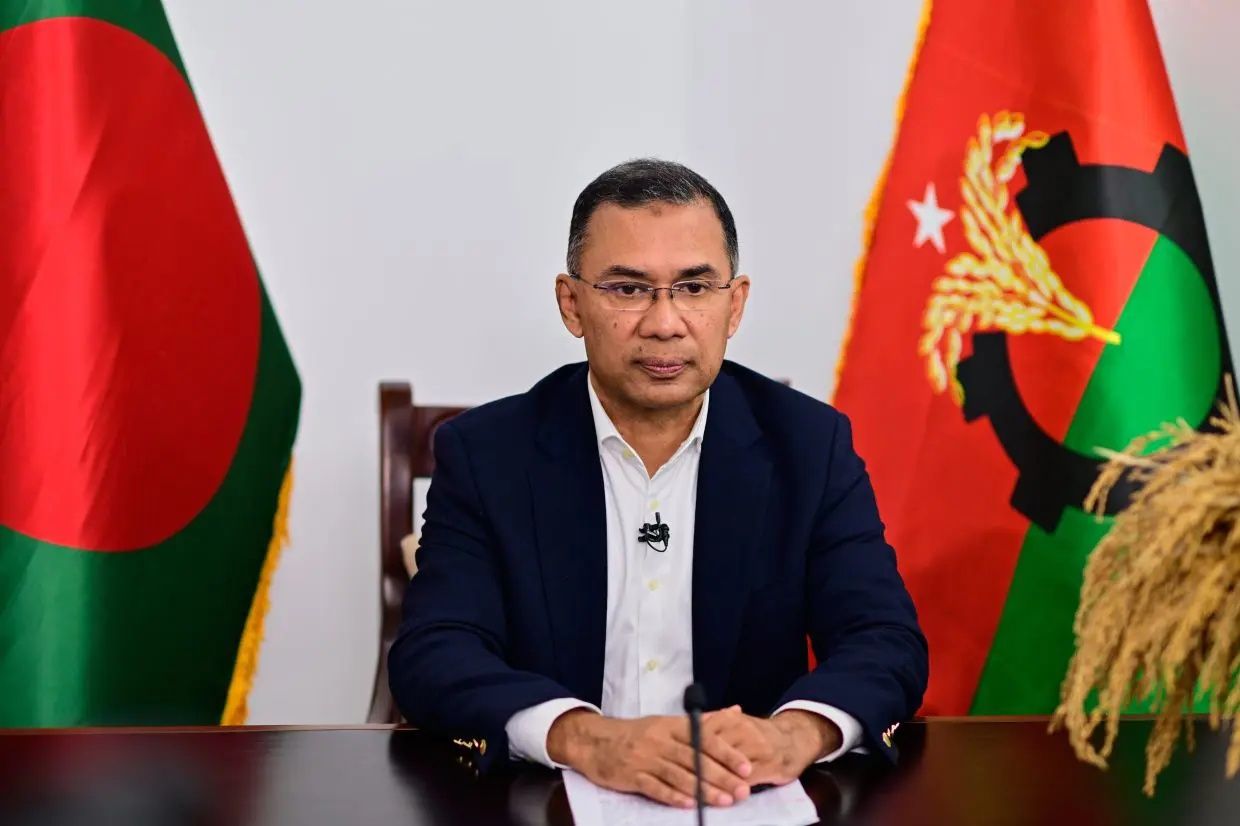
Bangladesh Prime Minister Tarique Rahman is embarking on his maiden foreign tour since assuming office, with visits to Malaysia and China that signal a deliberate recalibration of the nation's diplomatic priorities. The foreign ministry confirmed Saturday that Rahman would travel to Malaysia on Sunday before proceeding to China, marking a strategic choice to prioritise economic engagement with key regional and global partners over a traditional first stop to neighbouring India. The sequence of destinations carries considerable symbolic weight in South Asian diplomatic circles, where the direction of a new leader's initial foreign visits often indicates their government's geopolitical orientation and policy emphasis.
The timing and destination of Rahman's tour arrives at a pivotal moment for Bangladesh, which has undergone substantial political transformation following the tumultuous events of 2024. The removal of former Prime Minister Sheikh Hasina through popular uprising created a rupture in Dhaka's long-standing alignment with New Delhi, introducing fresh uncertainty into one of South Asia's most complex bilateral relationships. By choosing to prioritise Malaysia and China first, Rahman is demonstrating his administration's intent to pursue a more balanced and economically driven foreign policy that extends beyond the subcontinent's traditional power dynamics.
Malaysia represents a particularly significant destination for Rahman's inaugural trip, given the substantial Bangladeshi presence already embedded within Malaysian society and the economy. The Southeast Asian nation hosts approximately 800,000 Bangladeshi workers, representing more than one-third of Malaysia's entire foreign workforce. This community constitutes a vital economic lifeline for Bangladesh, generating substantial remittances that bolster household incomes across rural and urban areas. The visit provides an opportunity to strengthen labour agreements, facilitate worker welfare initiatives, and deepen commercial ties that benefit both nations, while reinforcing the existing human connections that underpin the bilateral relationship.
China features prominently on Rahman's agenda as the second destination, with discussions anticipated to centre on trade expansion and major infrastructure initiatives that could reshape Bangladesh's development trajectory. Among the priority projects under consideration is the long-stalled Teesta River project, an ambitious scheme designed to restore and manage this critical waterway through comprehensive dredging operations, embankment construction, and irrigation infrastructure development. The Teesta system is economically vital to Bangladesh, supporting agriculture across multiple regions and influencing water availability across a substantial portion of the country. Chinese involvement and financing could unlock progress on this initiative, which has faced protracted delays and competing stakeholder interests.
The Bangladeshi foreign ministry has framed these visits as a major diplomatic offensive aimed at broadening and strengthening the nation's economic partnerships across multiple continents and strategic partnerships. This positioning reflects a deliberate move away from a historically India-centric foreign policy approach that characterised the previous administration. The new government appears intent on leveraging Bangladesh's geographic position at the intersection of South Asia and Southeast Asia, as well as its growing importance within broader Indo-Pacific dynamics, to attract investment and cooperation from multiple quarters.
The backdrop to Rahman's tour remains the fractured relationship between Bangladesh and India, a rupture that accelerated following the 2024 uprising and has continued to deteriorate in subsequent months. Former Prime Minister Sheikh Hasina, who maintained close personal and political ties to New Delhi, remains in hiding within Indian territory following her flight from Bangladesh. The Rahman administration has made repeated formal demands for Hasina's extradition, which Indian authorities have consistently refused, creating a festering diplomatic irritant between the two nations. This standoff symbolises the broader estrangement between Dhaka and Delhi despite their geographical proximity and interconnected economies.
Border tensions have further strained the relationship, with India accused of systematically pushing individuals it classifies as illegal migrants across the frontier into Bangladesh. These expulsions have created humanitarian concerns and inflamed public opinion in Dhaka, with Bangladeshi civil society and media outlets criticising New Delhi's approach as coercive and inhumane. The scale of these cross-border movements has grown sufficiently to become a focal point of political discourse in Bangladesh, with domestic pressure mounting on the Rahman government to take decisive diplomatic action.
The geopolitical dimension of Rahman's tour also reflects the intensifying strategic competition between China and India for influence across South Asia. New Delhi has long harboured concerns regarding Beijing's expanding regional footprint, viewing Chinese infrastructure investments and development projects as vehicles for extending political leverage. India's dominance in South Asian affairs has been gradually contested by Chinese initiatives ranging from the Belt and Road Initiative to direct bilateral development partnerships. Bangladesh, as a nation of 170 million people occupying a strategically important location and demonstrating significant economic growth potential, represents a particularly contested arena within this broader competition.
Rahman's government inherited a nation navigating complex transitions across multiple dimensions simultaneously. The interim administration that succeeded Hasina oversaw a period of relative stability but lacked the democratic mandate and institutional consolidation necessary for sustained governance. Rahman's electoral victory and subsequent assumption of office in February provided Bangladesh with renewed political legitimacy, though considerable institutional challenges remain unresolved. His foreign policy choices during this early phase will establish the template for how his administration navigates the region's competing pressures and opportunities.
The visit to Malaysia additionally reflects recognition of Southeast Asia's growing importance to Bangladesh's economic future. The Association of Southeast Asian Nations represents a dynamic region of rapid growth and expanding commercial opportunities, in contrast to the more saturated and politically contested South Asian marketplace. Malaysian investment in Bangladesh has been modest but steady, concentrated primarily in manufacturing and services sectors. Enhanced bilateral engagement could unlock further commercial integration, particularly in sectors where Malaysian expertise and capital alignment with Bangladeshi development needs.
China's role as a development partner deserves particular scrutiny given the strategic implications for Bangladesh's future trajectory. Beijing has demonstrated willingness to finance large-scale infrastructure projects across Asia, often with flexible repayment terms and minimal governance conditionality compared to Western lenders or multilateral institutions. The Teesta project exemplifies the type of undertaking where Chinese involvement could prove transformative, though questions regarding debt sustainability and long-term dependency require careful consideration. Rahman's government must navigate the balance between leveraging Chinese support for developmental objectives and maintaining genuine policy autonomy.
The composition of Rahman's initial foreign visits ultimately represents a choice to emphasise economic partnership and commercial opportunity over traditional alliance politics or geographical proximity. This strategic reorientation reflects Bangladesh's growing confidence in its own diplomatic agency and recognition that the nation's interests extend well beyond South Asian frameworks. The visits to Malaysia and China signal an administration willing to challenge historical patterns and pursue a more diversified and pragmatic foreign policy orientation tailored to contemporary regional dynamics and national development imperatives.

