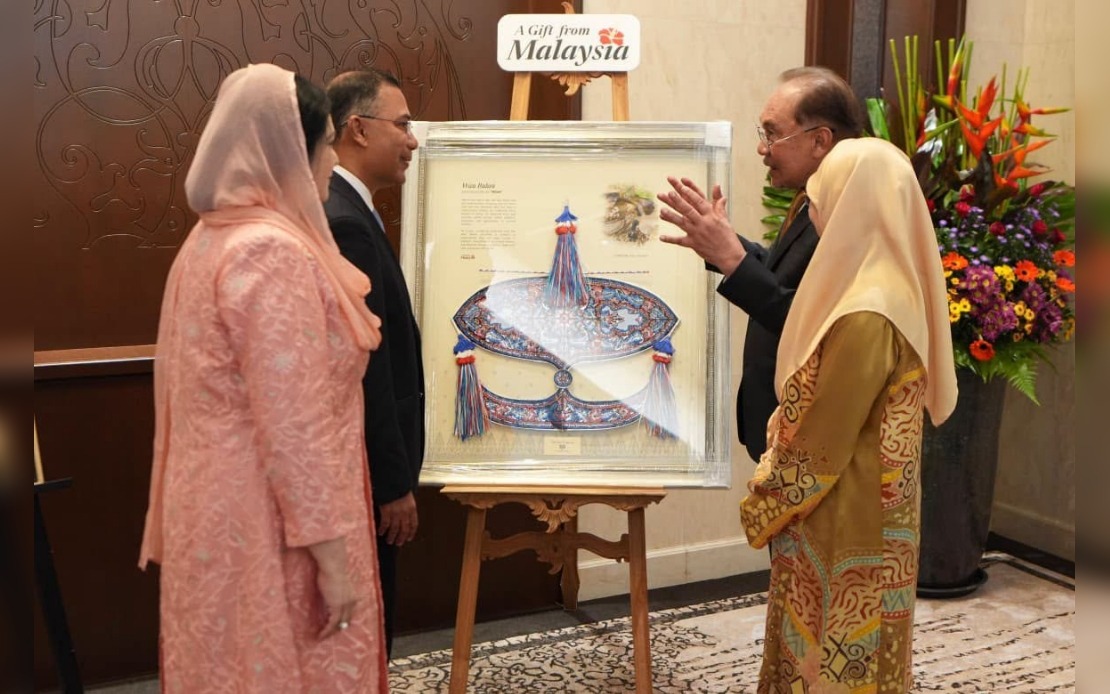
Bangladesh Prime Minister Tarique Rahman has wrapped up his first official state visit to Malaysia with fresh pledges to intensify cooperation across all dimensions of the bilateral relationship, signalling the importance Dhaka places on ties with its Southeast Asian neighbour. Following substantive discussions with Prime Minister Datuk Seri Anwar Ibrahim, Tarique underscored Bangladesh's determination to leverage shared interests and expand the partnership into new areas that benefit both nations and their citizens.
In remarks conveyed through official channels, Tarique emphasised that people-to-people bonds form the backbone of the relationship between the two countries, extending across trade, education, culture, and immigration. This people-centric framing reflects a strategic understanding that sustainable bilateral relations rest not merely on government-to-government transactions but on the lived experiences and interactions of millions of ordinary citizens from both nations who work, study, and settle in each other's countries. For Malaysian readers, this recognition carries particular weight given the substantial Bangladeshi diaspora in Malaysia, comprising migrant workers, students, and professionals whose remittances and contributions significantly shape local economies and communities.
The Prime Minister's appreciation for the personal warmth extended by Datuk Seri Anwar Ibrahim and his wife, Datuk Seri Dr Wan Azizah Wan Ismail, goes beyond standard diplomatic courtesy. It reflects a deliberate effort to establish rapport at the highest levels of government, a foundation upon which technical cooperation agreements and trade arrangements can more effectively function. Such personal connections between national leaders often translate into smoother negotiations on contentious issues, more flexible approaches to bilateral disputes, and quicker resolution of administrative hurdles that affect citizens and businesses on both sides.
Tarique's invocation of historical connections running back to the presidencies of Shaheed President Ziaur Rahman and the premierships of Begum Khaleda Zia positions the current engagement within a longer narrative arc. This historical anchoring serves multiple purposes: it legitimises present cooperation by rooting it in proven relationships, it appeals to shared regional history and values, and it suggests continuity in Bangladesh's foreign policy orientation despite domestic political transitions. For Malaysian observers, this historical consciousness underscores that Bangladesh views Malaysia not as a transactional partner but as a longstanding ally with whom fundamental interests align.
The reaffirmation of bilateral and multilateral ties carries particular significance in a regional context marked by competing geopolitical pressures and shifting alignments. Both Bangladesh and Malaysia have pursued balanced foreign policies, maintaining substantial relationships across the Global North and South while prioritising regional cooperation through mechanisms like ASEAN, in which Malaysia is a founding member. Bangladesh's aspiration to deepen engagement with Malaysia can be understood as part of a broader Southeast Asian integration strategy, seeking to strengthen connections with established regional powers that can facilitate technology transfer, investment flows, and market access.
Tarique's explicit mention of gratitude to His Majesty Sultan Ibrahim, King of Malaysia, for his time and engagement during the visit underscores the significance accorded to the institutional dimensions of bilateral relations. Royal-level involvement in state visits signals the importance both nations attach to the relationship and provides symbolic weight that government-to-government discussions alone cannot generate. For Malaysia, such courtesies reciprocated with substantive engagement create diplomatic goodwill that can prove invaluable when navigating regional tensions or coordinating positions on matters of mutual concern.
The discussions themselves, though not detailed in official statements, likely covered trade expansion, labour mobility agreements, maritime security cooperation, and counter-terrorism coordination—issues of persistent relevance to both nations. Bangladesh's growing manufacturing capabilities and Malaysia's advanced services and technology sectors create natural complementarities that both governments have incentive to exploit. Additionally, given shared maritime boundaries in the Bay of Bengal and Strait of Malacca regions, security cooperation assumes heightened importance as both nations navigate challenges ranging from piracy to transnational organised crime.
The timing of Tarique's visit merits consideration alongside broader regional developments. Bangladesh's recent political transitions and efforts to stabilise domestic governance create windows of opportunity for external partners to deepen engagement and offer support. Malaysia, with its decades of experience in managing ethnic diversity and economic development, offers lessons and partnership models that Bangladesh might find instructive. Conversely, Bangladesh's strategic location, demographic scale, and growing economic potential make it an increasingly important player for Malaysia's own regional influence and economic expansion strategies.
Looking forward, the commitments exchanged during this visit will likely crystallise into concrete initiatives—perhaps enhanced defence cooperation, expanded educational scholarships, accelerated business-to-business networking, or joint infrastructure projects. The significance lies not in grand rhetoric but in translating political will into measurable outcomes that improve the lives of ordinary citizens whilst advancing each nation's strategic objectives. For Malaysia, cultivating closer ties with Bangladesh represents investment in a relationship with a major South Asian nation capable of shaping regional politics and economics in coming decades.

