Bangladesh's legislative assembly is preparing to select the nation's next president on Thursday, with ruling party figure Mirza Fakhrul Islam Alamgir widely expected to secure the predominantly honorary position. At 78 years old, Alamgir serves as secretary general of the Bangladesh Nationalist Party (BNP) and minister for local government affairs. Parliamentary observers anticipate he will gain overwhelming support in the afternoon ballot for this five-year post, placing him at the helm of a nation with 170 million inhabitants.
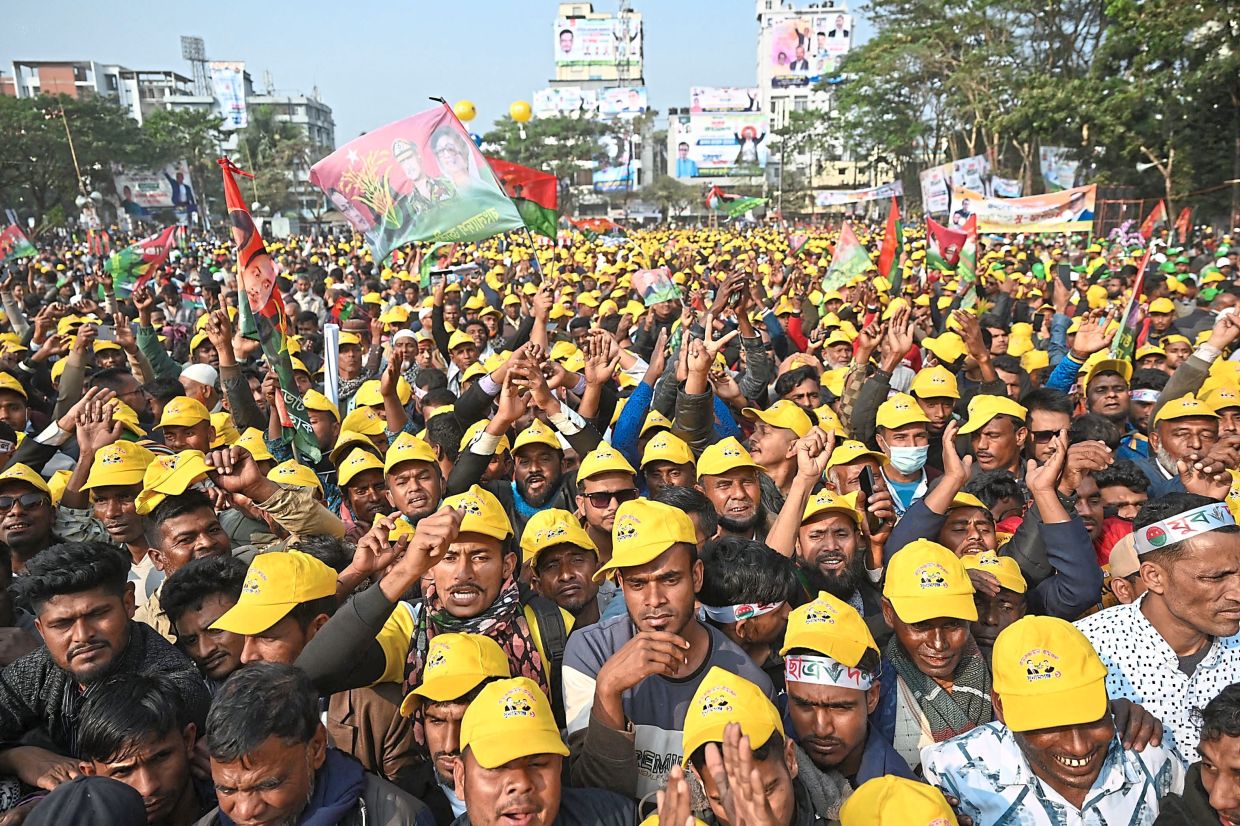
The forthcoming election represents a significant milestone in Bangladesh's political trajectory following the dramatic upheaval of 2024. The BNP, led by Prime Minister Tarique Rahman, swept February's parliamentary elections with a commanding majority—the first electoral contest held after a popular revolution toppled the previous government. This electoral mandate has consolidated the party's grip on state institutions, with the presidency now becoming the latest office to reflect the BNP's dominant position in contemporary Bangladeshi politics.
Speaking to journalists on Tuesday, Alamgir expressed his sense of humility regarding the impending elevation, stating his selection represents both the confidence reposed in him by his party and divine blessing. He underscored his commitment to remaining accessible and dedicated to public welfare, signalling an intent to transcend the ceremonial limitations typically associated with the presidential role in Bangladesh's Westminster-influenced system. His remarks suggest he intends to position himself as a custodian of national interests rather than merely a figurehead.
Alamgir's political journey stretches across five decades of engagement with Bangladesh's turbulent democratic institutions. Born on January 26, 1948, he entered politics while pursuing an economics degree at Dhaka University, where he emerged as a prominent student organiser during the 1969 uprising against military rule imposed by Pakistan. This youthful activism placed him among the vanguard of those who challenged authoritarian governance, ultimately contributing to Bangladesh's independence two years later. Following university, he balanced an academic career as an economics lecturer with progressive involvement in public administration before advancing into electoral politics.
Throughout his ministerial tenure, Alamgir has overseen diverse portfolios including agriculture, aviation, and tourism. However, his recent prominence derives largely from his role as an opposition figurehead during the previous administration under Sheikh Hasina. While BNP chief Khaleda Zia faced incarceration and her son Rahman was exiled, Alamgir maintained the party's organizational cohesion and political visibility through sustained resistance. This period, though marked by personal hardship—he endured multiple arrests on charges he characterised as politically manufactured—established him as a symbol of institutional resilience amid authoritarian pressure.
The previous president, Mohammed Shahabuddin, departed office in July citing health deterioration, having been elected merely two years earlier in 2023. Shahabuddin's resignation concluded a five-year term prematurely, removing from the presidency a figure closely aligned with Hasina's ousted administration. His departure effectively cleansed the presidency of associations with the former regime, a symbolic transformation that the BNP's endorsement of Alamgir reinforces. This transition reflects broader efforts to establish institutional discontinuity from what rights advocates characterised as a period of systematic repression.
Alternative nominations exist within the electoral process, though their prospects appear marginal. Oli Ahmed, nominated by an eleven-party coalition dominated by Jamaat-e-Islami, represents opposition interests. Yet the BNP's substantial parliamentary preponderance renders his election mathematically improbable. Parliamentary procedure dictates voting will commence around 2 pm local time, with results expected to confirm Alamgir's ascension to the presidency.
The transition encapsulates wider implications for Southeast Asian governance dynamics. Bangladesh's return to electoral democracy following the 2024 revolution has reestablished constitutional procedures, contrasting sharply with patterns of democratic backsliding observed elsewhere in the region. Alamgir's elevation through transparent parliamentary process—despite the predetermined outcome—represents institutional continuity rather than autocratic imposition. This procedural regularity carries symbolic importance for a nation seeking to consolidate democratic norms after years of deteriorating institutional integrity.
For Malaysian observers and the broader Southeast Asian community, Bangladesh's presidential succession demonstrates how democratic systems recover institutional legitimacy following political convulsions. The BNP's dominance reflects electoral choice rather than extraconstitutional seizure of authority, distinguishing Bangladesh's trajectory from other regional precedents. Alamgir himself, despite his advancing years, carries biographical weight as both a veteran of independence struggles and a figure who resisted authoritarian governance, potentially lending his presidency credibility with constituencies demanding genuine democratic restoration.
Alamgir's personal circumstances reflect Bangladesh's middle-class political culture. Married to Rahat Ara Begum, a retired financial administrator, and father to two daughters, his household configuration mirrors professional upper-middle-class families prevalent across South Asian capitals. Such biographical details, while apparently incidental, subtly communicate accessibility and familiarity to urban electorates concerned about whether leadership remains connected to ordinary citizens' experiences.
The presidential vote itself carries limited direct implications given the position's ceremonial constitutional status. Bangladesh operates with parliamentary sovereignty concentrated in the premier's office, rendering the presidency subordinate within executive architecture. Nevertheless, symbolic appointments matter significantly in post-conflict democratic transitions, where institutional reconstruction demands public confidence that power structures have genuinely transformed. Alamgir's election completes this symbolic renovation, removing traces of the previous regime from visible state authority while introducing figures recognised for democratic commitment. His assumption of office will thus mark not merely administrative succession, but institutional reckoning with Bangladesh's troubled recent past.

