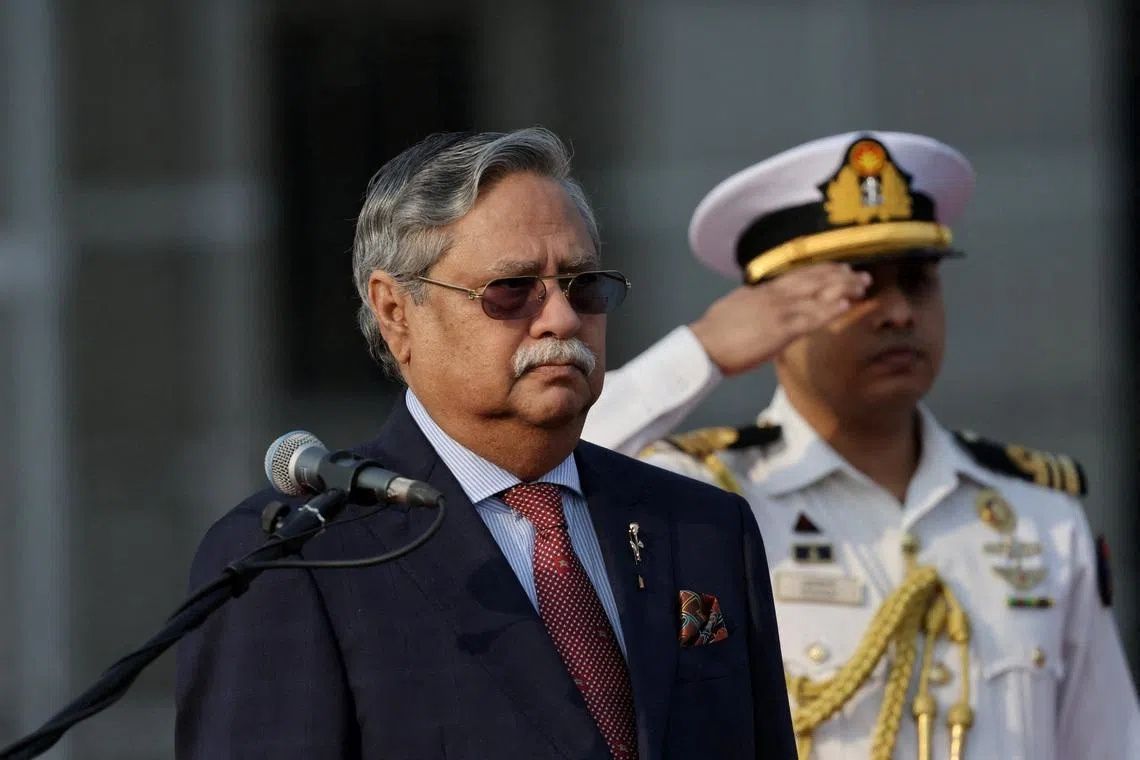
Bangladesh's President Mohammed Shahabuddin has stepped down from his position, citing serious medical issues that have compromised his ability to carry out the constitutional duties of the nation's head of state. The 76-year-old announced his resignation on Friday through a formal statement released by his office, marking a significant development in the political landscape of the South Asian nation during a period of considerable institutional upheaval.
Shahabuddin's medical disclosure reveals he has been diagnosed with Autonomic Neuropathy, a neurological condition affecting the autonomic nervous system that regulates involuntary functions. The condition has resulted in episodes of momentary loss of consciousness, complications the former president determined were incompatible with the demands of the ceremonial yet symbolically important role he has occupied since April 2023. His departure occurs at a particularly sensitive moment for Bangladesh's transitional government and its attempt to consolidate control following dramatic political upheaval.
The timing of Shahabuddin's resignation carries substantial political weight, arriving approximately five months before ousted Prime Minister Sheikh Hasina's anticipated return to Bangladesh. Hasina fled to India in August 2024 following widespread civil unrest centred on a student-led movement that ultimately toppled her government. Her former ally's departure from the presidency effectively removes one of the few remaining government figures with historical ties to her administration, further isolating her faction within the current institutional framework.
Hasina's political position has deteriorated markedly since her departure. Her Awami League party, which dominated Bangladeshi politics for extended periods, currently faces an official ban from operating within the country. The party's leadership structure has fractured severely, with numerous prominent members facing incarceration or forced underground existence. These constraints on her political apparatus substantially complicate any attempt by Hasina to rebuild influence upon her return, and the absence of sympathetic figures in high governmental positions weakens her negotiating position considerably.
The presidential office, though constitutionally designated as a ceremonial position, carries substantial symbolic importance within Bangladesh's political framework. As head of state, the president serves as commander-in-chief of the armed forces, a role that carries significant institutional weight despite executive authority residing with the prime minister and cabinet. The transition to new presidential leadership therefore merits careful observation, particularly regarding whether the replacement will demonstrate any alignment with Hasina's interests or maintain independence from factional pressures.
According to constitutional procedures outlined in Shahabuddin's resignation statement, the Speaker of the Jatiya Sangsad, Bangladesh's national parliament, will assume presidential duties during the interim period preceding election of a permanent successor. This arrangement ensures continuity of institutional function while the political system navigates the procedural requirements for selecting a new president. The speaker's temporary assumption of executive powers represents a standard constitutional mechanism designed to prevent governance vacuums during leadership transitions.
Bangladesh's current governmental configuration reflects the unstable equilibrium characterising the nation's politics since Hasina's departure. The transitional administration has sought to consolidate its legitimacy while managing expectations from the international community, numerous civil society organisations, and the broader population regarding accountability mechanisms and institutional reforms. Shahabuddin's health-related resignation, while seemingly administrative, intersects with these broader questions about the current government's stability and the political future facing key former officials.
The political calculations surrounding Hasina's anticipated return remain complex and contingent on multiple variables. Her party's banned status creates immediate practical obstacles to conventional political organising, while the incarceration or flight of party personnel reduces her available institutional infrastructure. The departure of Shahabuddin, however modest his influence may have been as a ceremonial president, represents a further erosion of her already limited support within the formal structures of state power.
International observers monitoring Bangladesh's political transition will likely interpret Shahabuddin's departure within the broader context of institutional consolidation by the current administration. The movement of administration figures from positions of authority to retirement, whether through health-related or political circumstances, frequently signals shifting power dynamics within transitional governments. The specific timing and manner of his departure, coupled with commentary regarding his historical alignment with Hasina, contributes to perceptions regarding whether the current system intends to create space for her political rehabilitation or maintain institutional distance from her faction.
For the approximately 173 million residents of this predominantly Muslim nation, the presidential transition represents an administrative adjustment within the broader backdrop of political and social reconstruction. The student-led uprising that precipitated Hasina's departure reflected deep popular grievances regarding governance, employment prospects, and accountability within political institutions. How the current administration addresses these underlying concerns, and whether new presidential leadership demonstrates commitment to substantive institutional reform, will substantially influence public confidence in Bangladesh's political trajectory during the coming months.

