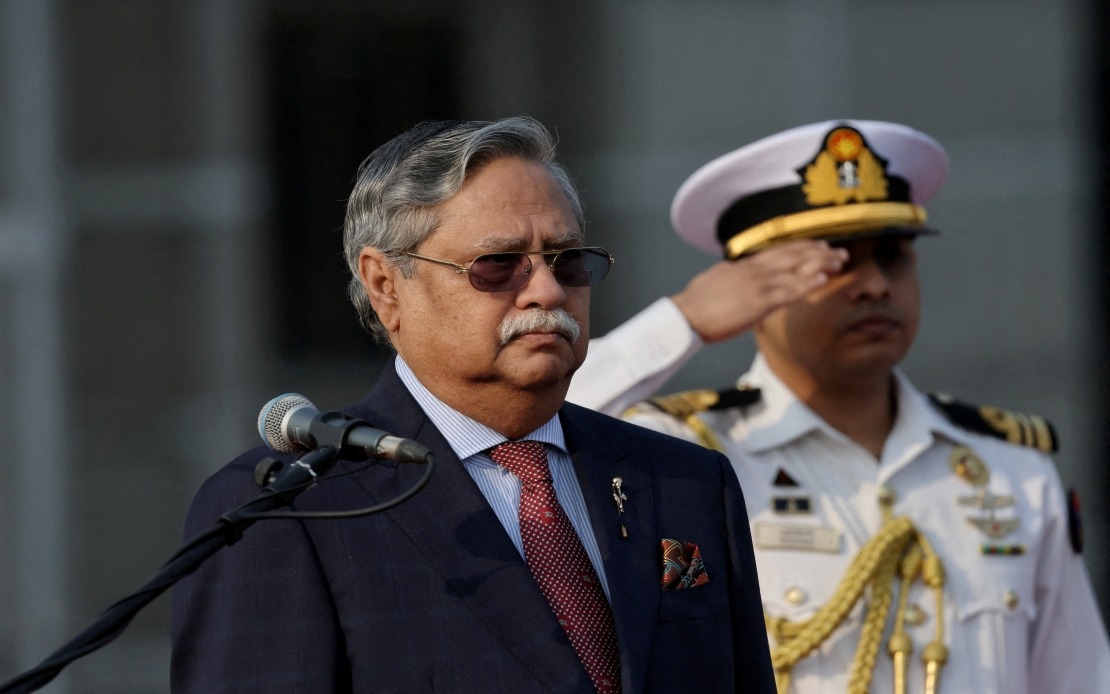
Bangladesh has entered a period of constitutional transition following the unexpected resignation of President Mohammed Shahabuddin on Friday. The 76-year-old leader cited deteriorating health as the reason for his departure, informing Parliament Speaker Hafiz Uddin Ahmed through a formal letter that he could no longer discharge the responsibilities inherent in his constitutional office. With his departure, Bangladesh faces the prospect of electing a new head of state well ahead of the April 2028 expiration of his five-year mandate, having served less than two and a half years since taking office in April 2023.
Shahabuddin's resignation underscores the mounting political pressures bearing down on state institutions following the dramatic upheaval that swept the country in summer 2024. At that juncture, former Prime Minister Sheikh Hasina found herself forced from power by a student-led uprising that fundamentally reshaped Bangladesh's political landscape. Her subsequent flight to India, where she continues to reside, left the government in the hands of successor administrations grappling with the aftermath of that tumultuous transition. The ousted prime minister now faces capital charges in absentia, convicted in connection with civilian deaths during the period of unrest, though she has publicly declared intentions to return home.
Underlying Shahabuddin's exit are persistent reports that he maintained covert contact with Hasina while abroad. During a medical visit to the United Kingdom in May, media accounts suggested the president engaged in telephone communication with the exiled former premier, a connection that would have proven deeply controversial in the current political environment where the Awami League, Hasina's party, faces official prohibitions. Such interactions, whether confirmed or speculative, have served to undermine confidence in Shahabuddin's position and accelerated calls from opposition elements demanding his removal from office.
The constitutional mechanics governing this transition are clearly established within Bangladesh's legal framework. Parliament Speaker Hafiz Uddin Ahmed will serve as interim president pending the election of a permanent successor. The constitution mandates that a new president must be elected within a 90-day window, establishing a defined timeline for the country's political completion of this institutional change. This procedural clarity provides some stability to an otherwise uncertain moment in Bangladesh's governance.
The likelihood of the next presidential election carries significant implications for the current power structure. The Bangladesh Nationalist Party (BNP) currently commands a parliamentary majority and therefore possesses decisive influence over which candidate will secure the presidency. Under Bangladesh's system, the president is elected exclusively by members of parliament, concentrating this choice within the legislature rather than distributing it to the broader electorate. This structural reality means that the BNP's nominee stands in a dominant position to claim the office when voting occurs.
Shahabuddin's tenure, which began under the Awami League government stewardship of Hasina, represents a link to the previous political order that has since been overturned. His appointment in April 2023 occurred during a period when Hasina and her party controlled the levers of national power. The intervening months have transformed the political reality entirely, leaving Shahabuddin positioned awkwardly between the old guard and the new arrangement. His resignation effectively removes from the presidency a figure symbolically tied to an administration that Bangladesh's current political actors regard as discredited.
For regional observers and Malaysia's policy establishment, these developments in Bangladesh warrant careful attention. The stability of democratic institutions in neighbouring countries carries implications for regional security and economic cooperation. The manner in which Bangladesh navigates this presidential succession will signal the resilience of its constitutional order and the commitment of political actors to established procedures during moments of institutional stress. The compressed timeline for selecting a replacement adds urgency to ensuring that the process unfolds transparently and in accordance with constitutional norms.
The health rationale cited by Shahabuddin, while potentially genuine given his age and the acknowledged medical needs that prompted his UK visit, coincides suspiciously with the political headwinds that have gathered around his position. Whether illness or accumulated political pressure represents the primary driver of his resignation, the practical effect remains identical: Bangladesh requires new presidential leadership to navigate the complex political environment that has emerged in the post-Hasina era. The question of whether Shahabuddin's departure signals a return to institutional normalcy or merely represents the opening phase of continued political recalibration will become clearer in the weeks following the new election.
The implications for Malaysia's relations with Bangladesh remain modest in the immediate term, yet they underscore the broader regional trend of political transitions reshaping Southeast Asian and South Asian governments. Malaysia's engagement with Bangladesh has traditionally centred on trade, investment, and labour migration. Continuity in Bangladesh's institutional functioning therefore carries economic relevance for Malaysian businesses and workers present within that nation. The expeditious election and smooth transition to new leadership would likely be the outcome most conducive to predictability and stability in bilateral interactions.
As the 90-day clock begins on the presidential election process, Bangladesh's political actors now face the task of selecting a successor whose legitimacy and political standing can command respect across the fragmented landscape of contemporary Bangladeshi politics. The BNP's control of parliament means the outcome is largely predetermined from a procedural standpoint, yet the successful operation of this constitutionally mandated process will provide important evidence regarding whether Bangladesh's democratic institutions possess sufficient durability to manage major transitions without descending into the instability that has at times characterised the country's political history.

