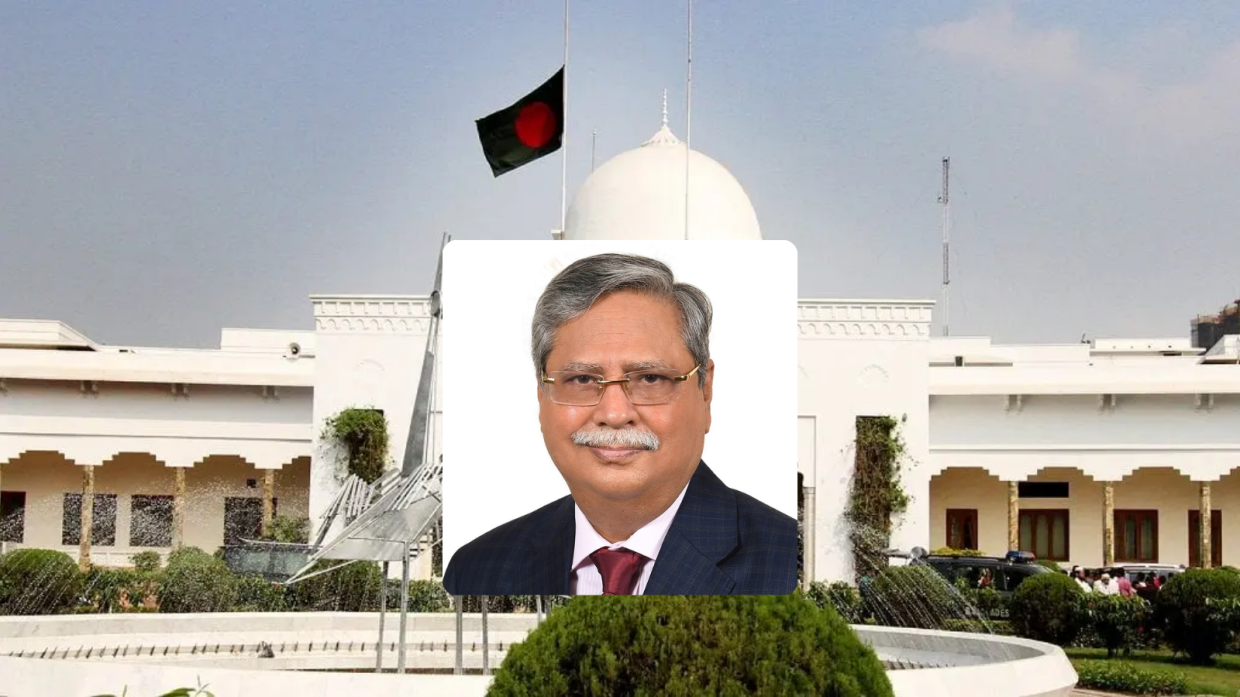
Bangladesh is bracing for the imminent resignation of President Mohammed Shahabuddin, a development that would complete the political realignment begun during last year's mass uprising. Multiple sources familiar with ongoing deliberations indicate that the resignation could occur within days, signalling a decisive shift in how the country's power structure has evolved since the tumultuous events of July 2024.
Shahabuddin's departure would be symbolically significant because he remains the sole holder of a major constitutional office from the period before the uprising. Since assuming the presidency in April 2023, he has navigated an increasingly precarious political landscape, having initially signalled his willingness to step down following the interim government's formation under Muhammad Yunus. His continued tenure under the new BNP-led administration has become an awkward anomaly in a leadership committed to thoroughly dismantling remnants of the previous order.
The catalyst for accelerating his resignation appears multifaceted. According to sources, Shahabuddin engaged in a confidential telephone conversation with former Prime Minister Sheikh Hasina during a medical visit to London in May. Hasina, who has remained in exile in India since fleeing Bangladesh after the July 2024 uprising, faces a death sentence at home and operates from exile. Intelligence agencies subsequently detected this communication, prompting officials to relay a subtle but unmistakable message to the president that his continued presence had become untenable. However, senior figures within the Bangladesh Nationalist Party suggest the situation extends far beyond this single incident, describing the matter as considerably more intricate.
The political chemistry shifted sharply following Hasina's recent announcement that she intends to return to Bangladesh around December alongside senior Awami League leaders, ostensibly to face justice through surrender. This audacious plan has rattled the current administration, which views any attempt to rehabilitate the Awami League or revive its organisational structures as an existential threat. Simultaneously, authorities have detected efforts by remaining Awami League cadres to quietly reorganise the banned party, an activity that has triggered heightened government vigilance and crackdowns.
Government insiders describe Shahabuddin's resignation as serving a crucial communicative purpose beyond the institutional mechanics. A senior BNP leader explained that his departure would publicly demonstrate the administration's determination to monitor potential destabilisation and maintain unwavering control over law and order. Prime Minister Tarique Rahman formally directed authorities during a Cabinet meeting on July 17 to intensify operations against the Awami League and affiliated youth organisations, signalling the government's hardening stance. The president's resignation would reinforce this message of systemic vigilance and resolve.
Shahabuddin's own positioning has evolved throughout his tenure. During the interim government period in December 2025, he publicly expressed intentions to resign mid-term, claiming he felt humiliated by Muhammad Yunus's administration. However, following the BNP government's assumption of power, he shifted tone during a newspaper interview in February of this year, indicating he would remain if the government desired his continued service but would leave if requested. This apparent flexibility has now transformed into expected action as government preferences have crystallised.
For Malaysian and Southeast Asian observers, Bangladesh's institutional dynamics offer instructive lessons about post-upheaval governance and the challenges of consolidating power after transformative political ruptures. The removal of figures associated with the previous era, even token symbolic positions, reflects the BNP government's determination to create psychological and institutional distance from what preceded July 2024. This pattern resonates across the region, where newly triumphant political movements typically prioritise the elimination of rival networks from positions of influence.
The constitutional mechanics of Shahabuddin's departure are straightforward. Under Bangladesh's Constitution, if the president resigns, the Speaker of Parliament assumes the acting presidency until a new president is elected through the established process. No final timeline has been confirmed, though sources indicate the decision could materialise imminently. A Bangabhaban-connected source mentioned that a decision might arrive within one or two days, with Shahabuddin scheduled to meet non-resident ambassadors from four countries on July 29, potentially representing one of his final presidential functions.
A government source characterised Shahabuddin's eventual departure as inevitable and natural, framing it as merely a question of timing rather than substance. The official expressed displeasure that the president had apparently attempted to re-establish historical contacts, presumably referring to relationships predating the uprising. Retaining a figure from the previous era in the country's highest constitutional office has ceased to be considered strategically prudent or politically acceptable within current government calculations.
The broader context involves the government's intensified campaign against Awami League revival. Authorities have mobilised security apparatus to prevent reorganisation of the banned party and its affiliated student and youth wings. This comprehensive effort reflects deep anxieties about potential resurgence, particularly given Hasina's stated intentions regarding December. Shahabuddin's removal from office aligns perfectly with this systematic elimination of pre-uprising institutional continuity.
For regional observers, Bangladesh's institutional transitions underscore the volatility of post-uprising political settlements. The initial interim government period under Yunus provided a transition framework, but the BNP's subsequent electoral victory initiated a more assertive consolidation phase. Each symbolic removal of pre-uprising figures strengthens the psychological narrative of fundamental break and renewal. Shahabuddin's resignation completes this institutional cleansing at the highest constitutional level.

