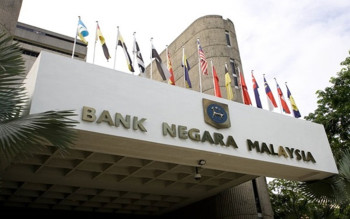
The central bank made multiple attempts to alert Tabung Haji's leadership about the widening disparity between its assets and liabilities, with Bank Negara Malaysia issuing five formal warning letters to the organisation's chairman and the Religious Affairs Minister, according to a ministerial statement delivered in Parliament on August 11. The warnings, which went unheeded by the institution's management, represented a serious concern because the financial instability at Tabung Haji posed potential systemic risks to Malaysia's broader financial system, said Dr Zulkifli Hasan, the Minister in the Prime Minister's Department (Religious Affairs), during a parliamentary briefing on the Royal Commission of Inquiry findings and remedial steps.
The persistent inaction by Tabung Haji's leadership despite repeated warnings from the financial regulator highlights a troubling pattern of governance failures within the institution. BNM's escalating efforts to communicate the severity of the situation—sending not one or two letters but five separate warnings—underscores the urgency with which regulators viewed the situation. The fact that these interventions were disregarded raises uncomfortable questions about accountability mechanisms and whether the institution's board possessed the financial expertise or willingness to confront hard truths about its operational state. Dr Zulkifli emphasised that the gaps identified in BNM's warnings needed immediate correction to prevent Tabung Haji from sliding further into regulatory violation.
Further layers of official concern emerged when Malaysia's Auditor-General issued a reprimand in the 2017 Financial Statements Report, signalling that regulatory bodies across multiple tiers of government had identified serious problems. The Auditor-General's critique centred on changes made to the impairment policy, which were altered twice within the same financial year—a practice that raised red flags about the authenticity of financial reporting. These policy adjustments appeared designed to artificially inflate the organisation's reported profits for 2017, suggesting the problems extended beyond passive mismanagement into potentially deliberate financial misrepresentation.
Only after mounting pressure from multiple quarters did Tabung Haji's newly constituted board take decisive action. In 2018, the institution engaged the international audit firm PricewaterhouseCoopers to conduct a comprehensive reassessment of its financial condition and performance using rigorous, internationally recognised accounting standards. This independent review proved revelatory. PwC's investigation confirmed that financial manipulation had indeed occurred within the institution's accounts. The audit firm discovered that of the RM4.6 billion in total assets reported by Tabung Haji, merely RM556 million had been properly valued by qualified professional valuers—meaning approximately 88 percent of reported assets lacked credible independent valuation.
The implications of this finding are staggering for a major institutional investor managing funds entrusted by Malaysian Muslim pilgrims. Tabung Haji functions as a sacred trust, collecting savings from millions of ordinary Malaysians preparing for their Hajj pilgrimage. The discovery that the vast majority of its asset base consisted of unverified valuations meant that the institution had lost its financial credibility and potentially exposed depositors to severe losses they had no knowledge of. The PwC report essentially confirmed what BNM and the Auditor-General had been attempting to communicate: Tabung Haji's financial statements bore little resemblance to operational reality.
The establishment of the Royal Commission of Inquiry in 2021 represented the government's formal acknowledgement that matters had spiralled beyond routine regulatory oversight. Following the appointment of RCI members on January 20, 2022, the commission conducted an exhaustive examination of Tabung Haji's management and operations across the 2014-2020 period. When the 211-page report became public on July 29, it catalogued extensive weaknesses in institutional governance, risk management, and operational controls that had accumulated over years of inadequate oversight and board performance. The scope of identified deficiencies suggested systemic cultural and structural problems rather than isolated missteps.
The RCI delivered 25 specific recommendations aimed at restoring Tabung Haji's financial integrity and operational credibility. By July 30, just one day after the report's public release, the institution had already implemented three-quarters of these recommendations, a pace suggesting genuine commitment to rehabilitation. However, the speed of implementation raises questions about whether the recommendations could be effectively absorbed and operationalised in such compressed timeframes, or whether some represented surface-level compliance rather than substantive institutional reform.
For Malaysian depositors whose Hajj savings reside with Tabung Haji, these developments carry profound implications beyond abstract financial metrics. The revelation that the institution's assets had been systematically misrepresented undermines faith in its stewardship of sacred trust funds. Rebuilding that confidence requires more than implementing audit recommendations—it demands transparent communication about losses incurred, concrete steps to prevent recurrence, and demonstrable changes in governance culture. The five ignored warnings from BNM serve as a cautionary tale about what occurs when institutional leadership resists objective financial reality and regulatory intervention.
The Tabung Haji crisis also illuminates broader governance vulnerabilities within Malaysia's institutional ecosystem. That an organisation managing billions of ringgits could drift into such severe financial misrepresentation for years before serious corrective action suggests regulatory gaps and board accountability mechanisms require strengthening across the public sector. The episode underscores why independent audits, regulatory oversight, and willing receptiveness to external warnings constitute essential safeguards for public institutions managing citizen assets. Whether the RCI recommendations and implementation efforts prove sufficient to restore Tabung Haji's financial standing and institutional reputation will test the depth of reform versus the sustainability of change.

