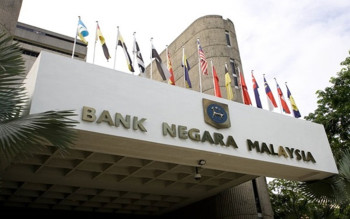
Bank Negara Malaysia has reaffirmed that its advisory interventions with Tabung Haji operate within the scope of its statutory obligation to maintain overall financial stability across the Malaysian financial system. In correspondence with the national news agency, the central bank articulated how its supervisory purview extends beyond traditional banking institutions to encompass large non-bank entities that carry systemic importance, positioning the pilgrim fund within a broader framework of institutional oversight designed to protect market integrity and investor confidence.
The central bank's mandate, enshrined in the Central Bank of Malaysia Act 2009, empowers it to monitor and identify emerging risks that could compromise the stability of Malaysia's financial architecture. This responsibility operates on the principle that threats to systemic stability may originate not merely from regulated banks but from significant players throughout the financial ecosystem whose operational distress could trigger cascading effects across interconnected markets and institutions. Tabung Haji's substantial asset base and its critical role serving millions of Malaysian pilgrims have positioned it as precisely the type of non-bank institution warranting such surveillance.
To operationalise this mandate, Bank Negara established the Financial Stability Executive Committee under the same legislation, creating a dedicated governance structure charged with identifying vulnerabilities and recommending corrective action. This committee functions as an early warning mechanism, drawing upon the central bank's analytical capabilities and market intelligence to detect emerging imbalances before they crystallise into systemic crises. The committee's formation reflects international best practices adopted by central banks worldwide, particularly following the 2008 financial crisis when gaps in cross-institutional oversight were identified as a contributing factor to global turbulence.
The specific parameters of Bank Negara's advisory relationship with Tabung Haji distinguish between formal supervision and prudential guidance. While the central bank does not directly regulate Tabung Haji under banking law, the Financial Stability Executive Committee retains authority to issue recommendations to significant non-bank financial institutions as a precautionary safeguard. This distinction proves important for Malaysian readers seeking to understand the boundaries of central bank power: Bank Negara cannot compel Tabung Haji to implement directives as it would with commercial banks, yet it can advocate for measures it deems necessary to preserve institutional health and mitigate potential spillover effects.
Bank Negara's engagement with Tabung Haji has taken concrete form through a series of escalating interventions spanning several years. The central bank dispatched five separate warning letters to the pilgrim fund's leadership and the responsible minister highlighting the growing disparity between assets and liabilities, signalling mounting concern about the fund's financial trajectory. These communications represented more than routine administrative correspondence; they constituted formal alerts from Malaysia's principal monetary authority that structural imbalances required urgent remedial attention. The persistence of Bank Negara in reiterating these warnings underscored the seriousness with which the central bank viewed the situation.
The central bank's concerns about Tabung Haji's financial position aligned with independent assessments conducted by Malaysia's Auditor-General, whose 2017 Financial Statements Report included formal criticism of the pilgrim fund's accounts. This convergence of warnings from multiple oversight bodies—both the central bank and the external auditor—painted a picture of institutional dysfunction that extended beyond temporary operational challenges. For Malaysian readers dependent upon Tabung Haji for savings management and pilgrimage financing, such critical assessments from authoritative sources would have raised legitimate questions about the safety of their contributions.
The government's decision to establish a Royal Commission of Inquiry into Tabung Haji in 2021, with formal member appointments announced in January 2022, represented a decisive escalation beyond routine advisory channels. By constituting an independent investigative body, the government signalled that concerns about the pilgrim fund had transcended the scope of confidential correspondence between regulators and management, requiring instead comprehensive public scrutiny and formal fact-finding. The RCI's presentation of findings to the Yang di-Pertuan Agong in August 2022 marked a significant moment in the institution's history, with implications for governance reform and investor protection extending well beyond Tabung Haji itself.
For Malaysia's broader financial ecosystem, Bank Negara's clarification regarding its Tabung Haji role establishes an important precedent about the scope of central bank intervention in non-regulated institutions. The affirmation that systemic stability concerns can justify advisory engagement with entities beyond traditional banking supervision suggests an expansive interpretation of the central bank's purview. This approach aligns Malaysia with international regulatory trends emphasising macroprudential oversight rather than purely microprudential supervision of individual institutions, yet it also raises questions about where institutional boundaries appropriately lie.
The practical implications of Bank Negara's oversight extend to confidence maintenance across Malaysia's financial services sector. Pilgrims and savers using Tabung Haji constitute a significant constituency—numbering in the millions—whose financial security underpins broader economic stability and consumer confidence. When central bank warnings prove prescient and subsequently validated by independent auditors and formal inquiries, public trust in both Tabung Haji and the broader regulatory framework faces testing. Bank Negara's articulation of its advisory mandate thus serves a dual purpose: it defends the central bank's interventionist approach while simultaneously underscoring why such interventions became necessary in the first place.
Looking forward, Bank Negara's clarification helps establish clearer institutional parameters for how Malaysia's regulatory system addresses risks posed by non-bank financial institutions. As the financial sector evolves and new categories of non-traditional intermediaries emerge, the precedent established through the central bank's Tabung Haji engagement may inform how Bank Negara calibrates its supervisory reach. The lesson appears to be that even institutions operating outside formal banking regulation face potential scrutiny if their scale and interconnectedness suggest systemic relevance, a principle with significant implications for fintech companies, investment funds, and other emerging financial service providers operating within Malaysia's jurisdiction.

