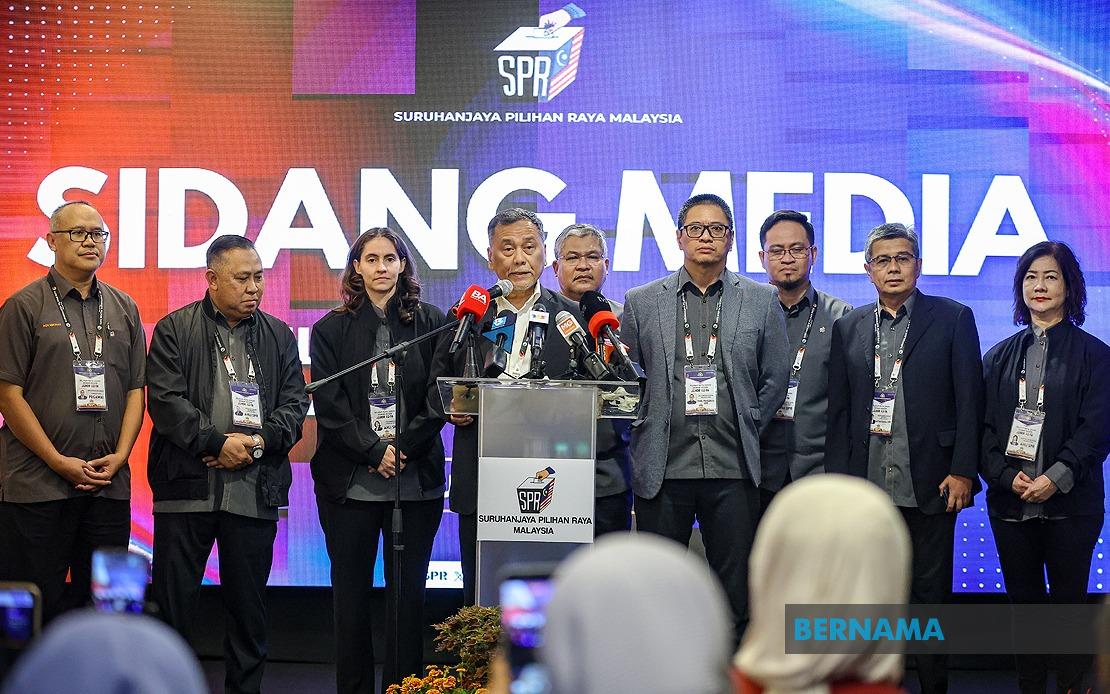
Barisan Nasional has reinforced its hold on Johor's state government following the 16th state election, securing 48 of the 56 contested seats with a decisive two-thirds supermajority that represents a substantial improvement from its previous showing. The expanded mandate reflects voter confidence in the coalition's governance and signals continued political stability in Malaysia's second-largest state by population and economic significance. Pakatan Harapan managed to capture only eight seats, marking a sharp reversal for the opposition alliance and raising questions about its strategic positioning in a critical state where it once harboured ambitions of substantial gains.
The coalition's seat distribution reveals the internal dynamics of BN's power structure within Johor. Umno, as the dominant Malay party within the alliance, secured 36 seats, consolidating its control over rural and traditional strongholds across the state's interior and eastern regions. The Malaysian Chinese Association retained considerable influence by winning eight seats, primarily in Chinese-majority constituencies and mixed urban areas, while the Malaysian Indian Congress achieved a perfect result by winning all four seats it contested—a remarkable performance that underscores the party's relevance among Indian Malaysian voters in targeted constituencies. This tripartite representation within BN's framework has historically provided the coalition with broad demographic appeal, and Johor's results suggest this formula continues to resonate.
The victory marks a dramatic turnaround from 2022, when BN secured 40 seats. The eight-seat swing represents a significant boost to the coalition's parliamentary arithmetic and its ability to implement policies without reliance on support from smaller parties or independent candidates. This expanded cushion provides Datuk Onn Hafiz Ghazi, the Johor BN chairman, with considerable legislative flexibility and a strong mandate to pursue the coalition's development agenda without the complications that minority governments face. The supermajority also strengthens Johor's negotiating position within the broader national political framework, given the state's economic importance and its contribution to federal revenues.
Pakatan Harapan's results paint a grimmer picture, with the opposition coalition experiencing significant losses in what many observers viewed as a potential battleground. The Democratic Action Party, traditionally strong in urban and Chinese-majority areas, won only six seats, marking a devastating reversal from its previous performance. The party lost four seats it had previously held—Johor Jaya, Tangkak, Jementah, and Perling—to BN's component parties, indicating erosion in constituencies that had previously backed opposition politics. These losses suggest that DAP's urban and middle-class support base in Johor may have fractured, either returning to BN or simply staying home on polling day. Keadilan Rakyat and Amanah, the other PH components, secured one seat each, a meagre return for an opposition alliance hoping to demonstrate revival after its 2022 performance.
The complete collapse of Perikatan Nasional represents the most dramatic narrative of the election. The coalition, which had won three seats in 2022, failed to defend any of them, with Dr Sahruddin Jamal—the former Johor Menteri Besar—losing his Bukit Kepong seat to BN. This outcome suggests that the Perikatan Nasional experiment has limited appeal in Johor and that the PAS-Bersatu coalition faces considerable challenges in repositioning itself as a viable alternative government at the state level. The collapse was so complete that Bersama Malaysia, which contested 15 constituencies, lost its deposits in every single one—a symbolic representation of the party's inability to gain political traction among voters.
Bersama Malaysia's disastrous showing, losing deposits across all 15 seats contested, raises questions about the viability of newer political parties without established grassroots networks or historical support bases. The party failed to convert organisational participation into actual votes, a common pitfall for new political vehicles that lack the infrastructure and cultural resonance of established parties. Similarly, the Malaysian United Democratic Alliance and other smaller parties made no impact on the results, suggesting that Johor voters continue to gravitate toward established coalitional structures despite periodic experiments with new political movements.
Individual contests reveal shifting voter preferences within specific constituencies. Datuk Onn Hafiz's commanding performance in Machap—securing 20,382 votes for a 15,375-vote majority in a straight contest—demonstrates the electoral strength of the incumbent BN chairman and suggests personal popularity translates effectively into vote mobilisation. Conversely, two sitting members of parliament who sought state assembly seats experienced defeat, with Onn Abu Bakar losing in Senggarang and Suhaizan Kayat defeated in Larkin, indicating that federal-level incumbency provides limited protection when candidates face established state-level competitors. The exceptions who bucked broader trends include Dr Maszlee Malik, the former Education Minister, who successfully won Puteri Wangsa for Pakatan Harapan despite competing against five other candidates, suggesting that PH's appeal remained concentrated in specific urban constituencies.
The retention of state executive councillors by all nine renominated candidates indicates voter approval of the state administration's performance and suggests that Johor's economic management and governance record have resonated with the electorate. This support extends to individual performers like Datuk Samsolbari Jamali, the Ayer Hitam Umno division chief who successfully defended the Semarang seat for a sixth consecutive term, demonstrating remarkable longevity in electoral politics. His sustained support across multiple election cycles suggests effective constituency service and community engagement practices that transcend normal political cycles.
The electoral participation reflected a registered voter base of approximately 2.7 million Johoreans, with 172 candidates contesting across multiple parties and independent options. The breadth of candidacy provides voters with genuine choice, yet the concentration of seats within BN suggests that competition, while extensive, did not translate into competitive outcomes across most constituencies. The election involved simultaneous contests by 56 BN candidates, 56 PH candidates, 33 Perikatan Nasional candidates, 15 Bersama Malaysia candidates, four independent MUDA candidates, six unaffiliated independents, and individual nominees from PSM and ASLI, creating a crowded electoral marketplace that ultimately benefited the established coalition.
For Malaysia's broader political landscape, the Johor results carry significant implications. The coalition's expanded mandate in the country's second-largest state by economic output strengthens its position nationally and provides additional leverage in the federal parliament. Johor's stability under sustained BN governance contrasts with volatility in other states and reinforces the coalition's claim to represent continuity and competent administration. The complete collapse of opposition options—whether through Perikatan Nasional's failure or Pakatan Harapan's limitations—suggests that BN's dominance in the state reflects not simply superior campaign machinery but also fundamental voter satisfaction with existing governance frameworks or scepticism about opposition viability.
For Southeast Asia's wider political economy, Johor's stability matters because the state serves as a crucial economic corridor connecting Malaysia to Singapore and Thailand. A government with a strong mandate and supermajority can pursue long-term infrastructure and investment strategies without domestic political distraction, potentially accelerating regional development initiatives. The election's outcome suggests that Johor voters prioritise economic performance and governance continuity over political change, a calculation that shapes how the state will engage with federal initiatives and regional partnerships.
The victory also positions Datuk Onn Hafiz for continued influence within UMNO and national BN structures, potentially affecting succession dynamics within Malaysia's dominant party. His personal electoral success, combined with the coalition's expanded mandate, suggests his standing within party hierarchies has strengthened considerably. This concentration of political capital in Johor's leadership may influence how the state navigates future federal realignments and how it positions itself within broader coalition politics, particularly regarding resource allocation and policy prioritisation at the national level.

