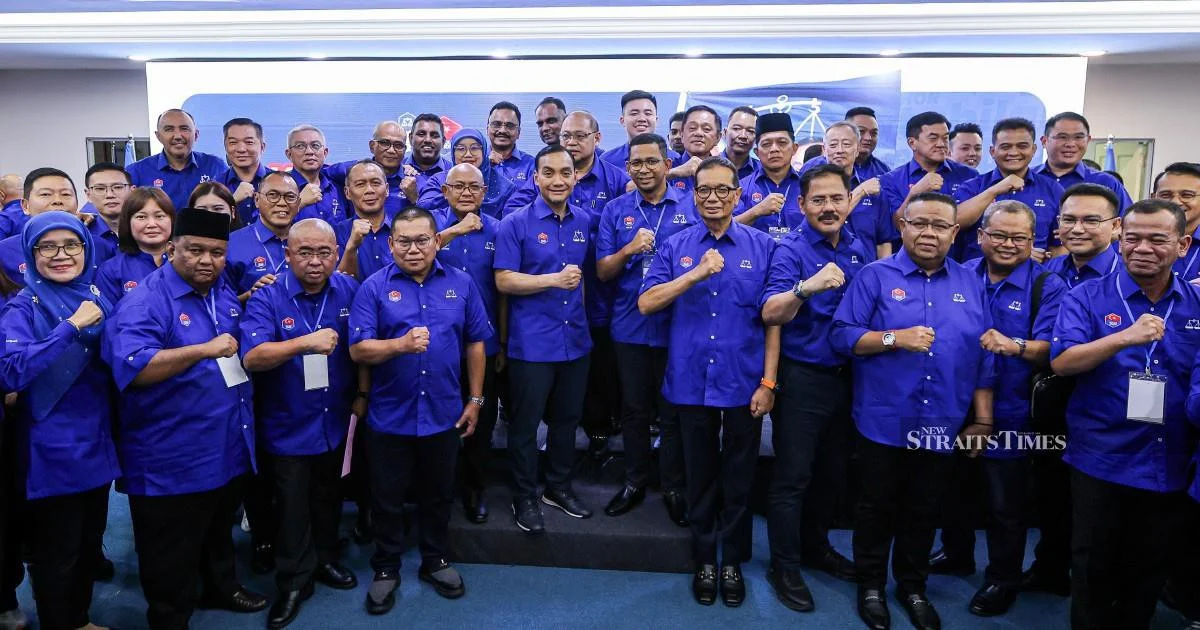
Johor Barisan Nasional has turned to a cohort of fresh political recruits to spearhead its comeback bid in the state election scheduled for July 11. Representatives from the coalition's constituent parties gathered in Johor Baru to publicly declare their resolve to capture the poll and restore BN's dominance in Malaysia's southernmost state. The emphasis on new candidacies underscores a strategic pivot by the historically dominant coalition, which has faced declining electoral fortunes in recent years and sees generational renewal as essential to reconnecting with voters.
The decision to prominently position first-time or previously unsuccessful contenders reflects internal calculations within BN's leadership that fresh faces may prove more palatable to an electorate weary of incumbent figures. Johor has been a bellwether for BN's broader health at the national level, given its substantial parliamentary contingent and traditional status as a BN stronghold. The coalition lost control of the state in 2018 when Pakatan Harapan swept to power on a wave of anti-Najib sentiment, and the intervening years have witnessed fractious internal politics and governance challenges under the Harapan administration.
Recruiting new political talent carries both strategic advantages and inherent risks for BN. Untested candidates may energise younger or undecided voters seeking alternatives to established political machinery, yet they lack the ground networks and voter familiarity that experience provides. Component party leaders have evidently calculated that the liabilities of fielding veterans from the outgoing federal administration outweigh the organisational benefits. This calculation becomes sharper when Johor's recent political trajectory is examined: the state's shift to Harapan reflected genuine voter appetite for change, not merely temporary dissatisfaction that swing back automatically.
The July 11 election arrives at a juncture when Malaysia's political landscape has become more fractionalised than at any point in the nation's history. Johor voters must navigate competing messages not only from BN and Harapan but increasingly from Perikatan Nasional, which has established footholds in the state through defections and shifting allegiances. The multi-cornered contest complicates BN's path to recovery, as vote splitting among centre-right and Islamist options could fragment the anti-government vote in unpredictable ways. New candidates selected by BN must therefore articulate clear differentiation not merely from the ruling Harapan coalition but from other opposition formations bidding for power.
Johor's electoral significance extends well beyond state-level implications for governance and development. As Malaysia's third most populous state and economic engine, the state exerts outsized influence on national political momentum and confidence. Should BN regain Johor, it would constitute a watershed moment signalling the coalition's capacity to rebuild following its 2018 federal election loss and subsequent governing complications. Conversely, BN retention of opposition status in Johor would suggest the coalition remains mired in the legitimacy crisis that began with the 1MDB scandal and Najib Razak's removal from high office. The generational strategy being pursued hinges partly on voter willingness to separate the institution of BN from specific individuals tainted by association with corruption allegations.
The composition of new BN candidates will be scrutinised for demographic and geographic balance. Johor comprises urban constituencies in Johor Baru where educated, middle-class voters have grown sceptical of BN messaging, alongside rural and semi-urban areas where traditional patronage networks retain considerable force. Fielding credible local candidates in both settings requires different skill sets and legitimacy markers. Whether the new slate successfully bridges these divides will materially affect BN's electoral performance across the state's 56 state assembly constituencies.
From a Malaysian political economy perspective, the revival of interest in Johor reflects broader reordering of power among federal politicians and state-level apparatuses. BN's federal revival under Prime Minister Anwar Ibrahim's administration, which incorporates UMNO, MCA, and MIC among other partners, creates synergies that benefit the state coalition if properly coordinated. Yet the federal coalition's fragility and dependence on cross-party support arrangements means federal campaigning muscle cannot be deployed with the single-minded purpose that characterised earlier eras. New candidates must therefore rely more heavily on local resonance and ground organisation.
The July 11 election also arrives amid economic headwinds affecting Malaysian household finances. Inflation, employment pressures, and rising living costs have become potent electoral issues across the country. Whichever coalition wins Johor will inherit immediate challenges managing these pressures, particularly in sustaining public service employment and local infrastructure investment. New BN candidates must convincingly address why the coalition's policy prescriptions differ from alternatives on bread-and-butter concerns that motivate ordinary voters more than abstract arguments about party renewal or institutional legitimacy.
Internally, BN component parties face their own pressures regarding candidate selection and campaign resource allocation. The multi-ethnic composition of the coalition, spanning UMNO, MCA, MIC, and smaller allies, requires consensus-building across party lines for competitive seat allocations. New candidates emerging from this selection process must prove capable of navigating intra-coalition dynamics whilst mounting effective campaigns against external opponents. This dual challenge separates political ambition from political effectiveness.
As preparations accelerate toward July 11, the national political establishment watches Johor intently. The state election functions as an early indicator of shifting voter preferences and organisational capacity among competing formations. Fresh candidates fielded by BN offer the coalition a narrative of renewal and break with the past, yet ultimately cannot overcome deeper questions about institutional trust and policy direction that Malaysian voters increasingly prioritise. The contest will reveal whether cosmetic candidacy changes suffice as electoral strategy or whether more fundamental repositioning remains necessary.

