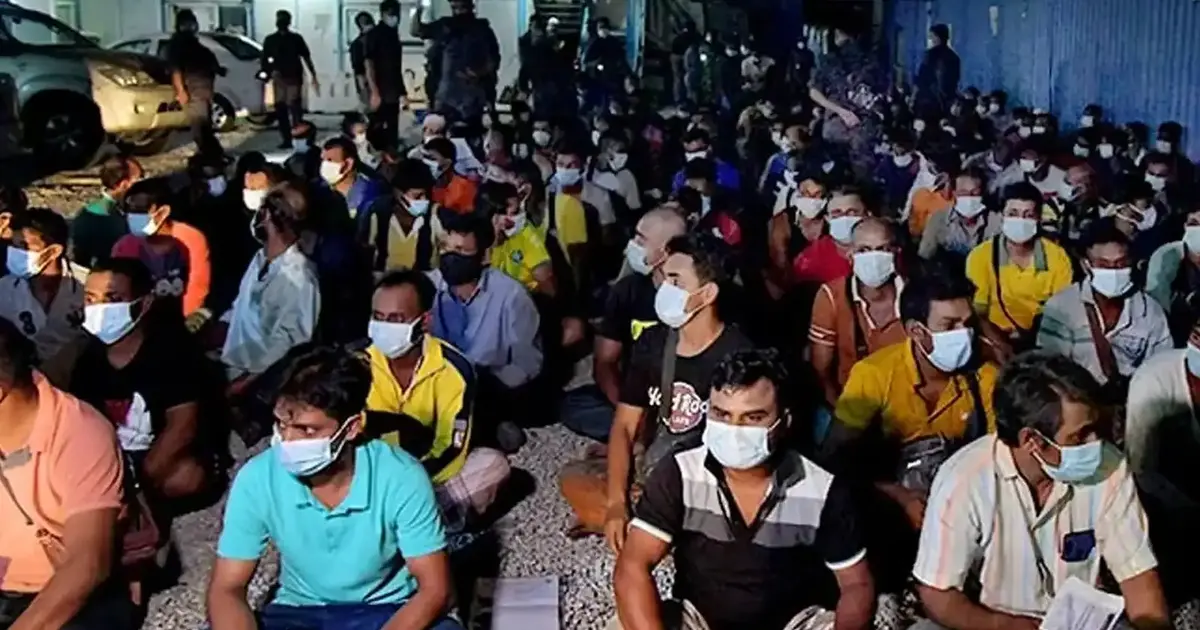
Integrating refugees into Malaysia's formal labour market faces formidable hurdles beyond simple administrative reform, according to economist Yea Kim Leng, who emphasises that the absence of coherent policy architecture and prior failed initiatives present substantial barriers to meaningful employment opportunities for displaced populations in the country.
Yea Kim Leng's assessment reflects a growing recognition among policy analysts that refugee integration cannot proceed through piecemeal measures or goodwill alone. The economist highlights a critical gap: Malaysia currently lacks a comprehensive, legally binding framework that would permit refugees to work in designated sectors or under regulated conditions. This legislative vacuum means that even well-intentioned employment schemes lack the formal authority necessary to operate effectively or provide meaningful protection to both workers and employers.
The 2017 pilot project represents perhaps the most instructive lesson in this domain. The initiative, intended to test pathways for refugee labour participation, ultimately failed to achieve its objectives—a cautionary tale that reverberates through subsequent policy discussions. Rather than dismissing the pilot as merely poorly executed, analysts interpret its collapse as symptomatic of deeper structural problems that persist today, including insufficient inter-agency coordination, unclear ministerial responsibilities, and absence of adequate monitoring mechanisms.
Local resistance constitutes an equally significant obstacle that policymakers cannot ignore. Malaysian communities, already navigating economic pressures and concerns about labour competition, harbour legitimate anxieties about large-scale refugee employment schemes. These concerns, whether framed around wage suppression, job scarcity for citizens, or cultural integration, carry weight in democratic discourse and cannot be overridden through top-down policy directives. Addressing such reservations requires sustained public education, transparency in programme design, and demonstrated commitments to protecting local workers.
The legal landscape further complicates matters. Malaysia's immigration statutes, framed primarily around security and border control, contain few provisions specifically addressing refugee work rights. Extending employment permission would require legislative amendments—a process demanding cross-party consensus, ministerial alignment, and careful parliamentary scrutiny. Such fundamental shifts move slowly through democratic institutions, particularly when neighbouring policy questions involve citizenship, labour market regulation, and social integration.
Yea Kim Leng's perspective aligns with international experience suggesting that refugee employment integration succeeds only where multiple preconditions align: clear legislation, employer engagement, community buy-in, and sustainable funding for support services. Southeast Asian nations grappling with similar populations—Thailand, Indonesia, and Bangladesh—have experimented with variously structured initiatives, each encountering comparable implementation challenges. Malaysia's relatively stricter immigration posture and smaller refugee population mean fewer established advocacy networks compared to these neighbours.
The economic case for refugee employment, while theoretically compelling, remains underdeveloped in Malaysian policy discourse. Refugees represent potential labour supply filling sectoral gaps, yet their integration requires initial investment in skills assessment, language training, and workplace orientation. Without quantified cost-benefit analyses specific to Malaysia's labour market, political support remains diffuse. Employers, meanwhile, hesitate to pioneer schemes when legal status remains uncertain and competitive advantages unclear.
International pressure offers limited leverage in this context. While the United Nations and global refugee advocacy organisations encourage host nations to expand employment access, Malaysia operates largely outside these accountability frameworks. The country hosts no UNHCR mandate population, reducing external institutional pressure. Domestically, refugee concerns occupy modest space in national political priorities, squeezed between competing demands for healthcare, education, and infrastructure investment.
Yea Kim Leng's insistence that fundamental policy architecture must precede employment initiatives reflects pragmatic recognition that ad-hoc experiments invite failure. The 2017 pilot's shortcomings stemmed not from ambition but from attempting to operate outside established legal parameters. Lessons suggest future efforts require preliminary groundwork: legislative amendments, inter-agency task forces establishing clear responsibilities, employer consultation identifying labour market needs, and public engagement addressing community concerns systematically rather than defensively.
The regional dimension cannot be overlooked. Should Malaysia pioneer substantial refugee employment schemes, neighbouring nations might face pressure from their own displaced populations seeking similar opportunities. Thailand, hosting substantially larger refugee cohorts, has maintained tighter employment restrictions partly to avoid incentivising further regional migration. Malaysia's policy choices thus carry implicit implications beyond national borders.
Progress appears contingent on convergence of political will, legislative action, and sustained coalition-building among stakeholders currently operating in silos. Yea Kim Leng's diagnosis suggests that rhetorical commitment to humanitarian principles requires alignment with institutional capacity, legal clarity, and social consensus—conditions remaining incompletely met across Malaysia's governance apparatus. Until these foundational elements strengthen, employment proposals will continue encountering the resistance patterns evident in previous initiatives, leaving refugee populations in prolonged labour market limbo.

