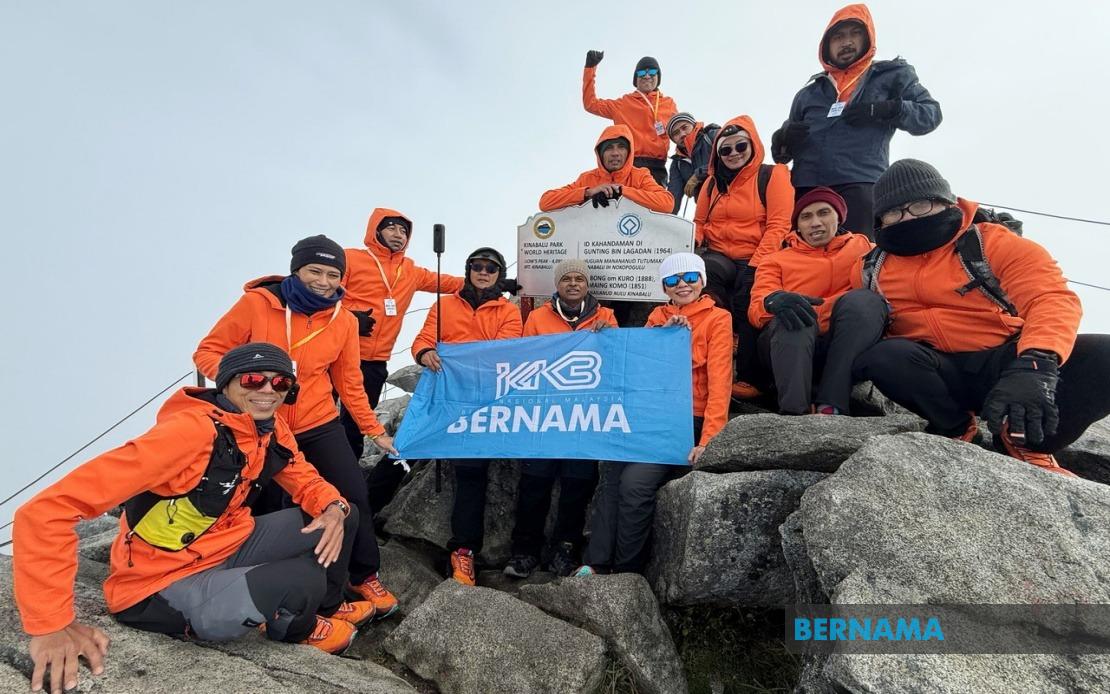
In a landmark demonstration of institutional teamwork and professional camaraderie, staff from Malaysia's national news agency Bernama reached the 4,095.2-metre summit of Mount Kinabalu on July 1, marking a significant moment for both the organization and Malaysia's journalism sector. The 23-strong contingent, comprising reporters, photographers, editors, television crew members and support staff, completed the challenging ascent under demanding conditions as part of celebrations for HAWANA 2026, the annual National Journalists' Day observance that honours Malaysia's news professionals.
The expedition, spearheaded by Bernama Editor-in-Chief Arul Rajoo Durar Raj, represents more than a symbolic gesture of organizational unity. The climb strategically targets two Malaysia Book of Records entries that would establish Bernama as a trailbetting institution within Malaysia's media landscape. The first recognition would acknowledge the group as the largest contingent of journalists from a single news organisation to successfully climb Southeast Asia's highest mountain. The second aspires to position Bernama as the inaugural media organisation to produce and broadcast news reports simultaneously in four languages from Mount Kinabalu's summit, underscoring the agency's multilingual capabilities and reach across Malaysia's diverse linguistic communities.
For Arul Rajoo personally, summiting Mount Kinabalu represents a historic first—he becomes the inaugural Bernama Editor-in-Chief to reach the mountain's peak, a distinction that adds individual significance to the collective achievement. This milestone carries symbolic weight within the organization's leadership narrative, demonstrating that senior management willingly undertakes the same physical and mental challenges asked of staff members during such endeavours.
The expedition's logistics revealed the meticulous planning required for such an undertaking. Participants began their ascent at Timpohon Gate at 10 am on June 30, navigating the initial stages with fresh energy before settling at Panalaban rest house for the night. The critical final push commenced at 2:30 am on July 1, with the team reaching the summit by approximately 7:20 am. This pre-dawn timing is standard mountaineering practice, allowing climbers to reach the peak during optimal weather windows while managing the physical toll of high-altitude exertion. Throughout the climb, participants contended with unpredictable montane conditions—persistent rainfall, dense mist reducing visibility, and powerful winds that tested both physical endurance and mental fortitude.
The Bernama Staff Club (KKB), which organized the expedition for the first time, articulated the initiative's broader objectives beyond the pursuit of record recognition. The climb functioned as a platform for fostering organisational cohesion among personnel across different departments and hierarchical levels. By assembling reporters alongside administrative staff, photographers alongside sub-editors and television technicians, the expedition deliberately dissolved workplace silos and created shared experience across functional divisions. This strategic mixing of personnel serves the organization's human resources objectives of strengthening interpersonal bonds and building resilience through collective challenge.
The climb's wellness dimension reflects contemporary corporate emphasis on employee health initiatives. Bernama framed the expedition as an instrument for promoting physical fitness and mental resilience among its workforce, objectives increasingly recognized as essential to workplace productivity and employee retention in Malaysia's competitive media sector. The mountain's challenges—altitude, weather variability, physical exertion sustained over multiple hours—provide natural testing grounds for psychological fortitude and determination, qualities fundamental to journalism's demands.
Mount Kinabalu's geographical and cultural significance informed the expedition's symbolic value. The mountain, reaching 4,095.2 metres above sea level, stands as not merely Malaysia's highest peak but Southeast Asia's tallest mountain, establishing its continental importance. Located within Kinabalu Park's protected 754 square-kilometre expanse, the mountain holds designation as a UNESCO World Heritage Site and forms a crucial component of the Kinabalu UNESCO Global Geopark. This recognized status elevates the significance of news coverage originating from its summit, linking journalistic activity to internationally recognized natural and geological heritage.
The expedition benefitted from substantial corporate partnership and sponsorship, reflecting Malaysia's business community's investment in media institution activities. International sportswear manufacturer BMAI provided technical equipment and expertise. National carrier Batik Air and beverage brand 100PLUS offered logistical support and nutritional sustenance. Local businesses including EHH Food Industry, Saloma Bistro, Marathon Baker and Malaysia Insight contributed resources. Sabah Parks, which manages Mount Kinabalu and its surrounding protected areas, collaborated directly with expedition planning and execution, as did Malaysia Airports and UFL. This constellation of supporters demonstrates how Malaysian organizations recognize value in associating with high-visibility institutional achievements, particularly those involving national symbols like Mount Kinabalu.
For Malaysian journalists and the broader media landscape, the expedition carries professional implications worth considering. Bernama's emphasis on producing multilingual news reports from the summit speaks to the agency's strategic positioning as Malaysia's national voice addressing the country's ethnolinguistically diverse population. The expedition showcases institutional commitment to operational excellence across challenging environments—a relevant consideration for an organization whose mandate extends to delivering news and information during national emergencies and crises where standard working conditions may prove impossible.
The HAWANA 2026 context situates this achievement within Malaysia's annual celebration of journalism as a profession. By organizing a high-profile, record-pursuing expedition, Bernama signalled to Malaysia's broader journalistic community that institutional investment in staff welfare and professional pride remains central to media organization strategy. This matters in an era when news organizations worldwide face technological disruption, audience fragmentation and declining advertising revenues—institutional expressions of faith in journalism's importance and collective pride in professional identity carry heightened significance.
The expedition's successful completion despite adverse weather conditions and the mountain's formidable physical demands demonstrates the capability within Bernama's workforce. Malaysian media organizations continually operate in contexts requiring rapid adaptation, resource constraints and high-pressure deadline environments. The ability of a 23-person contingent spanning different skill sets and physical capabilities to successfully navigate a 4,095-metre mountain under unpredictable conditions suggests organizational resilience and the effectiveness of collaborative leadership models that Bernama practices internally.
Looking forward, should Bernama's record applications succeed, the agency would join a select group of Malaysian institutions with official recognition for innovative institutional achievements. Beyond the symbolic value, successful record recognition would provide a documented point of reference for Malaysia's media history, establishing precedent for how news organizations can simultaneously serve professional objectives while advancing institutional identity and staff engagement in measurable, publicly recognized ways.

