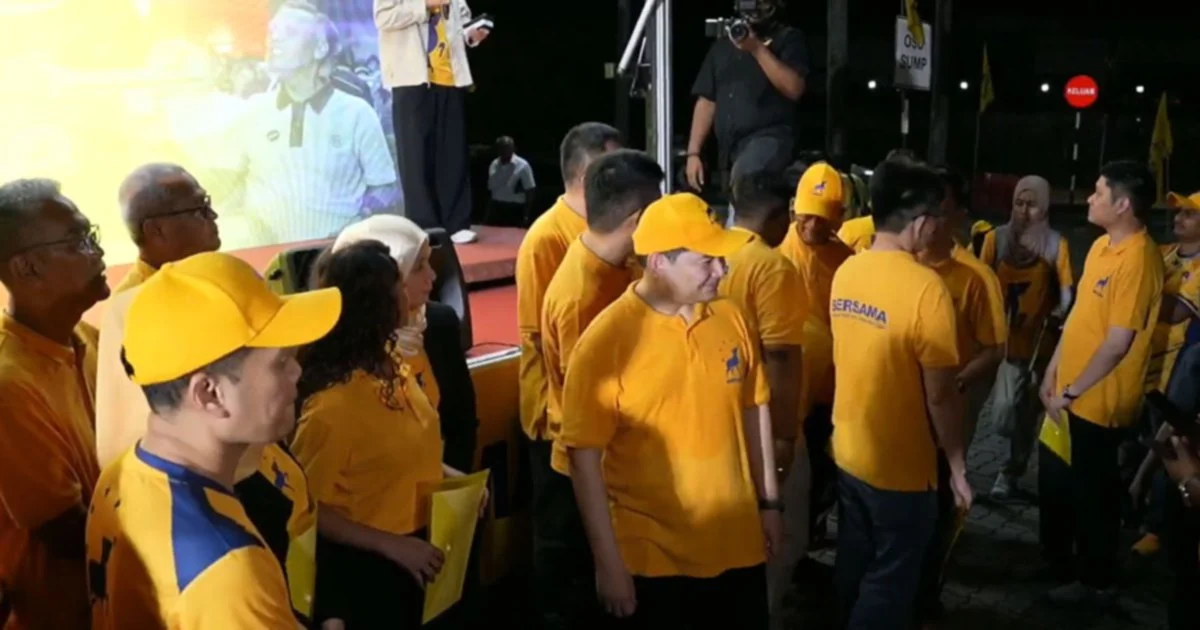
Parti Bersama Malaysia has formally introduced its slate of 15 candidates for the upcoming 16th Johor state election, signalling the party's ambition to expand its footprint in the southern state through a campaign emphasizing grassroots representation and practical experience. The lineup, unveiled on Friday in Kuala Lumpur, reflects a deliberate strategy to appeal to working-class and entrepreneurial voters by nominating individuals drawn directly from commerce, retail operations, and transport sectors rather than relying exclusively on career politicians.
The composition of the candidate roster reveals an intentional effort by the newer political formation to differentiate itself from established parties by highlighting individuals with direct experience in the private sector. The inclusion of entrepreneurs demonstrates Bersama's positioning as a party attuned to business community concerns, particularly as small and medium enterprises navigate post-pandemic economic recovery and rising operational costs. These candidates can potentially communicate directly with business owners about issues such as regulatory burden, financing access, and tax structures that affect commercial viability across Johor's varied economy.
The selection of supermarket management representatives brings retail sector expertise into the political arena at a time when Malaysian consumers face persistent cost-of-living pressures. Managers with background in large-scale retail operations understand supply chain dynamics, wholesale pricing mechanisms, and consumer purchasing patterns—knowledge that could inform policy discussions around retail regulation, fair pricing practices, and the role of major retailers in maintaining food affordability. This appointment suggests Bersama intends to bridge conversations between retailers, consumers, and government authorities on balancing commercial interests with public welfare.
Logistics workers feature prominently in the candidate list, reflecting the sector's critical importance to Johor's economy. The southern state serves as a major corridor for regional trade, port operations, and last-mile delivery networks connecting Malaysia to Singapore and beyond. Candidates from logistics backgrounds can articulate the operational challenges facing transport workers—fuel costs, toll expenses, scheduling regulations, and workplace safety—issues that affect thousands of Johor residents whose livelihoods depend on efficient supply chains. Their nomination suggests Bersama aims to position itself as responsive to the needs of workers often overlooked by mainstream political discourse.
The decision to field 15 candidates across the state represents a calibrated expansion, neither attempting to contest every seat nor limiting presence to a token few constituencies. This selective approach indicates strategic target-seat planning, likely focusing on areas where working-class populations concentrate and where grassroots networks might overcome the organizational advantages of larger, established parties. Johor's electoral geography varies significantly between urban centres like Johor Bahru, industrial zones, port-adjacent communities, and agricultural areas, requiring tailored messaging and locally credible representatives.
Bersama Malaysia itself remains a relatively recent political entrant, competing in a crowded Malaysian political landscape dominated by UMNO, PKR, DAP, and other established organizations. By emphasizing practical experience and everyday working backgrounds rather than educational credentials or political pedigrees, the party articulates an implicit critique of traditional politics, appealing to voters frustrated with conventional politicians. This positioning aligns with global trends where newer political movements challenge incumbent parties by claiming greater connection to ordinary citizens' material concerns.
The announcement occurs in the context of Johor's evolving political dynamics. The state has traditionally been an UMNO stronghold, though recent years have witnessed increasing electoral competitiveness and the emergence of new political coalitions. The presence of multiple political forces—including PAS-aligned candidates, PKR, DAP, Bersama, and independent candidates—creates a fragmented electoral environment where even modest vote consolidation around specific issues or personalities can shift outcomes. For Bersama, establishing credibility in Johor is essential to building a foundation for future state and national campaigns.
The professions represented in Bersama's candidate roster carry specific implications for policy priorities the party may emphasize during campaigning. Entrepreneurs and business managers will likely prioritize discussions around economic growth, business-friendly regulation, and private sector development. Logistics and retail workers may drive conversations about wage standards, workplace protections, and cost-of-living affordability. This diversity within the candidate slate could allow Bersama to present itself as a broad coalition spanning multiple economic interests, potentially appealing across class lines by speaking to both business aspirations and worker concerns.
For Malaysian voters, particularly in Johor, the emergence of new political parties with distinct candidate profiles offers opportunities to evaluate alternatives beyond traditional party structures. The 16th Johor state election will test whether candidates positioned as practical, sector-experienced individuals can attract sufficient support to translate into meaningful parliamentary representation. The outcome may also signal whether Malaysian voters increasingly prioritize professional background and constituency connection over party machinery and historical brand recognition when making electoral choices.

