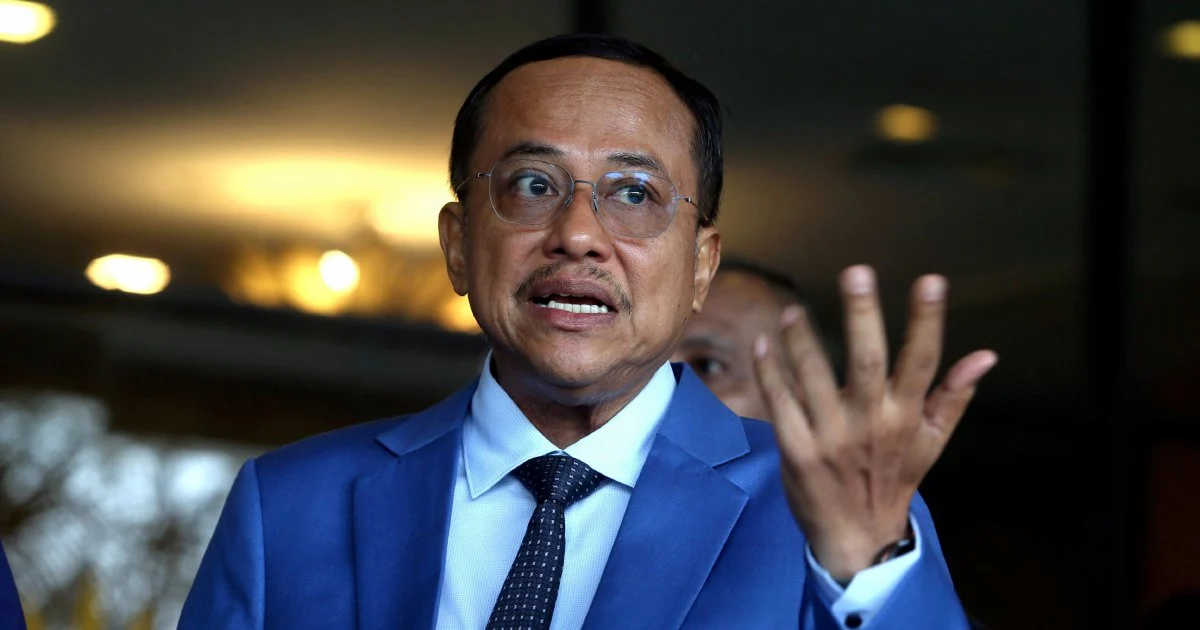
Datuk Tun Faisal Ismail Aziz, serving as Bersatu's information chief, has delivered a pointed rebuke to Perikatan Nasional (PN) chairman Datuk Seri Dr Ahmad Samsuri Mokhtar, accusing him of abddicating his fundamental responsibilities as head of the coalition during a critical period of internal discord. The criticism underscores the growing tensions within PN, which has struggled to maintain unity as its three constituent parties navigate competing interests and strategic priorities.
Faisal's statements suggest that Samsuri has become passive in his role as coalition leader, effectively ceding decision-making authority to other voices within PN's structure. By asserting that Samsuri appears to have confused his position as coalition chairman with that of Pas party chairman, Bersatu has raised serious questions about where actual power and responsibility lie within PN's leadership hierarchy. This distinction matters considerably, as the coalitions's legitimacy rests on the chairman's ability to coordinate between its member parties and forge consensus on major decisions.
The accusation of "very irresponsible" conduct reflects deepening frustration within Bersatu over what it perceives as a vacuum in coalition leadership. Rather than taking decisive action to resolve disagreements or chart a clear strategic direction, Samsuri appears to have stepped back from active management of PN's affairs. This passivity during a crisis period is particularly damaging because it prevents the coalition from presenting a unified front to external observers and leaves individual parties to interpret and pursue their own agendas without coordinated guidance.
For Malaysian observers, this internal PN conflict carries significant implications. The coalition has positioned itself as an alternative political force, yet such public disputes over leadership and competence raise legitimate questions about its readiness to govern should the opportunity arise. Voters assessing PN as a potential government option will note that its internal structures appear fragile and its leadership lacking the decisiveness required during challenging moments. The contrast between presenting a strong external image and demonstrating weakness in managing internal governance is particularly telling.
Bersatu's willingness to publicly criticise the coalition chairman represents an escalation in internal PN tensions. Typically, coalition partners attempt to resolve such matters behind closed doors to avoid airing grievances that might undermine collective credibility. The fact that Faisal felt compelled to make such public statements suggests that quieter attempts at resolution have failed, and that Bersatu views the situation as sufficiently serious to warrant public attention. This development indicates that PN's internal cohesion is under genuine strain.
The reference to Samsuri conflating his coalition role with his party position as Pas chairman highlights a structural ambiguity within PN. When the coalition chairman is simultaneously a party chairman, questions naturally arise about whose interests take priority. Bersatu's suggestion that Samsuri is prioritising Pas concerns over coalition-wide considerations implies that the coalition's needs are being subordinated to one member party's agenda. Such dynamics can rapidly corrode trust between coalition partners, especially if smaller or junior members feel that their interests are being systematically overlooked.
Within the broader context of Malaysian politics, PN's difficulties reflect the inherent challenges of maintaining multi-party coalitions without clear hierarchies and governance frameworks. Unlike Barisan Nasional's more established power-sharing arrangements or Pakatan Harapan's formal organisational structures, PN has appeared more ad hoc in its approach to managing relationships between members. The absence of robust mechanisms for resolving disagreements and clarifying decision-making authority has left the coalition vulnerable to the kind of public disputes now unfolding.
For Bersatu specifically, the criticisms of Samsuri may reflect concerns about the coalition's direction under Pas-dominated leadership. Bersatu, which has experienced its own leadership transitions and internal reorganisation, may fear that its voice is being marginalised within PN as Pas asserts greater influence. Public critiques serve both to alert party members and supporters to perceived problems and to signal to other potential coalition partners that Bersatu remains an independent force unwilling to be subsumed into a Pas-led structure.
The timing of such accusations also matters. If PN faces imminent challenges such as by-elections, policy decisions, or negotiations with the federal government, public questions about leadership competence can create additional difficulties. Coalition members may become less confident in supporting collective decisions if they doubt the chairman's commitment to representing coalition-wide interests. This erosion of internal confidence can translate into reduced effectiveness in pursuing shared objectives.
For Southeast Asian observers monitoring Malaysian political developments, PN's internal struggles reflect broader regional trends in coalition politics. Throughout the region, groupings built on pragmatic alliances rather than deep ideological or organisational foundations often struggle to maintain cohesion under pressure. The absence of unifying principles beyond immediate political advantage creates vulnerabilities that become apparent during crises.
Moving forward, PN faces a critical juncture. Leadership questions must be addressed transparently if the coalition is to restore public confidence and internal stability. Whether through formal mechanisms for strengthening the chairman's authority or through restructuring to clarify member parties' roles and representation, PN cannot afford to leave such fundamental governance questions unresolved. Continued public disputes will only deepen the perception that the coalition prioritises factional interests over unified purpose.