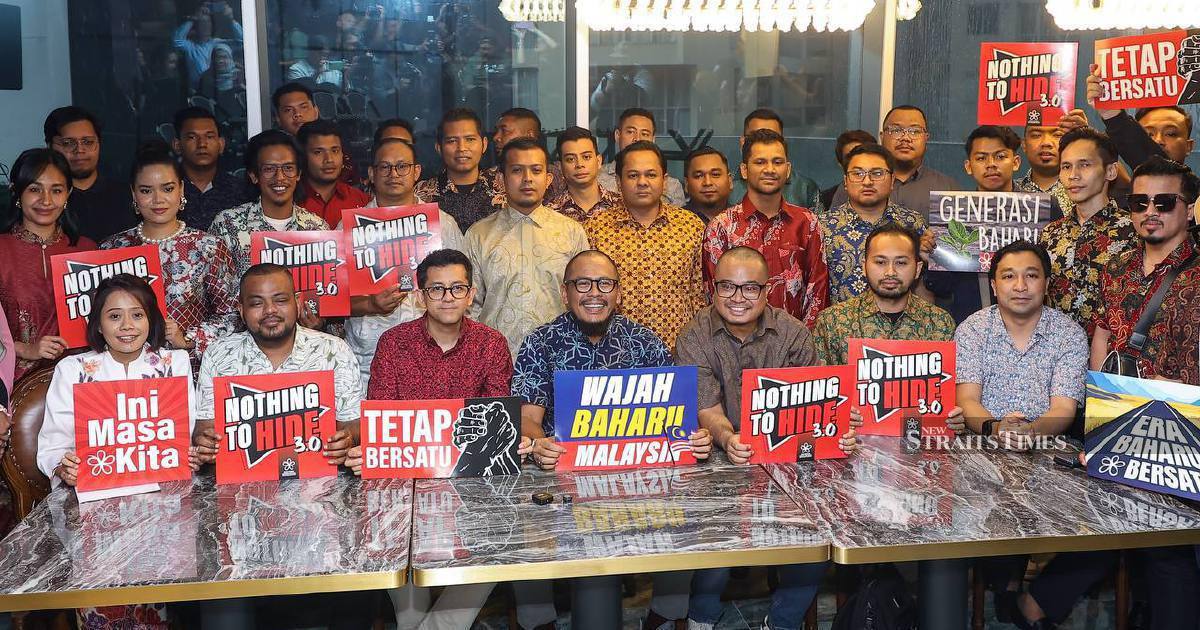
Kota Siputeh assemblyman Mohd Ashraf Mustaqim Abdul Munir has signalled growing confidence that the relationship between PAS and Bersatu—two pivotal pillars of the Perikatan Nasional (PN) coalition—can be restored to firmer ground. His remarks come at a moment when the two parties have been navigating significant friction that threatened to undermine the broader political alliance that has been instrumental in shaping Malaysia's coalition landscape in recent years.
The comparison drawn by the assemblyman to a married couple engaged in household quarrels carries particular weight in Malaysian political discourse. Rather than suggesting irreparable damage or fundamental incompatibility, the analogy implies that the recent tensions stem from the everyday friction that emerges when two substantial political forces must coexist and cooperate within a shared institutional framework. This framing offers a somewhat more optimistic reading of the situation than external observers might have formed during periods of heightened public disagreement between the two parties.
For Malaysian readers familiar with PN's evolution, this statement represents an attempt to manage perceptions about the coalition's stability at a time when internal cohesion has been questioned. The Perikatan Nasional was forged as an alternative political platform and has served as a counterweight to other major coalitions in Malaysian politics. The health of the relationship between PAS and Bersatu directly influences whether PN can maintain its relevance as a unified force in future electoral contests and parliamentary configurations.
The specific mention of tensions between the two parties acknowledges that disagreements have moved beyond whispered backroom negotiations into public view. Such visibility creates pressure on leaders to demonstrate that conflicts can be managed constructively. Mohd Ashraf Mustaqim Abdul Munir's intervention suggests that within party circles, there is a deliberate effort to reframe recent disputes as temporary misunderstandings rather than symptoms of deeper structural problems.
Understanding the dynamics within PN requires recognizing that both PAS and Bersatu bring distinct constituencies, ideological orientations, and political histories to their alliance. These differences have occasionally manifested as policy disagreements or strategic divergences. The challenge for coalition leadership lies in maintaining a united public front while accommodating the legitimate interests of both parties—a balancing act that demands constant diplomatic effort.
For Southeast Asian observers, the trajectory of PN carries relevance beyond Malaysia's borders. Coalition management and inter-party relations within multiethnic democracies across the region often follow similar patterns of tension and accommodation. The ability of Malaysian coalitions to navigate disagreements without fracturing entirely offers lessons in how diverse political forces can sustain collaborative frameworks despite periodic friction.
The Kota Siputeh assemblyman's characterization as resembling marital disputes also subtly communicates that the parties remain bound by commitments that extend beyond the immediate conflict. In marriages, couples choose to work through disagreements because the relationship is understood as long-term and foundational. By extension, his comments suggest that PAS and Bersatu share interests sufficiently aligned and stakes sufficiently high that separation would damage both parties.
From a governance perspective, coalition stability matters considerably for Malaysia's political continuity and legislative effectiveness. When major coalition partners experience heightened tensions, it can create uncertainty about the durability of agreements on key policies, ministerial appointments, and parliamentary voting patterns. Reassurances from party leaders that problems can be resolved contribute to investor confidence, administrative predictability, and public perceptions of political stability.
The timing of such statements often carries strategic significance. By publicly expressing optimism about reconciliation, senior figures can help reduce market volatility, discourage defections among rank-and-file members, and signal to other political actors that the coalition remains a viable force. These communications are rarely spontaneous but rather form part of a coordinated messaging effort.
Looking forward, the real test of whether tensions between PAS and Bersatu have genuinely been resolved will emerge in how the two parties coordinate on substantive matters—parliamentary votes, policy positions, and the distribution of elected positions. Public statements of goodwill, while important, ultimately must translate into consistent collaborative behaviour to demonstrate that underlying disputes have been satisfactorily addressed.
For Malaysian voters and political observers monitoring coalition dynamics, Mohd Ashraf Mustaqim Abdul Munir's remarks offer some reassurance that PN leadership is actively engaged in conflict resolution. However, history suggests that periodic friction within coalitions is neither unusual nor necessarily fatal. The more significant question is whether mechanisms exist to address disagreements before they escalate into existential threats to the alliance itself, and whether both parties genuinely prioritize coalition cohesion above short-term competitive advantages.

