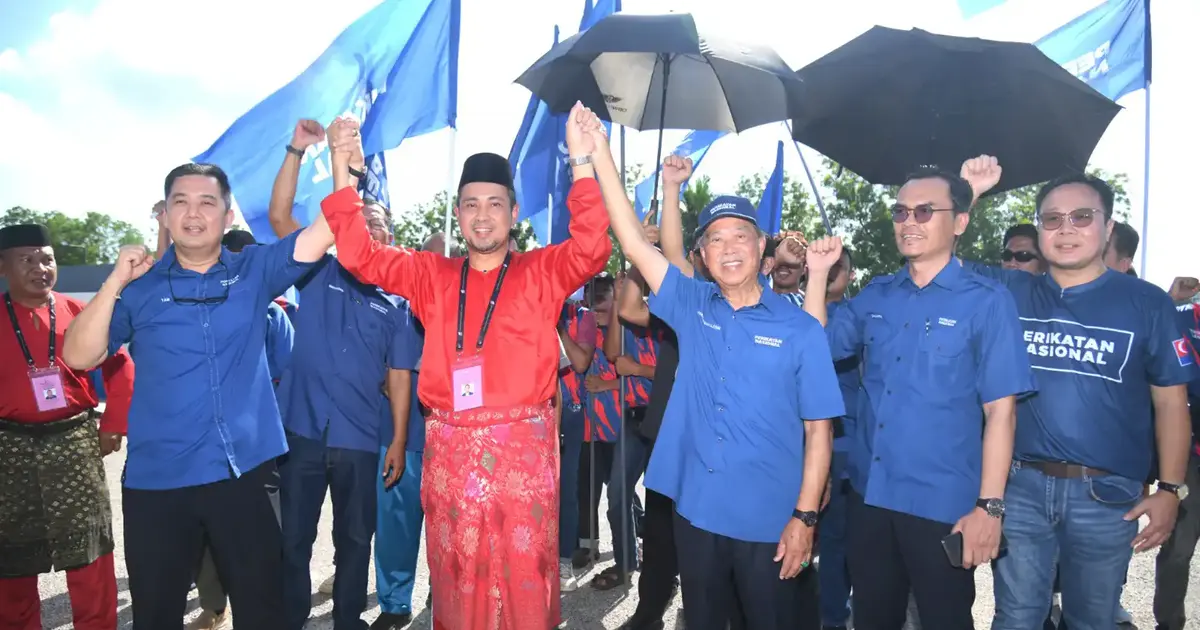
Bersatu president Muhyiddin Yassin has downplayed tensions within the Perikatan Nasional coalition after PAS declined to place its organisational machinery at the disposal of partner parties, signalling a measured response to what could have been a significant crack in the opposition alliance's unity. Speaking to this development, Muhyiddin sought to frame the matter as a routine disagreement within a multi-party bloc, emphasising that mutual cooperation remains a guiding principle of PN even as individual components retain autonomy over their internal resources and operational structures.
The refusal by PAS, Malaysia's second-largest Islamic party and a dominant force in several northern and east coast states, to lend its machinery marks a subtle but noteworthy assertion of independence within PN. Such decisions carry practical implications for campaign coordination and electoral strategy, as party machinery encompasses grassroots volunteers, logistical networks, and on-the-ground organisational capacity that prove invaluable during electoral cycles. Muhyiddin's characterisation of the situation as acceptable underscores Bersatu's pragmatic approach to managing an alliance of ideologically diverse partners who do not always agree on tactics or resource allocation.
The PN coalition, which came to prominence following the 2020 political upheaval, has always operated on the basis of negotiated cooperation rather than strict hierarchical control. Unlike formal government coalitions bound by coalition agreements and shared cabinet responsibility, the opposition alliance functions more loosely, with constituent parties retaining considerable discretion over their participation in joint initiatives. This structural flexibility has allowed PN to survive internal disagreements that might have fractured more tightly integrated political blocs, though it also creates periodic friction when parties prioritise their own interests over collective objectives.
For Bersatu, which derives significant strength from its association with former prime minister Muhyiddin himself and occupies a centrist position within PN's ideological spectrum, the PAS decision represents a manageable setback rather than an existential challenge. The party has demonstrated resilience through various political configurations and has built its own grassroots presence across multiple states, particularly in Pahang and Johor where it competes directly with both UMNO and PAS. Muhyiddin's public acceptance of PAS's autonomy may reflect confidence in Bersatu's ability to mobilise support independently, or alternatively, a recognition that pushing back against coalition partners would prove counterproductive.
PAS, led by Tan Sri Abdul Hadi Awang, operates from a position of considerable strength within PN, controlling state governments and wielding influence disproportionate to its parliamentary representation. The party's reluctance to share machinery likely stems from concerns about protecting its electoral base and maintaining control over candidate selection processes. For an Islamic-oriented party with a specific ideological mission, surrendering organisational control to allied parties—some of which may not share identical religious or social policy positions—represents a legitimate worry about diluting party identity and strategic independence.
The tension between centralised coordination and decentralised autonomy pervades all multi-party coalitions, but it becomes especially pronounced in opposition alliances lacking the binding force of ministerial responsibility and patronage distribution. Unlike government coalitions where parties negotiate for cabinet posts and federal resources, opposition blocs must rely on ideological alignment and electoral calculation to maintain cohesion. When electoral prospects appear uncertain or when individual parties believe they can perform better independently, the incentive to pool resources diminishes accordingly.
Muhyiddin's public stance that Bersatu respects PAS's choice—while simultaneously affirming that cooperation and mutual support remain PN's core values—attempts to preserve alliance unity while signalling that his party will not be dictated to by larger partners. This messaging serves a dual purpose: internally, it reassures Bersatu members that their party maintains dignity and independence; externally, it demonstrates to voters that opposition coalitions can accommodate disagreements without collapsing entirely. The nuance lies in distinguishing between principled cooperation, which PN genuinely practises, and enforced compliance, which Muhyiddin correctly identifies as incompatible with voluntary alliances.
For Malaysian politics more broadly, the PAS-Bersatu dynamic reflects deeper questions about whether opposition forces can maintain sufficient cohesion to mount effective challenges to dominant coalitions. The Perikatan Nasional has positioned itself as an alternative to both the federal government coalition and the Pakatan Harapan alliance, betting that Malaysian voters will eventually rally behind a unified opposition front. Yet such unity cannot be manufactured through coercion—it requires genuine agreement on strategic direction and willingness from larger partners to accommodate smaller allies' concerns about institutional preservation.
The machinery dispute also illuminates the different strategic calculations that Islamic and secular-nationalist parties must make within shared coalitions. PAS's emphasis on maintaining organisational independence reflects not merely internal party discipline but a fundamental commitment to preserving the party's ability to advance Islamic governance objectives independent of coalition constraints. Bersatu, by contrast, operates more flexibly across ideological boundaries, which both enables coalition participation and limits the party's ability to claim a distinctive political identity separate from personalities and patronage networks.
As Malaysian politics heads toward future electoral contests, the ability of PN to manage such disagreements without fracturing will prove determinative of opposition effectiveness. Muhyiddin's calm acceptance of PAS's decision suggests a coalition leader confident in his party's standing and committed to long-term alliance stability over short-term tactical advantages. Whether this measured approach translates into electoral gains or whether the cooperation-without-compulsion model proves insufficient to challenge entrenched power structures remains to be seen.

