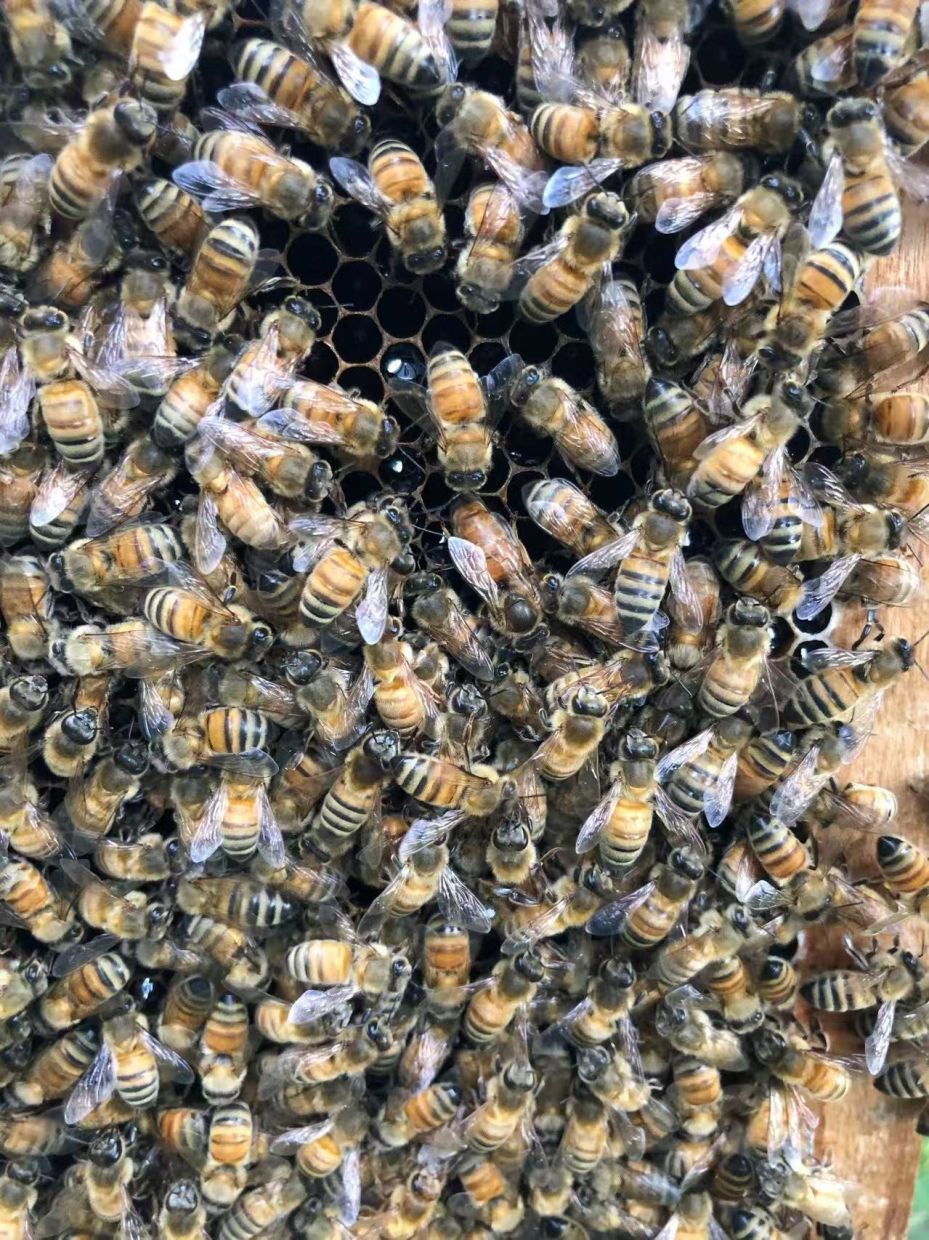
For centuries, beekeepers and scientists have understood that honeybee queens emerge from the same ordinary fertilised eggs as their worker counterparts, with a special diet of royal jelly marking the decisive difference. Yet groundbreaking research published in the journal Nature suggests this explanation captures only part of the story. An international team led by Kai Wang of the Institute of Apicultural Research at the Chinese Academy of Agricultural Sciences has uncovered evidence that the physical structure and chemical composition of the wax chamber itself plays an equally critical role in transforming an ordinary larva into a colony's sole reproductive female.
The revelation challenges what Wang describes as a "deeply rooted dogma" in apicultural science: nutritional determinism. While the nutrient-rich royal jelly that worker bees secrete remains important, the research demonstrates that larvae cannot develop into healthy queens without exposure to the specific sensory environment created by the chamber that houses them. This finding carries profound implications for understanding how honeybee colonies function as integrated biological systems and has practical applications for beekeepers struggling with declining colony health across North America and Europe.
Within a typical honeybee nest, worker bees construct three distinct types of chambers from wax they secrete themselves. The majority of hexagonal cells serve dual purposes: storing food reserves and nurturing developing offspring. A third chamber type, however, resembles a suspended peanut shell and has long fascinated beekeepers as an indicator of either swarming or queen replacement. For generations, these structures were regarded as passive containers, simply holding the developing larva until emergence. Wang's study fundamentally reframes this understanding, revealing what he calls an "active, highly engineered 'smart incubator'" optimised to guide larval development along a royal trajectory.
The mechanisms at work prove remarkably sophisticated. The wax composing queen chambers differs markedly from that used in worker cells. It possesses a distinctly softer consistency, melts at a substantially higher temperature, and releases a different array of chemical compounds—what researchers describe as a unique chemical "perfume." These physical properties appear to function in concert. The softer walls may provide growing larvae with greater space to expand, while the distinctive scents could serve as hormonal triggers, subtly directing genetic expression toward queenly development. Even more striking, larvae reared in standard worker-cell wax despite receiving royal jelly demonstrated markedly inferior queen development and significantly elevated mortality rates, suggesting that both diet and chamber environment prove essential.
The work required examining not only the chambers themselves but also the worker bees responsible for their construction. Wang's team discovered that bees building queen cells operate under physiologically extraordinary conditions. These workers maintain unusually elevated thoracic temperatures, effectively transforming their bodies into what Wang colourfully describes as tiny "living furnaces." Some maintain thorax temperatures exceeding 39 degrees Celsius—comparable to running a high fever—to properly mould the special high-melting-point wax. Concurrent genetic analysis revealed distinct patterns of gene expression in these bees, suggesting their biology temporarily shifts to accommodate this specialised task.
Perhaps most intriguingly, these extraordinarily industrious bees are not members of a permanently specialised caste. Rather, they represent ordinary, flexible young workers undertaking a temporary, emergency-driven assignment. Their elevated thorax temperatures and altered gene activity persist only briefly, representing what Wang characterises as "short-term shifts" enabling wax processing. While executing this specialist role, these same workers simultaneously continue performing everyday hive functions: sharing food with nestmates, inspecting adjacent cells, and maintaining colony cohesion. Wang celebrates them as "the ultimate multitaskers," embodying the remarkable adaptability inherent in honeybee societies.
The research leaves one critical question unanswered: which specific element of the royal chamber triggers the molecular switch determining queenly development? The chemical scent profile remains largely unmapped, and the precise physical properties that matter most—whether texture, temperature retention, or some other quality—have not yet been isolated. Wang acknowledges this gap, framing the next investigative phase as identifying "which specific chemical scent or physical touch actually tells the queen larvae's DNA, 'You are the queen.'" This molecular-level understanding could unlock interventions currently beyond reach, potentially allowing targeted manipulation of colony development.
The implications extend beyond honeybees themselves. Wang suggests that similar mechanisms likely operate throughout social insect societies. Termite mounds, structured far more elaborately than previously appreciated, may shape colony member development through environmental engineering rather than chemical signals alone. Wasp paper nests could function as more than mere shelters. Most tantalizingly, stingless bee colonies—renowned for their intricate wax architecture—may conceal comparable secrets regarding how colony-level organisation guides individual development. This broader perspective positions the honeybee research within a larger evolutionary narrative about how social insects harness collective behaviour to shape their own biological destinies.
For practical beekeeping, the discoveries offer considerable promise. Boris Baer, a professor of pollinator health at the University of California, Riverside and co-leader of the study, emphasises that queen production remains central to modern apicultural operations. Healthy, high-quality queens are prerequisites for maintaining strong colonies, yet beekeepers across the United States and internationally report substantial colony losses. Understanding how colonies naturally produce superior queens through environmental optimisation rather than dietary manipulation alone could enable breeders to select or engineer conditions promoting healthier, more resilient queens.
The broader context frames this research as increasingly urgent. Managed honeybees pollinate more than 80 major agricultural crops globally, making colony health a matter of food security as well as ecological concern. Declining bee populations threaten agricultural productivity and ecosystem stability simultaneously. If the new understanding of queen development can be translated into improved breeding practices and husbandry techniques, it might contribute meaningfully to reversing current population decline trends. The knowledge could prove especially valuable in regions like Southeast Asia, where agricultural dependence on pollinator services runs high and beekeeping provides important livelihoods.
Wang articulates the broader philosophical implication: the honeybee colony functions as a true "superorganism," with individual workers collectively orchestrating the transformation of an ordinary larva into their future mother and reproductive nexus. This perspective reframes how we understand colonial insects—not as collections of individuals following rigid programming, but as integrated systems where structure, chemistry, behaviour, and genetics interweave to achieve outcomes no individual could accomplish alone. His memorable formulation captures this elegantly: "Eating well is important, but living in the perfect home is what truly changes your destiny." For honeybees and humans alike, it seems, environment and nurture prove inseparable partners in determining outcomes.

