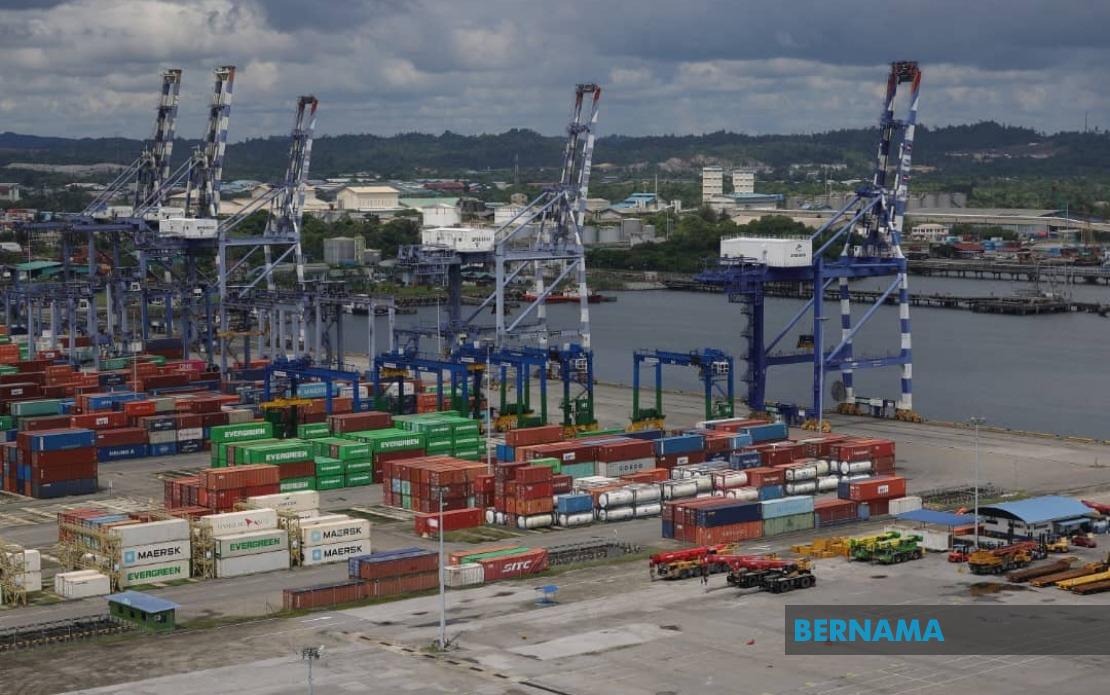
In a ceremonial handover that underscores deepening federalism in Malaysia, Bintulu Port has officially transitioned from federal to state control—a shift that Datuk Mustapha Sakmud, Minister in the Prime Minister's Department overseeing Sabah and Sarawak affairs, characterises as one of the most tangible achievements in implementing the Malaysia Agreement 1963. The transition occurred during a formal event in Bintulu attended by Prime Minister Datuk Seri Anwar Ibrahim and Sarawak Premier Tan Sri Abang Johari Tun Openg, marking a symbolic reshaping of the relationship between Kuala Lumpur and Sarawak's government.
The regulatory handover carries profound constitutional significance. Since Malaysia's formation in 1963, Sarawak and Sabah have occupied a distinctive constitutional position as founding partners, yet decades of centralisation meant critical infrastructure remained under federal jurisdiction. The Bintulu Port decision reverses that trend, recognising Sarawak's rights as co-architect of the federation rather than merely a constituent state. Mustapha's framing emphasises that this shift represents cooperation rather than concession—a deliberate attempt to repackage state devolution as mutually beneficial rather than a loss of federal control.
Bintulu Port's economic importance extends far beyond symbolic value. The facility has long functioned as Malaysia's primary liquefied natural gas export terminal, channelling the nation's vast hydrocarbon wealth to global markets. That role alone makes the port strategically vital to Malaysia's export economy and foreign exchange earnings. Yet the handover represents recognition that the port's future potential transcends LNG infrastructure. Officials envision transformation into a diversified industrial and logistics nexus, leveraging Sarawak's geographic position at the heart of Southeast Asia and its proximity to rapidly expanding Asian markets.
The green energy dimension adds contemporary urgency to the handover narrative. Sarawak possesses substantial hydroelectric generation capacity, providing abundant renewable electricity that increasingly attracts multinational corporations shifting away from carbon-intensive operations. By consolidating control over Bintulu Port, Sarawak can now orchestrate coordinated industrial policy—coupling port infrastructure, energy availability, and regulatory environment to lure manufacturers seeking low-carbon production bases. This positioning directly addresses global supply chain reconfiguration driven by climate commitments and ESG considerations. Investors evaluating relocation away from traditional manufacturing hubs in China and Southeast Asia's coal-dependent regions may find Sarawak's emerging green manufacturing proposition compelling.
For Malaysian readers, the Bintulu Port transition illustrates broader constitutional dynamics reshaping federalism. The Malaysia Agreement 1963 embedded protections for Sabah and Sarawak—education policy autonomy, religious freedom guarantees, immigration controls, and natural resource stewardship—yet implementation remained incomplete for six decades. Recent governments, particularly the current administration, have rekindled MA63 implementation as a unifying agenda bridging Peninsular and East Malaysian interests. Port control, while economically specific, signals renewed commitment to honouring those foundational constitutional bargains.
The timing matters significantly within regional context. Southeast Asia faces intensifying competition for manufacturing investment as supply chains decentralise from China. Thailand, Vietnam, and Indonesia have aggressively courted electronics, automotive, and chemical manufacturers. Sarawak's ability to offer integrated infrastructure—efficient port, renewable energy, competitive labour costs, and political stability—positions the state to compete effectively. Bintulu Port under state management can operate with faster decision-making cycles and regulatory alignment tailored to Sarawak's development priorities, potentially outpacing federal port management's bureaucratic constraints.
Mustapha's characterisation of MA63 implementation as strengthening rather than weakening the Malaysian federation reflects careful political messaging. Federal decentralisation initiatives can trigger anxieties in Kuala Lumpur among those who perceive dilution of central authority. By framing Sarawak's port authority as recognition of founding partner status rather than federal retreat, the government attempts to reposition devolution as constitutional restoration. This rhetorical strategy proves essential for maintaining political consensus in Peninsular Malaysia while advancing East Malaysian autonomy.
The economic implications for Sarawak are considerable. State control enables Bintulu Port operators to negotiate directly with customers, adjust tariff structures competitively, and reinvest port revenues into expansion without federal budgetary constraints. Sarawak can also pursue specialised infrastructure investments—petrochemical berths, container handling systems, or cold-chain facilities—aligned with targeted industrial sectors. Such flexibility potentially accelerates Sarawak's transformation from resource exporter to value-added manufacturing hub.
Beyond Bintulu, this precedent may influence other MA63-related negotiations. Sarawak seeks expanded autonomy over education, immigration, and telecommunication regulation. Federal concession on port control—particularly an economically vital asset—demonstrates willingness to honour constitutional commitments. This creates momentum for resolving other outstanding MA63 issues, though some remain constitutionally complex and politically contentious within Malaysian federation.
The port handover also carries implications for Malaysia's climate and energy transition narrative. As the nation commits to net-zero targets by 2050, renewable energy capacity becomes central to industrial competitiveness. Sarawak's hydroelectric abundance—among Southeast Asia's largest reserves—transforms the state into a crucial asset within Malaysia's energy future. Port control strengthens Sarawak's ability to leverage this advantage, potentially attracting aluminium smelting, data centres, or semiconductor manufacturing—all energy-intensive sectors increasingly gravitating toward renewable-powered locations.
For investors and businesses monitoring Malaysian policy developments, the Bintulu Port transition signals institutional reform favouring state-level infrastructure management. Companies evaluating Sarawak as a manufacturing or export base can anticipate more responsive regulatory environment and streamlined decision-making. Conversely, businesses dependent on federal port control in Peninsular Malaysia should monitor whether comparable devolution emerges, potentially reshaping competitive dynamics within Malaysia's port sector.
The ceremony itself, bringing together the Prime Minister and Sarawak Premier in Bintulu, symbolises restored partnership between federal and state governments. After years of tension over resource distribution, constitutional interpretation, and development priorities, the visual symbolism of collaborative transition matters. It reinforces Anwar Ibrahim's commitment to MA63 implementation and suggests that the current administration views East Malaysian partnership as essential to national cohesion and long-term development strategy.

