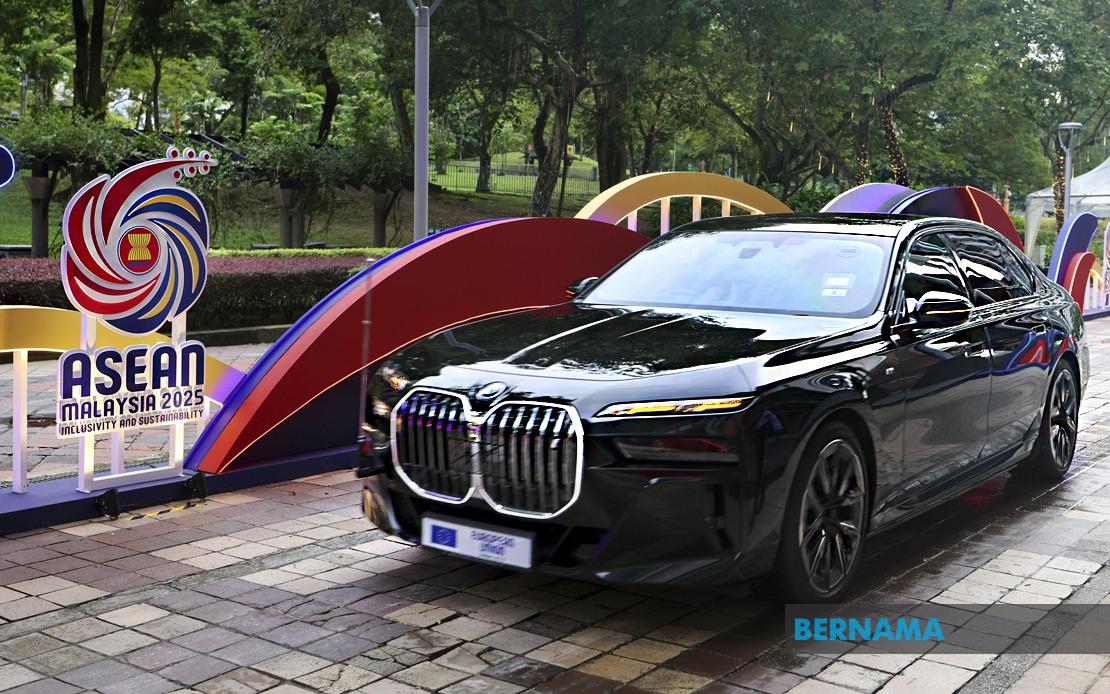
The Prime Minister's Department has moved to settle public confusion surrounding a luxury BMW vehicle that has been in use by Prime Minister Datuk Seri Anwar Ibrahim, confirming through a statement released on Facebook that the car represents an existing government asset rather than a newly procured official vehicle. This clarification emerged as the department sought to address growing speculation and allegations circulating on social media platforms concerning the ownership and purpose of the high-security motorcar.
According to the statement issued jointly by the Prime Minister's Department and the Ceremonial and International Conference Secretariat Division (BIUPA), the BMW falls under BIUPA's asset portfolio and serves a specific mandate within Malaysia's official state logistics framework. The department explained that this particular vehicle category exists within government holdings to fulfil established operational requirements that extend beyond the Prime Minister's personal transportation needs.
The underlying rationale for maintaining such specialist vehicles relates directly to Malaysia's international obligations and security commitments. When foreign heads of state and government leaders—those holding the rank of president or prime minister—visit Malaysia on official business, the country must provide transportation infrastructure that meets stringent international security standards and protocols. These expectations form part of diplomatic protocol arrangements that are reciprocal in nature, reflecting accepted norms among nations regarding the movement of high-ranking officials.
The technical specifications demanded by contemporary security threats fundamentally distinguish these vehicles from conventional government transport. The BMW in question has been engineered to withstand ballistic threats of significant caliber, explosive devices, and modern security hazards that have emerged in recent decades. Notably, the department highlighted drone threats as a specific contemporary concern that such vehicles must accommodate through their defensive engineering, reflecting the evolving nature of security risks faced by state dignitaries in the twenty-first century.
The temporary deployment of this particular vehicle for the Prime Minister's use stemmed from a confluence of circumstances and professional security recommendations. The statement clarified that the deployment followed advice and security assessments conducted by the Royal Malaysian Police (PDRM), suggesting that the decision involved law enforcement and security professionals rather than political or administrative preference. This distinction carries significance for public understanding of how such decisions are made within Malaysia's governmental structure.
The timing of this deployment coincided with scheduled maintenance work on the Prime Minister's primary official vehicle, which was previously gifted by the Yang di-Pertuan Agong. Regular maintenance of high-security vehicles involves specialized procedures and extended timelines, necessitating temporary alternative arrangements for the Prime Minister's official movements during such periods. The use of the BMW therefore represents a practical response to routine maintenance requirements rather than any permanent change in the Prime Minister's official transport arrangements.
This situation illuminates the substantial infrastructure and security frameworks that underpin the movement of Malaysia's highest officials. Most members of the public remain unaware of the complexity involved in protecting national leaders while maintaining the capacity to receive international dignitaries with appropriate security arrangements. The deployment of specialist vehicles, their maintenance cycles, and the security protocols governing their use constitute significant but largely invisible components of state operations.
From a Malaysian perspective, the clarification addresses broader questions about government asset management and resource allocation. The existence of such vehicles within BIUPA's portfolio raises legitimate questions about utilization rates, maintenance costs, and the balance between security requirements and public perceptions of governmental spending. In a region where questions about executive accountability and government transparency remain politically salient, addressing such matters through clear public communication serves both practical and political purposes.
The incident also reflects the challenges facing government communications in the social media age. The emergence of speculation on digital platforms prompted an official response that had to balance security considerations with public reassurance. Malaysia's government has increasingly recognized that allowing unsubstantiated claims to circulate unchecked can generate public mistrust, yet simultaneously revealing details about security arrangements creates its own risks. The department's decision to issue a statement represents an attempt to navigate this difficult terrain.
For Malaysian citizens, understanding these arrangements provides insight into how state institutions operate at the highest levels. The Royal Malaysian Police's involvement in security assessments, BIUPA's role in managing state logistics, and the Prime Minister's Department's coordination of these elements demonstrate the interconnected nature of Malaysia's executive infrastructure. Such coordination becomes particularly important during transitions in leadership or when unexpected circumstances—such as extended vehicle maintenance—necessitate rapid adjustment of operational procedures.
Looking forward, this clarification may prompt broader discussions about government transparency regarding state assets and their deployment. While security concerns necessarily limit the disclosure of certain operational details, the baseline question of which assets government holds and how they are allocated remains legitimate public concern. Malaysia's experience with this BMW situation suggests that proactive communication about government resources, when balanced appropriately with security requirements, can help maintain public confidence in institutional decision-making and asset management practices.

