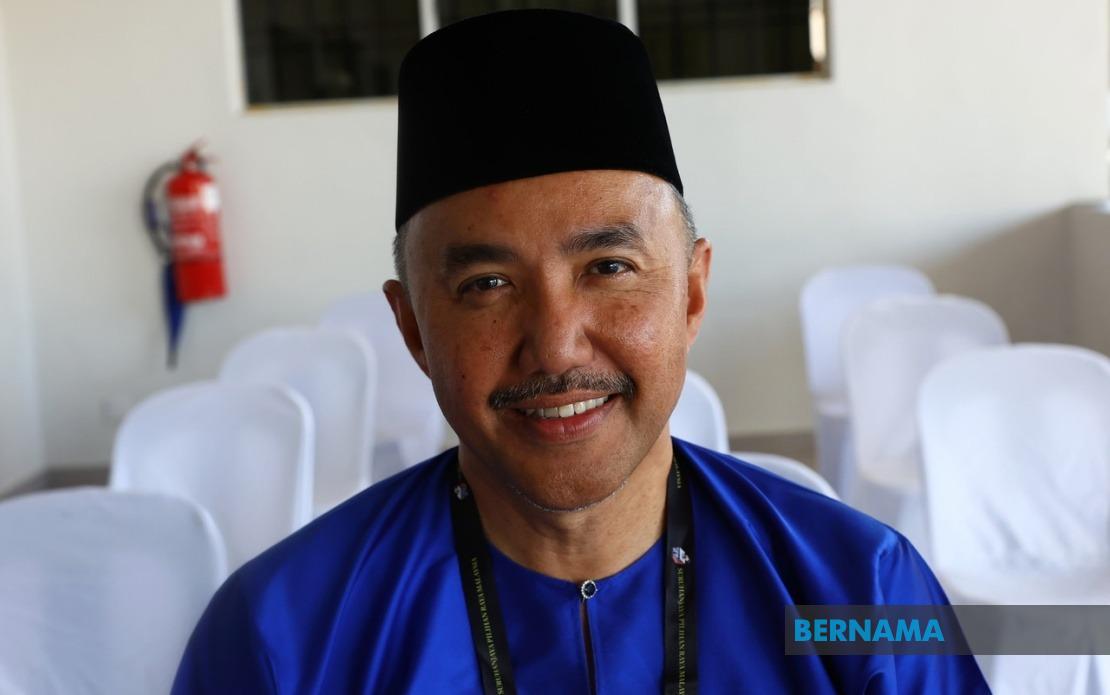
The coalition of Barisan Nasional is pinning considerable hopes on strong backing from FELDA voters across the Kulai parliamentary constituency in the forthcoming 16th Johor state election, with party officials asserting that recent years of government attention to settler welfare have reversed previous electoral setbacks in these communities. Kulai BN chairman Datuk Mohd Jafni Md Shukor outlined the coalition's strategy during campaigning in the area, pointing to four distinct FELDA settlements representing nearly 7,000 potential voters who could prove decisive in the parliamentary seat and its constituent state constituencies.
The four FELDA communities in question are spread across two state seats: FELDA Taib Andak, FELDA Inas and FELDA Bukit Permai sit within the Bukit Permai state constituency, while FELDA Bukit Batu falls under the Bukit Batu state seat. For Jafni, who is personally contesting the Bukit Permai seat, these voters represent a crucial demographic that his coalition must secure in order to maintain control of the constituency. The distribution of these settlements across different state seats underscores how FELDA communities function as a significant voting bloc capable of influencing outcomes across multiple electoral divisions simultaneously.
BN's confidence stems largely from what party leaders characterise as a turnaround in government responsiveness to FELDA concerns under Menteri Besar Datuk Onn Hafiz Ghazi's administration. Jafni acknowledged that the 2018 state election delivered a sobering result for BN in these areas, with voter defection reflecting accumulated grievances over neglect and unmet promises. However, he argued that the 2022 election demonstrated an improvement in support, signalling that the state government's renewed focus on FELDA welfare was beginning to resonate with these traditionally important constituencies.
Central to this strategy is the Johor government's claimed resolution of a decades-old land title issue that has plagued FELDA settlers across the state. According to Jafni, approximately 99.9 percent of land ownership applications have now been processed and finalised, addressing what had been a persistent source of frustration and financial uncertainty for FELDA communities. This administrative achievement, if confirmed, would represent a tangible demonstration of governmental competence and responsiveness—precisely the kind of concrete outcome that shapes voting behaviour in constituencies where economic security remains a primary concern.
Beyond the land title resolution, the state government has expanded its engagement with FELDA communities through targeted educational assistance. The Johor Education Foundation, established as a conduit for providing financial aid to FELDA children, represents an investment in human capital that resonates particularly strongly in rural and semi-rural settlements where school fees and educational expenses can strain household budgets. By channelling educational support directly to FELDA families, the government has created a tangible link between state administration and household welfare that transcends abstract political messaging.
Jafni's framing of the election as a choice between stability and uncertainty reflects BN's broader campaign narrative in Johor. He appealed to voters to renew the coalition's mandate, arguing that a single term in office has proven insufficient to fully implement the state government's developmental agenda. This argument carries particular weight in constituencies where infrastructure deficits and service gaps remain evident, positioning continued BN governance as necessary for completing projects and initiatives already underway. The implicit message is that electoral instability would disrupt progress and reset developmental timelines.
The Kulai parliamentary constituency represents a microcosm of contemporary Malaysian electoral dynamics, where traditional rural constituencies with established patron-client relationships compete alongside suburban and semi-urban communities increasingly swayed by national political currents. The presence of FELDA settlements within this constituency ensures that questions of agricultural support, rural development, and settler welfare remain salient campaign issues even as broader state and national political debates dominate media coverage.
Jafni faces a fragmented opposition field in his personal contest for the Bukit Permai seat, with challengers fielded by Parti Bersama Malaysia, Pakatan Harapan, and Perikatan Nasional. This four-way split could theoretically benefit the frontrunner if opposition votes disperse evenly, though the presence of multiple challengers also suggests that local constituencies perceive viable alternatives to BN governance. The 2022 result, in which Jafni secured a majority of 4,755 votes, provides context for assessing whether his coalition's optimism regarding FELDA support reflects genuine momentum or wishful thinking.
The broader implications for Johor's political trajectory depend significantly on whether BN can indeed mobilise FELDA communities as a consolidated voting bloc. These settlements, while numerically modest, function as reliable organisational nodes where traditional authority structures and community networks remain relatively intact compared to more urbanised constituencies. If the coalition successfully replicates its claimed 2022 improvements across multiple FELDA constituencies throughout Johor, the aggregated effect could prove decisive in determining overall state-level outcomes.
Polling is scheduled for July 11, with early voting permitted on July 7, giving BN and rival coalitions roughly a fortnight to consolidate their respective support bases. For FELDA settlers evaluating their electoral choices, the calculus involves assessing whether recent state government initiatives represent genuine long-term commitment or temporary pre-election gestures designed to restore flagging support. The distinction between these scenarios will ultimately determine whether Jafni's confidence in FELDA backing translates into actual electoral performance.

