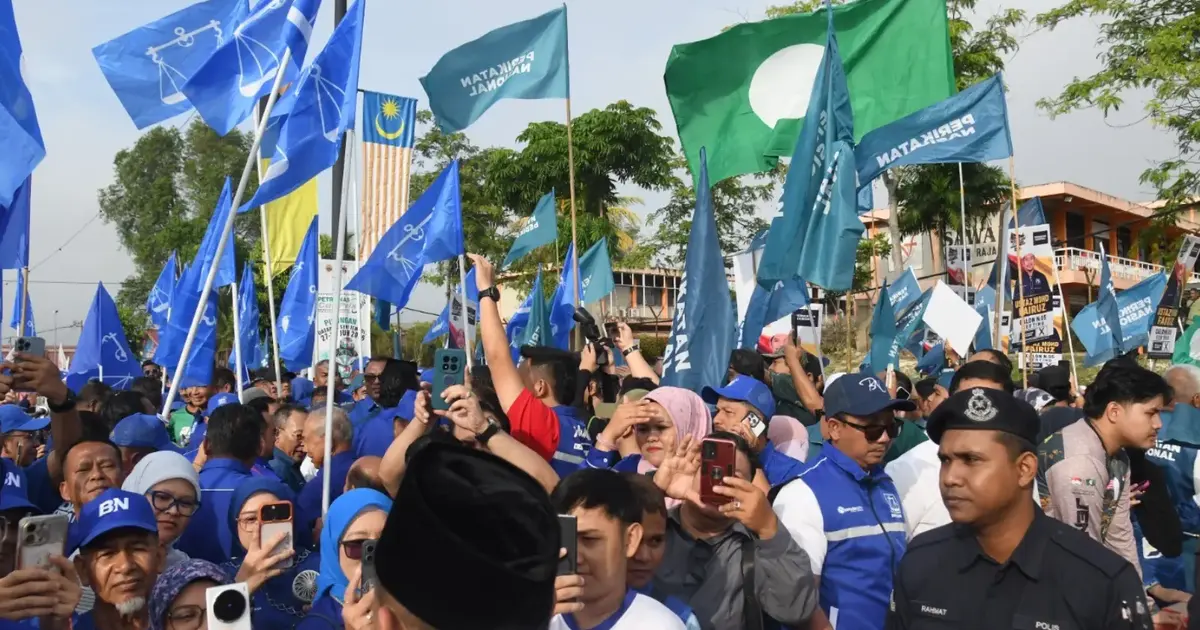
Political strategist Azmi Hassan has cast doubt on the viability of Barisan Nasional serving as an effective partner for PAS in the latter's push to secure control of Selangor, contending that BN fundamentally lacks the organisational capacity and voter reach that Bersatu previously mobilised on behalf of the Perikatan Nasional coalition during the preceding electoral cycle. The assessment underscores a critical strategic weakness confronting PAS as it recalibrates its electoral alliance ahead of future contests in Malaysia's most economically significant state.
Selangor represents the crown jewel of Malaysian electoral politics, serving as the financial and industrial heartland of the nation and functioning as a barometer for broader political sentiment across the peninsula. The state's 222 state assembly seats and substantial middle-class voter demographic make it indispensable to any coalition's ambitions of achieving national dominance. Losing control of Selangor in 2018 catalysed Barisan Nasional's broader political decline, whilst Pakatan Harapan's capture of the state during that election symbolised the opposition's capacity to penetrate traditional BN strongholds. The subsequent transfer of Selangor administration to Pakatan Rakyat, culminating in its return to PH governance, reflects the intense competition characterising the state's political landscape.
Bersatu's pivotal role in Perikatan Nasional's performance during the most recent Selangor state election proved instrumental in translating electoral mathematics into tangible gains, particularly among particular demographic segments and geographic constituencies. The party mobilised specific voter constituencies through localised campaign apparatus and community networks that orthodox BN machinery had failed to effectively penetrate during preceding cycles. Bersatu's populist messaging resonated distinctly with segments of the Malay-Muslim electorate who had previously gravitated towards PAS, enabling the Perikatan coalition to consolidate support across complementary voter bases rather than fragmenting opposition to Pakatan Harapan. This collaborative dynamic proved remarkably effective in translating ideological affinity into electoral performance.
Barisan Nasional operates from fundamentally distinct organisational premises and voter constituencies compared to the grassroots mobilisation network that Bersatu cultivated. BN's traditional support base comprises urban professional classes, Chinese business communities, and institutionalised rural power brokers whose interests frequently diverge from PAS's core constituency of rural Malay-Muslim voters concentrated in non-peninsular and semi-urban regions. The coalition's established hierarchical structures and clientelistic networks, whilst effective in specific contexts, lack the flexibility and ideological alignment necessary for genuine collaborative mobilisation alongside PAS. Furthermore, BN's historical opposition to Islamic governance frameworks creates ideological tensions that cannot be smoothly reconciled through administrative alliance.
The strategic realignment accompanying Mahathir Mohamad's Bersatu formation specifically generated a vehicle through which established and emerging Malay-centric constituencies could coalesce around Perikatan Nasional without triggering the institutional friction that characterises BN-PAS collaborations. Bersatu functioned as an ideological bridge and organisational accelerant rather than merely another coalition component, enabling PN to consolidate previously fragmented anti-PH sentiment into coherent electoral competition. Its founder and core membership's establishment credentials whilst maintaining maverick positioning proved instrumental in mobilising constituencies alienated from traditional BN structures yet sceptical of PAS's governance capabilities.
Analyst Hassan's assessment reflects broader structural realities constraining BN's relevance in contemporary Malaysian electoral competition. The coalition has struggled fundamentally to regenerate its organisational vitality following its 2018 electoral catastrophe, with sustained internal fractures, diminished grassroots engagement, and persistent questions regarding institutional credibility among younger and urban voters undermining its recovery trajectory. Attempts to rehabilitate BN's electoral fortunes through leadership regeneration and policy repositioning have generated modest dividends at best, with the coalition's dependence on institutional resources and patronage networks increasingly insufficient to overcome voter scepticism regarding its commitment to substantive reform. The coalition's simultaneous competition with Perikatan Nasional for traditionalist Malay-Muslim support creates additional friction preventing the kind of complementary electoral collaboration that would characterise effective BN-PAS partnership.
PAS itself confronts an asymmetrical challenge in pursuing Selangor conquest without Bersatu's collaborative infrastructure. The party must simultaneously maintain its ideological distinctiveness, consolidate Malay-Muslim voter loyalty across the peninsula, and generate sufficient cross-ethnic electoral mathematics to translate state-level support into administrative control. These competing imperatives prove extraordinarily difficult to reconcile without coalition partners possessing genuine popular legitimacy beyond narrow sectarian constituencies. Bersatu, despite its subsequent electoral decline and organisational fractures, temporarily resolved this equation through strategic positioning. Barisan Nasional cannot replicate this achievement given its institutional trajectory and established voter coalitions.
The broader implications for Malaysian electoral competition are profound. If BN cannot effectively serve as PAS's electoral catalyst in Selangor, this constrains Perikatan Nasional's ability to mount credible challenges to Pakatan Harapan's governance in the state most critical to determining national political trajectories. The calculus increasingly suggests that Selangor will remain heavily contested territory where Pakatan Harapan retains structural advantages through institutionalised governance presence and metropolitan voter preference, fundamentally shaping the nation's broader political equilibrium for coming electoral cycles.

