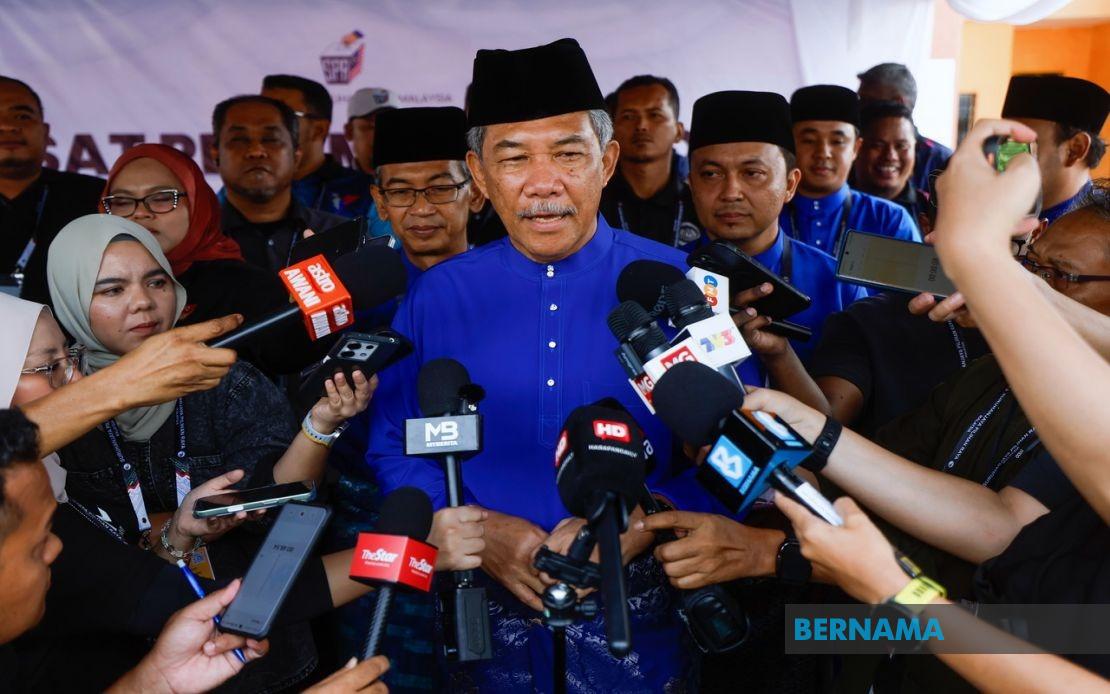
Barisan Nasional deputy chairman Datuk Seri Mohamad Hasan has issued a forthright warning to his party's campaign apparatus to refrain from exploiting Negeri Sembilan's adat—the state's foundational system of traditional customs and governance—as a tactical campaign tool in the upcoming 16th state election. Speaking at the nomination proceedings in Rembau on July 18, the UMNO deputy president emphasized that preserving democratic harmony demands that cultural and customary institutions remain insulated from electoral politics.
The caution reflects a broader concern about maintaining institutional integrity during electoral contests. Adat institutions in Negeri Sembilan occupy a distinctive constitutional position, serving as guardians of Malay-Muslim cultural values and state traditions that predate modern political competition. When such culturally sensitive frameworks become entangled with partisan campaign narratives, the risks extend beyond immediate electoral consequences—they threaten to erode public confidence in institutions that derive legitimacy from their perceived neutrality and cultural authenticity.
Mohamad articulated this concern with specific clarity, noting that weaving adat matters into political discourse creates complications that benefit no one in the electorate. The stakes involve more than rhetorical restraint; instrumentalizing customary law and practices risks widening social divisions precisely when electoral processes should bring communities together around substantive policy questions. His repeated reminder that adat merits respect independent of electoral calculations underscores recognition that some institutional domains require protection from the pressures of competitive politics.
The timing of this intervention carries significance for Negeri Sembilan's political trajectory. The state assembly's dissolution on June 5 initiated a compressed electoral calendar, with early voting scheduled for July 28 and polling day set for August 1. Within this condensed timeframe, the temptation to deploy every available political lever intensifies. Mohamad's preemptive statement acknowledges this pressure while setting a clear boundary that BN, as the incumbent coalition, intends to respect—a positioning that also enables the leadership to hold subordinate actors accountable should they breach this demarcation.
Beyond adat considerations, Mohamad addressed the electoral mechanics governing BN's approach across the 36 state seats. The coalition continues maintaining what he characterized as an electoral understanding with Perikatan Nasional, a formulation carefully distinguished from a formal coalition arrangement. This distinction matters considerably: unlike the formal PN-BN alliance that governed Johor's 2023 state election, the Negeri Sembilan arrangement preserves each coalition's independence while enabling strategic coordination in specific constituencies where BN declines to contest.
This operational framework reflects pragmatic calculation about vote efficiency and seat maximization. By concentrating BN's candidate roster in constituencies where the coalition commands strongest support while allowing PN space to contest uncontested seats, the arrangement theoretically amplifies combined opposition strength against Pakatan Harapan's dominance. For Malaysian coalition politics, such arrangements represent an evolution beyond the rigid, all-encompassing alliances of earlier electoral cycles toward more flexible, issue-specific coordinations that respect each partner's autonomy.
For Negeri Sembilan voters and Malaysian observers more broadly, the election unfolds against a backdrop of federal political reconfiguration. Since Anwar Ibrahim's ascension to the Prime Minister's office in November 2022, the political landscape has shifted substantially. Pakatan Harapan's positioning within federal government creates distinct dynamics in state contests, where voters may employ elections to signal approval, disapproval, or demand for course corrections on national policies affecting their localities.
The campaign environment also reflects heightened sensitivity to institutional boundaries across Malaysia's political system. Recent years have witnessed intensified scrutiny regarding the relationship between political processes and traditional governance structures, particularly within Malay-Muslim majority states where adat, Islamic law, and constitutional monarchy intersect. Mohamad's intervention participates in this broader conversation about preserving institutional differentiation in an increasingly polarized political environment.
From a regional Southeast Asian perspective, Negeri Sembilan's election offers insights into how established democracies manage the tension between competitive electoral politics and respect for pre-democratic institutions. Malaysia's constitutional architecture requires balancing parliamentary democracy with traditional sultanate authority and customary law systems—a tension visible in state elections where adat questions surface. How political leaders navigate such intersections influences both immediate electoral outcomes and longer-term institutional health.
The practical implications of Mohamad's guidance will become apparent during the campaign's final phases. Campaign workers, candidates, and party surrogates face pressure to maximize competitive advantage, yet face clear directives against crossing into adat territory. The constraint reflects leadership judgment that certain victories come at excessive institutional cost. Whether subordinate actors respect this boundary provides a measure of party discipline and commitment to preserving customary institutions' integrity.
Looking forward, the Negeri Sembilan election will determine whether BN can consolidate its state government position or whether Pakatan Harapan can breach the coalition's control. Beyond seat arithmetic, however, the election's conduct—particularly whether adat matters remain appropriately separated from campaign dynamics—carries implications for how Malaysia's political system manages institutional pluralism. Mohamad's intervention signals that at least the BN leadership recognizes such separation as essential to maintaining both electoral legitimacy and cultural institution credibility.

