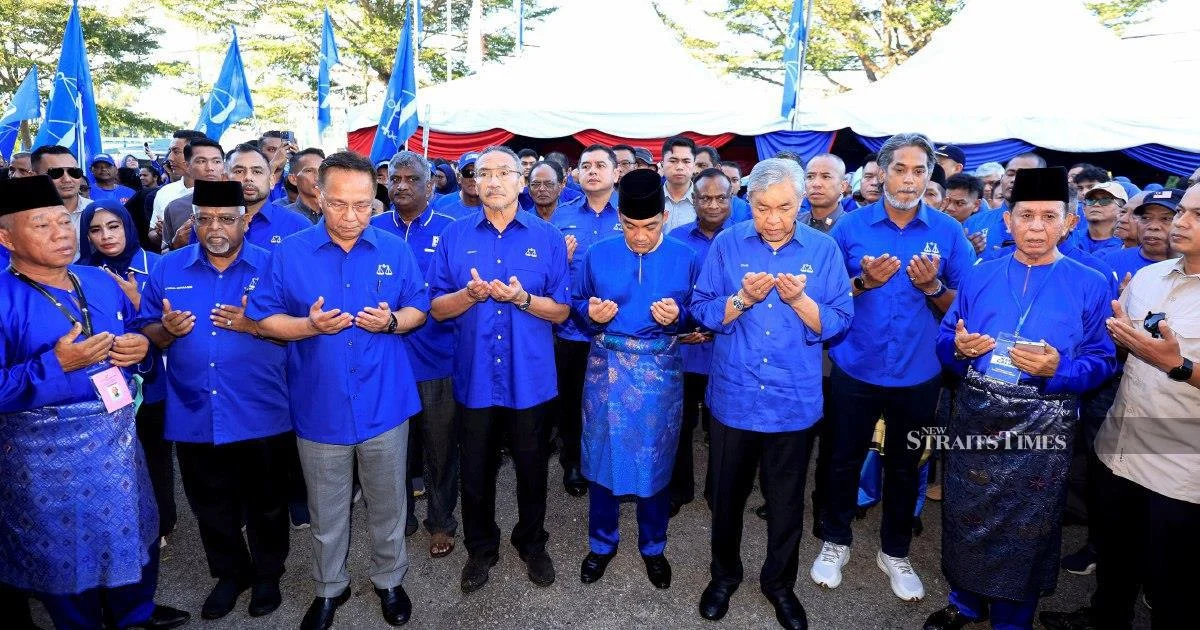
Prominent figures within Barisan Nasional converged on the Simpang Renggam District Council on Wednesday morning, orchestrating a carefully choreographed display of party solidarity centred on Johor Chief Minister Datuk Onn Hafiz Ghazi. The gathering represented far more than a routine political event—it constituted a deliberate projection of BN's institutional cohesion at a moment when the ruling coalition faces persistent questions about internal discipline and alignment across its component parties.
The decision to marshal multiple senior leaders for this public appearance underscores the strategic importance BN attaches to maintaining Onn Hafiz's political position and bolstering his standing within Johor's fractious political landscape. Johor remains a crucial stronghold for BN's federal and state dominance, and any perceived weakness in the chief minister's authority or party backing would send damaging signals to opposition forces eager to exploit organisational vulnerabilities. The assembly thus functioned as both a morale-boosting exercise for the party rank-and-file and a message directed outward toward competitors that BN leadership remains firmly consolidated.
Onn Hafiz's tenure as Chief Minister has encompassed periods of consolidation and challenge alike. The presence of multiple BN heavyweights at Simpang Renggam suggested the party establishment views him as a figure warranting their active investment and protection. In Malaysia's intensely personal brand of politics, such public demonstrations of support carry outsized significance—they signal to state assemblymen, grassroots workers, and ordinary voters that Onn Hafiz commands the confidence and backing of BN's national hierarchy, thereby strengthening his capacity to deliver patronage, secure resources, and maintain discipline within his administration.
The timing of this show of force also reflects the broader rhythm of Malaysian electoral politics. With federal elections typically held every five years and state polls occasionally called early, BN strategists operate under perpetual campaign readiness. Demonstrating visible party unity around key state leaders like Onn Hafiz inoculates BN against accusations of being a spent or fractious force, particularly vital given the competitive pressures from Perikatan Nasional and other opposition coalitions across Malaysia's federal landscape.
Johor's political dynamics carry implications extending well beyond the state itself. As Malaysia's second-largest state by population and a cornerstone of BN's electoral arithmetic, developments in Johor ripple through national politics. Any erosion of BN control or weakening of state-level leadership cascades upward, potentially threatening the coalition's broader legitimacy and federal governing capacity. Conversely, projecting strength and unity in Johor sends reassuring signals to BN allies in other states and reinforces the coalition's claim to superior organisational prowess.
The convergence of multiple BN personalities at Simpang Renggam also serves internal party purposes. Within Barisan Nasional, component parties UMNO, MCA, MIC, and smaller coalition members compete for resources, ministerial positions, and electoral seats. By rallying visibly around Onn Hafiz, BN's national leadership reinforces the precedence of coalition discipline over inter-party jockeying, signalling that attempts to undermine state leaders backed by the centre will face consequences. This hierarchical reassertion becomes particularly important when component parties or individual politicians show signs of autonomy or defection.
From a Malaysian perspective, such political theatre reflects deeper structural realities. Malaysia's Westminster-derived parliamentary system, combined with its unique federal structure and entrenched communal politics, generates perpetual incentives for ruling coalitions to perform unity and discipline publicly. Onn Hafiz, as a Malay-Muslim UMNO politician leading Johor, occupies a position of considerable symbolic and practical importance within both his party and the broader BN framework. Protecting and promoting his position becomes a matter of coalition-wide concern.
The Simpang Renggam gathering also demonstrated BN's continued capacity to mobilise senior leaders and generate news coverage, an important indicator of organisational health in Malaysia's media-saturated political environment. Opposition parties scrutinise such events carefully, reading them for signs of BN weakness or fracture. The presence of multiple heavyweights effectively countered any potential narratives suggesting BN internal divisions or Onn Hafiz's isolation within the ruling coalition.
Looking forward, this coordinated display of support establishes important political ground for Johor governance and potentially for national politics. Should elections be called in Johor or federally, BN enters the contest with publicly demonstrated party coherence and unified leadership backing. Such positioning, while not guaranteeing electoral victory, substantially improves BN's capacity to maintain voter confidence and organisational morale during a campaign. For Onn Hafiz specifically, the endorsement of multiple party heavyweights fortifies his authority to make decisions, implement policies, and navigate the inevitable political complexities of running Malaysia's second-largest state within a complex federal structure.

