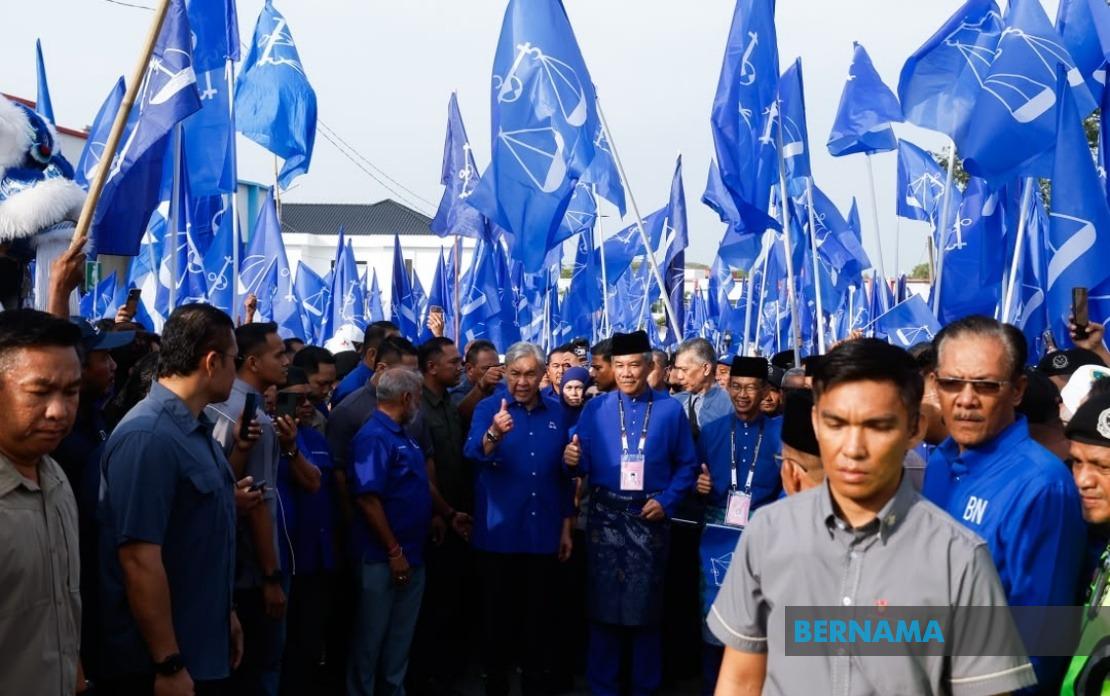
Barisan Nasional's top leadership made a coordinated show of force across Negeri Sembilan on July 18, with party chairman and UMNO president Datuk Seri Dr Ahmad Zahid Hamidi personally escorting his deputy Datuk Seri Mohamad Hasan to the Rembau nomination centre. The early morning arrival at 8.40 am—ahead of the official 9 am opening—demonstrated the coalition's intent to project organizational readiness and confidence as candidates formally entered the race for the state assembly. Mohamad Hasan's submission of nomination papers to defend the Rantau seat, which he has represented since 2004, carried particular weight as a sitting assemblyman seeking re-election.
The simultaneous opening of all eight nomination centres across Negeri Sembilan at 9 am and their closure an hour later compressed the filing period into a single intensive morning, reflecting electoral protocols designed to minimize disruption and ensure equal access for all contenders. This compressed timeframe placed additional emphasis on organizational capability, favoring coalitions with established machinery—precisely where BN sought to demonstrate its advantage through the visible presence of top figures at multiple locations.
The distribution of senior party personalities across different constituencies revealed a deliberate strategy to maintain visible party presence throughout the state. BN secretary-general Datuk Seri Dr Zambry Abd Kadir stationed himself in Port Dickson alongside Datuk Mohd Faizal Ramli, the Linggi seat aspirant, while UMNO vice-president Datuk Seri Johari Ghani supported Suhaimizan Bizar's candidacy in Gemencheh, which falls within the Tampin parliamentary constituency. This geographical spread ensured media coverage and symbolic party backing reached multiple regions simultaneously, reinforcing the message of coalition-wide engagement.
In Jempol parliamentary constituency, UMNO secretary-general Datuk Dr Asyraf Wajdi Dusuki conducted what amounted to a nomination day tour, accompanying three separate BN candidates—Datuk Mustapha Nagoor for Palong, Datuk Mohd Zaidy Abdul Kadir for Jeram Padang, and Chong Fui Ming for Bahau—across different nomination venues. The concentration of senior party management in this area suggested that Jempol held strategic importance in BN's election calculus, possibly reflecting demographic shifts, competitive pressures from opposition parties, or the significance of these seats within the broader parliamentary arithmetic.
Coalition partners also made their presence felt, with PAS president Tan Sri Abdul Hadi Awang accompanying his party's Serting seat candidate Mohd Fairuz Mohd Isa, signifying the Islamist party's continued participation in the BN framework at the state level. The appearance of Parti Orang Asli Malaysia (ASLI) president Rashid Ka alongside the party's Jeram Padang candidate Dayana Dal underscored how even smaller coalition components leveraged the nomination day to amplify their visibility and relevance within the broader political structure.
The Negeri Sembilan state election represents a mid-term test of BN's regional governance, coming less than two years after the coalition's return to federal power in late 2021. The state assembly's dissolution on June 5, following the Yang Dipertuan Besar Tuanku Muhriz Tuanku Munawir's consent, set the stage for what political analysts view as a referendum on BN's performance under Chief Minister Mohamad Hasan's administration. For Malaysia's opposition camps, the election offers an opportunity to challenge BN's control, though the coalition's ability to field prominent figures at every nomination centre suggests organizational advantages that competitors may struggle to match.
The August 1 polling date provides a campaign window of approximately two weeks following the July 18 nominations—a period compressed compared to typical electoral cycles but sufficient for the coalition's extensive organizational machinery to mobilize supporters across the nine state seats. Early voting on July 28 will allow security forces, essential workers, and other designated groups to participate before general polling, a scheduling detail that BN candidates are likely aware may influence turnout patterns and strategic ground deployment.
Negeri Sembilan's electoral significance extends beyond state-level implications. The state has historically served as a political barometer for the broader Malay-Muslim vote and UMNO's grassroots organization. Poor performance here would signal vulnerability within traditional BN strongholds, potentially affecting the coalition's confidence heading into future federal parliament by-elections or a possible general election in coming years. Conversely, a decisive BN victory would reinforce narratives of the coalition's renewed political momentum and organizational capacity.
The visibility of deputy chairman Mohamad Hasan at the forefront of nomination proceedings, with chairman Ahmad Zahid's accompanying presence, also communicated internal party harmony at a moment when UMNO has weathered internal tensions over leadership succession, factional competition, and governance priorities. By positioning himself and his deputy as unified figures symbolically launching the campaign, Ahmad Zahid sought to project stability to party members and voters alike. This carefully choreographed display of solidarity matters in Malaysian politics, where perceptions of leadership discord can undermine electoral performance even when organizational machinery remains intact.
The nomination centre events also illustrated how Malaysian electoral contests, despite their democratic character, remain heavily structured around party hierarchies and leadership endorsements. Candidates filing nominations appeared consistently flanked by senior figures, a pattern reflecting the hierarchical nature of party politics in Malaysia where individual candidacies derive much of their perceived legitimacy and voter appeal from senior party backing. This system has advantages for organizational cohesion but potentially disadvantages grassroots-level politicians or candidates championed by local constituencies but lacking high-level patronage.
For voters in Negeri Sembilan, the leadership turnout at nomination centres offered early signals about which constituencies and candidates each major political faction viewed as priorities. The geographic distribution of senior figures and the seniority levels assigned to different seats provided subtle indicators of internal party calculations regarding electoral competitiveness, demographic trends, and strategic resource allocation that go beyond the formal candidate profiles and manifestos that typically dominate public campaign narratives.

