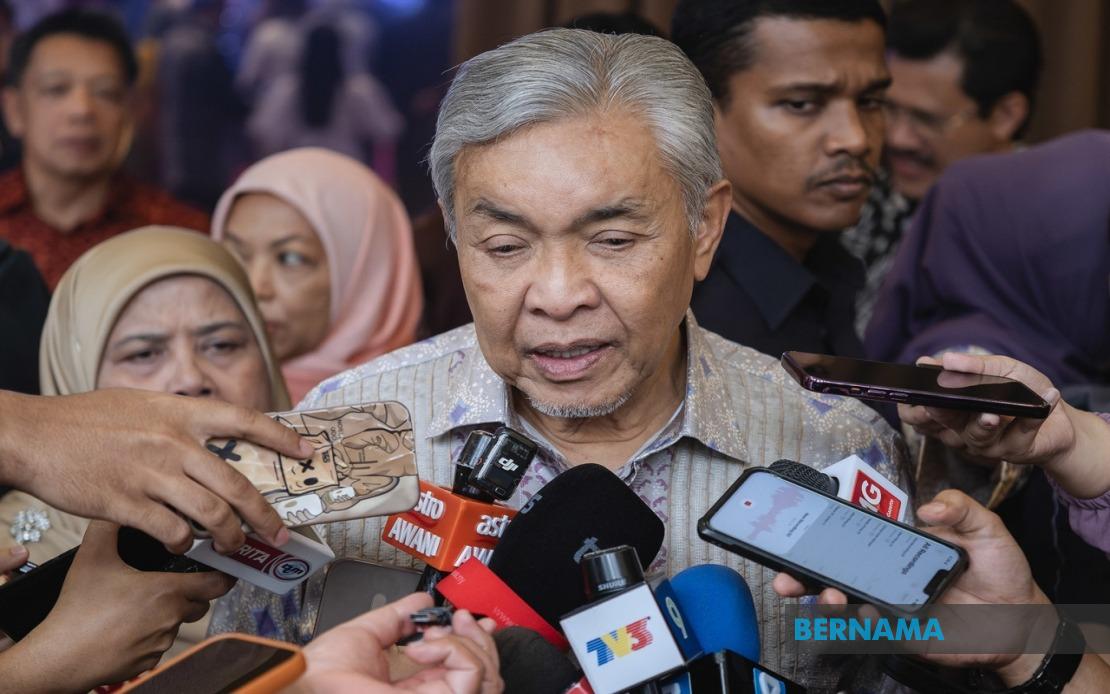
Deputy Prime Minister Datuk Seri Dr Ahmad Zahid Hamidi has given an explicit assurance that Barisan Nasional will maintain strict boundaries regarding the Negeri Sembilan royal institution and its Council of Justice and Laws (DKU), signalling the coalition's determination to keep internal state matters separate from electoral politics. Speaking after a ceremony honouring the Ministry of Rural and Regional Development, the UMNO president stressed that legal and institutional matters falling under the palace's purview would remain entirely outside the coalition's campaign sphere.
The pledge comes as Negeri Sembilan moves toward its August 1 state election, where 36 state assembly seats will be contested. Ahmad Zahid underscored this commitment during a meeting with the state party's leadership, indicating that delineating clear boundaries had been a key discussion point in the coalition's election preparation strategy. His remarks suggest that BN recognises the sensitivity of royal and judicial matters in Malaysian politics, where institutional respect remains paramount regardless of electoral considerations.
This position marks a deliberate contrast with BN's approach during the previous state election cycle. In the 15th Negeri Sembilan polls, the coalition had worked collaboratively with component parties from Pakatan Harapan, a cross-party arrangement that no longer exists. The shift to a more competitive electoral environment means BN must now build momentum through internal cohesion rather than broad multi-coalition partnerships. Ahmad Zahid emphasised that this fundamental change in the political landscape requires a different strategic approach centred on unity across all organisational levels.
The DKU, which functions as Negeri Sembilan's advisory body on matters of law and custom relating to the Malay Muslim population under the state's constitutional monarchy, occasionally deals with questions that intersect with political life. By explicitly stepping back from any involvement in such matters, BN is attempting to insulate royal institutions from the rough-and-tumble of electoral competition. This approach aligns with Malaysia's constitutional conventions, where the monarchy occupies a special position requiring protection from partisan contention.
Ahmad Zahid's emphasis on party unity across leadership tiers reflects a recognition that the Negeri Sembilan contest will require disciplined organisation. The state has proven politically competitive in recent cycles, with different demographic regions showing varied support for different coalitions. Building consensus among grassroots party members, division-level leaders, and state-level figures becomes crucial when operating without the cross-coalition support structure that existed previously. The party chief's focus on internal alignment suggests BN anticipates a tightly contested election where margins of victory could be narrow.
The timing of Ahmad Zahid's remarks carries significance for Malaysian politics more broadly. As the nation watches how BN performs in state-level contests, the party's willingness to observe institutional boundaries demonstrates an attempt to position itself as a responsible steward of constitutional norms. This messaging may prove particularly important given ongoing national conversations about the role of institutions and coalitions in Malaysian democracy. By committing to staying out of palace affairs, BN seeks to claim higher moral and constitutional ground.
For Negeri Sembilan's electorate, the statement provides assurance that the coming campaign will focus on policy and governance rather than institutional intrigue. The state has seen periods of political turbulence related to questions of royal prerogative and constitutional process, making it valuable for voters to understand that major political actors will respect clear institutional lines. Ahmad Zahid's explicit commitment represents an attempt to keep the August 1 election focused on conventional electoral issues rather than constitutional questions.
The coalition's revised approach also reflects changing realities in Malaysian politics. The era of grand multi-party coalitions working together at state level has given way to more direct competition between BN and opposition blocs. In this environment, BN must sharpen its identity and demonstrate disciplined unity among its constituent parties. The emphasis on organisational coherence at all levels suggests the party plans to compete aggressively while maintaining procedural propriety.
Looking ahead to the August election, this stance will likely frame how BN campaigns across the state's various constituencies. Rather than getting drawn into institutional controversies, the coalition can concentrate resources on conventional campaign themes such as economic management, infrastructure development, and service delivery. For voters concerned about political instability or constitutional questions, BN's declared position offers some reassurance about maintaining stability in governance practices.
The broader implications extend to how Malaysia's major political formations are learning to operate in a more competitive, decentralised electoral environment. As state elections increasingly serve as barometers of national sentiment, parties must demonstrate both their capacity to compete effectively and their commitment to constitutional propriety. Ahmad Zahid's statement reflects this dual imperative, positioning BN as a force capable of pursuing electoral victory while respecting institutional boundaries that define Malaysian democracy.

